Now supplying automotive & motorcycle screws M2–M12 from Jababeka, Bekasi — see the automotive programme
Manufacturing in Bekasi, West Java — Indonesia ISO 9001 · IATF 16949 · ISO 14001 · ISO 45001

Industry

Fasteners for Automotive & Motorcycle

Screws from M2 to M12 for vehicles, motorcycles and their component suppliers

M2 – M12Heat treatedZinc & zinc-nickelLocal supply from Jababeka
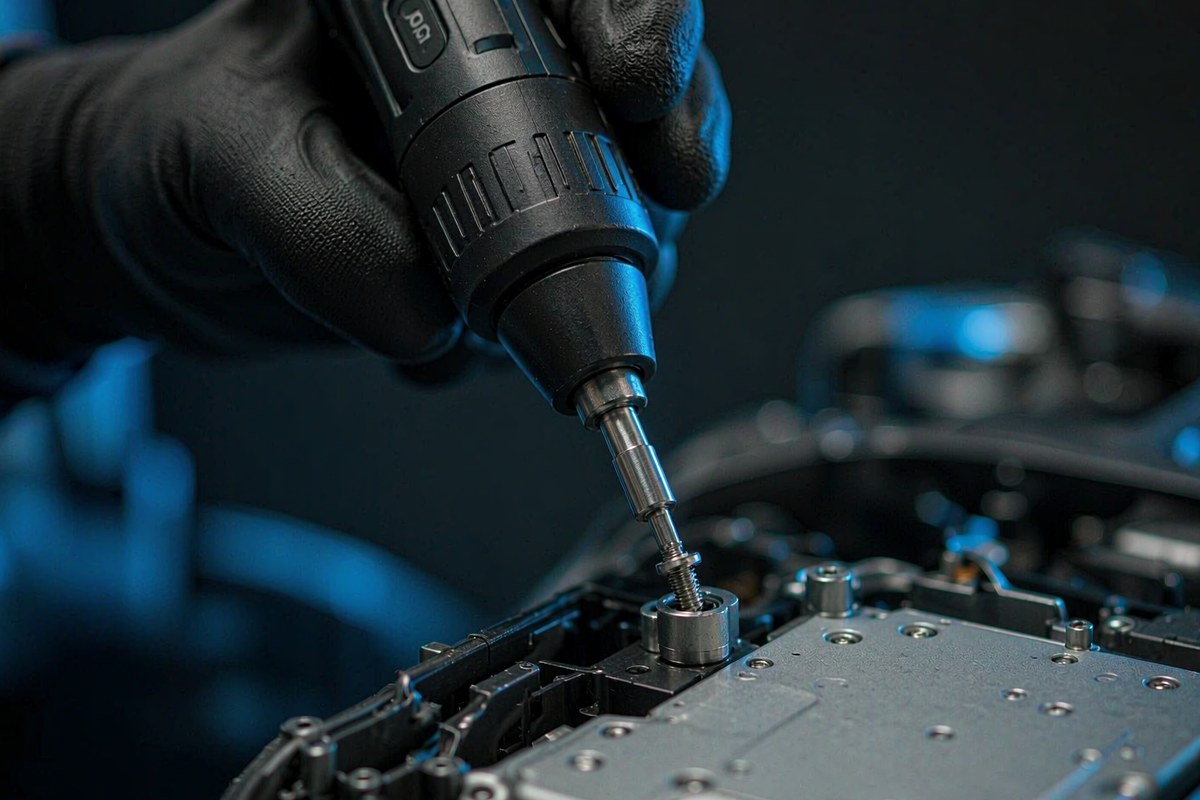
Precision torque driver fastening a screw into an automotive electronics module Automotive & Motorcycle

Why it matters

Screws from M2 to M12 for vehicles, motorcycles and their component suppliers

Automotive is the segment where the plant sits physically closest to its customers. The Jababeka industrial corridor in Cikarang Utara hosts vehicle assembly and a dense network of tier-1 and tier-2 component makers, and a fastener supplier that is forty minutes away instead of forty days of shipping changes what a shortage means: a top-up order arrives on the same day rather than halting a trim line.

The fastener content of a vehicle or a motorcycle is dominated by machine thread screws in the M2 to M12 band — pan and flange heads into plastic interiors, hex and flange bolts into brackets and housings, all of them expected to survive vibration, temperature cycling and a coated salt-spray specification. Our heading and thread rolling machines cover this band in volume, the mesh belt and rotary furnaces supply the hardening behind it, and the plating and precoat lines deliver the finish and the locking element that an automotive drawing usually calls out.

M2 – M12

Automotive screw band

3,000K

Carburising furnace capacity / 8 h

400K

Precoat dispensing / 8 h per machine

Same-day

Top-up supply inside Jababeka

Field problems

What actually goes wrong in this industry

These are the failure modes we see most often, and the engineering response that addresses each one. Problems are stated as they appear on the line, not as they appear in a textbook.

Failure mode and engineering response
Problem observed Engineering response
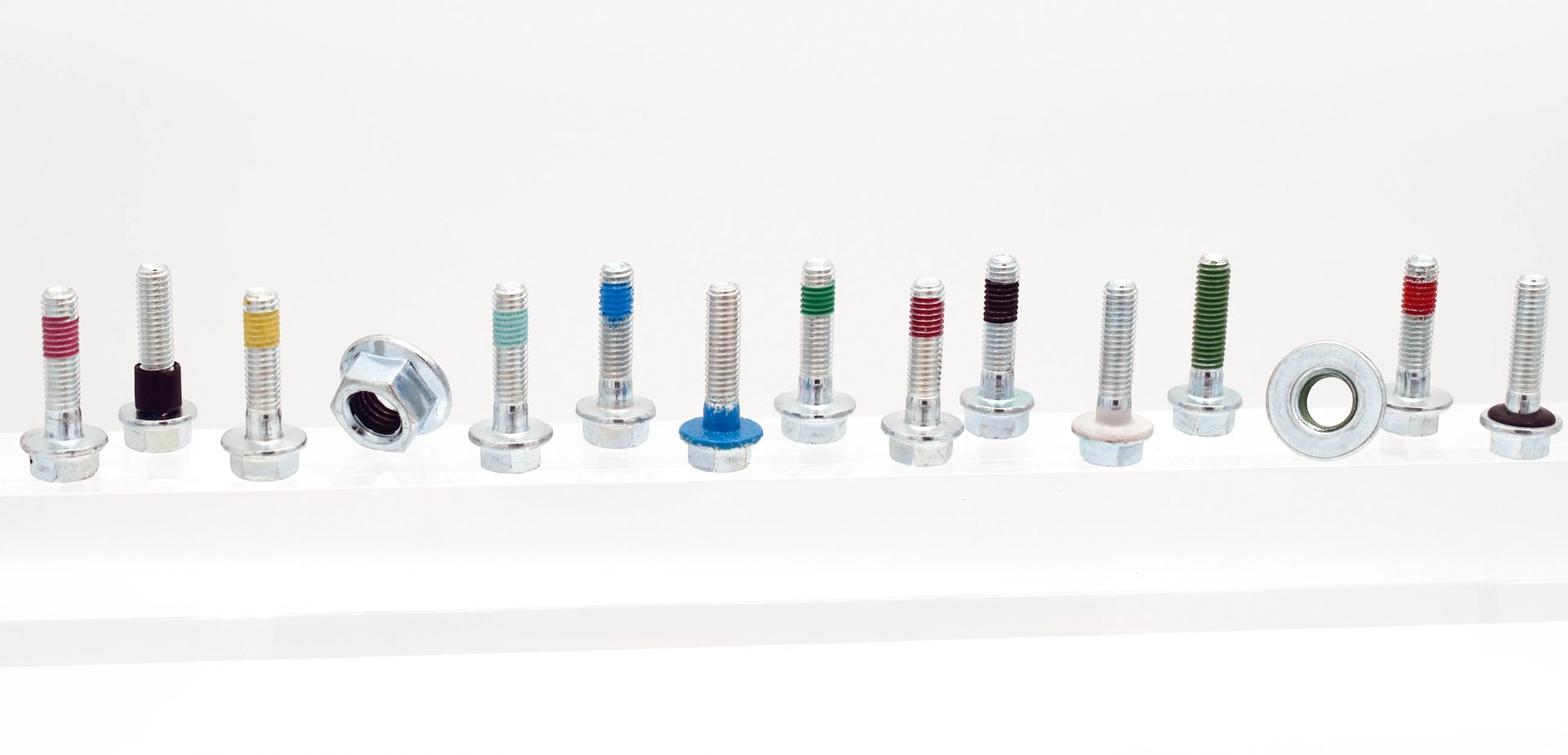
Fasteners loosen under sustained engine and road vibration. Pre-applied nylon patch or micro-encapsulated adhesive is applied on our own dispensing lines — 400K pcs per 8-hour shift per machine — so the locking element arrives controlled in position and mass instead of being dispensed at the assembly line.
The drawing calls for a property class the part cannot reach as formed. The mesh belt furnace runs tempering and carburising treatments for any screw size in the range, and the rotary furnace adds 3,000K pieces per 8-hour shift of carburising capacity, so the hardness is produced and verified in the same plant that forms the part.
Corrosion failures appear at the coating rather than the steel. Zinc, zinc-nickel and nickel plating are verified with the in-house salt spray chamber and X-ray coating thickness gauge, and threads are re-gauged after coating so the fit survives the finish.
A line-down shortage cannot wait for an overseas shipment. The plant is inside Jababeka Phase 8, next door to the component supplier base. Top-up quantities of a released part number can be produced and delivered locally instead of being ordered across a border.
Mixed or damaged fasteners reach the assembly line and stop the station. Four optical separators inspect 500K pieces per 8-hour shift each, and CCD machines verify presence and orientation at packing, so what reaches the feeder is what the label says.
Documentation is demanded at PPAP level for a new component. Material certificates, hardness records, coating thickness data and torque verification are produced in-house and issued per lot, with the submission level agreed at quotation.

Specification basis

Typical requirements for this industry

A starting specification, not a fixed menu. Most programmes adjust one or two of these after the first joint review.

Diameter band

M2 – M12 machine thread, coarse and fine pitch

Head styles

Pan, hex, flange, socket, countersunk; custom heads to drawing

Property classes

Set by drawing and verified by Vickers hardness and metallography in-house

Materials

SWRCH carbon steels, alloy steels, stainless on request

Heat treatment

Mesh belt furnace (tempering + carburising) and rotary furnace, 3,000K pcs / 8 h

Finishes

Zinc (blue-white, colour, black, green), zinc-nickel, nickel, nano coating, stoving paint

Locking

Nylon patch and micro-encapsulated adhesive, 400K pcs / 8 h per dispenser

Verification

Salt spray, X-ray coating thickness, digital torque meter, optical sorting before packing

Documentation

Material certificates, inspection records and PPAP-level submissions agreed per project

Recommended products

Families we specify most in this industry

Chosen for the tolerance, finish and locking requirements typical of the assemblies described above.

Machine thread screws from M0.8 to M12 produced at the Bekasi plant

Micro Screws · M0.8 – M12

Machine Thread Screws

Machine screws that engage a pre-formed thread — a tapped hole, a brass insert or a heat-set nut — and hold their clamp load through repeated disassembly, from M0.8 micro screws to M12 fasteners.

Coarse & fine pitchRepeated re-assemblyStainless / carbon steel
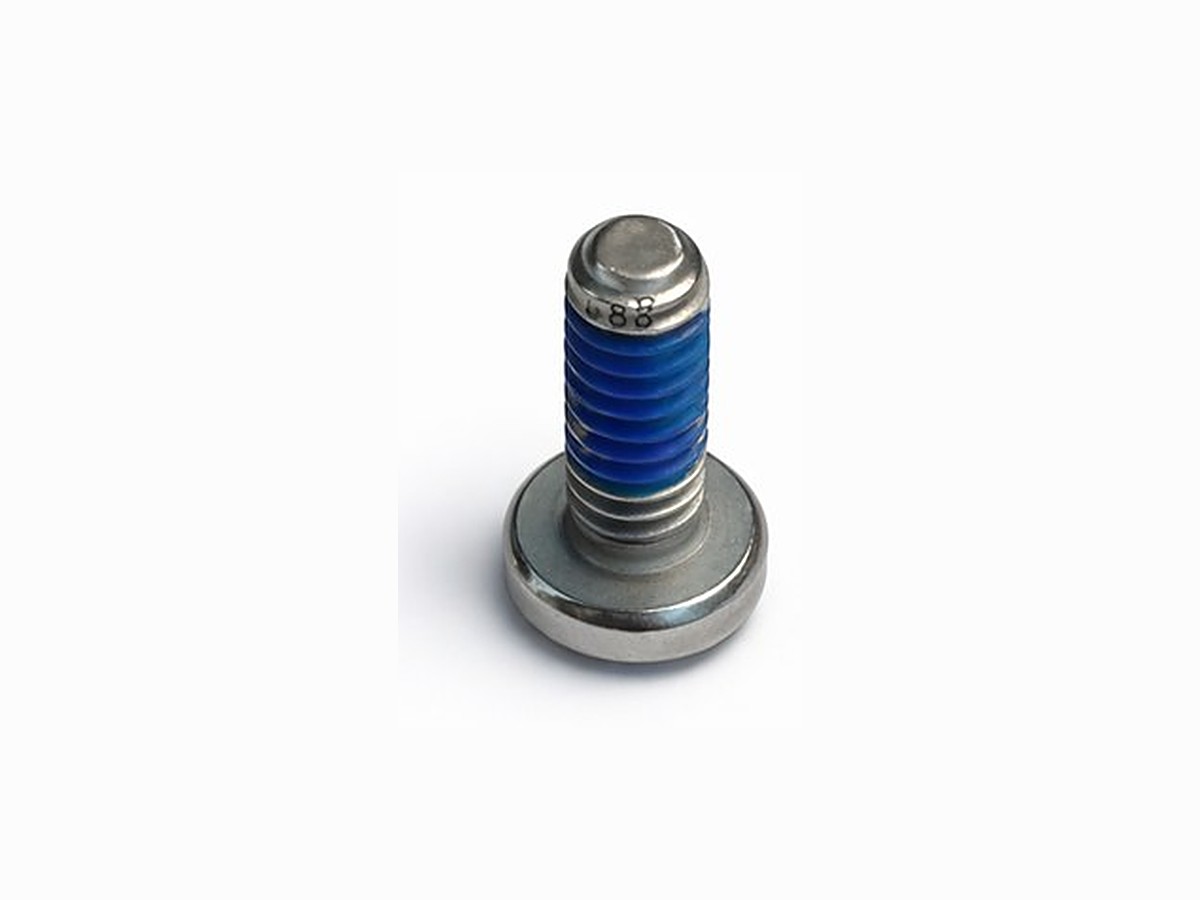
Pan head TORX screws with a blue pre-applied threadlocking patch

Micro Screws · From M0.8 × 1.0 mm

Precoated Screws

Screws supplied with a locking, sealing or vibration-damping element already applied — micro-encapsulated adhesive, nylon patch, sealant or damping coating, from M0.8 upward.

Four product families90°–360° coverageExternal or internal thread
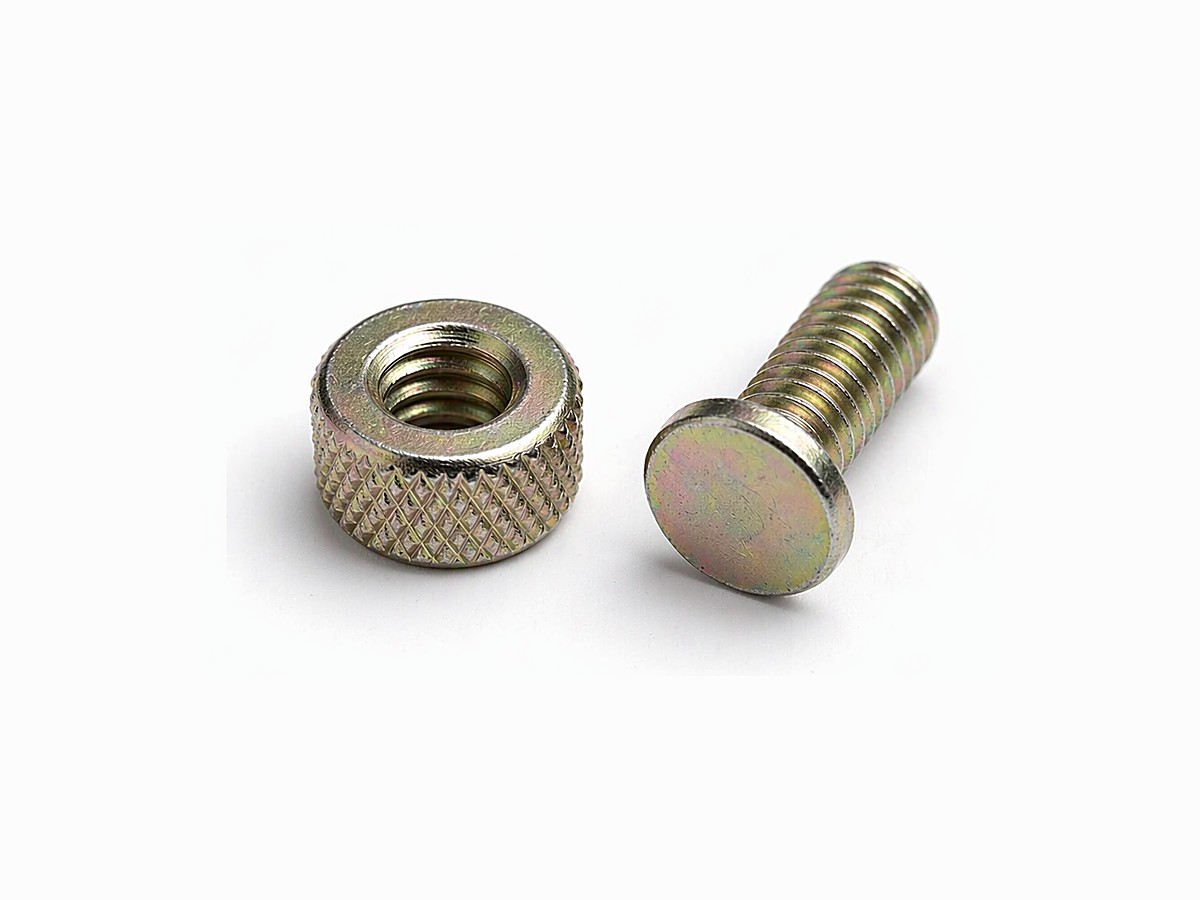
Clinching nuts and threaded standoffs for sheet metal panels

Thread & Panel · Sheet metal panels

Clinching Nuts & Studs

Clinching nuts, studs and grounding terminals are pressed into sheet metal with a press, giving a permanent load-bearing thread in a panel that is often thinner than the thread itself.

Pressed installationNylon locking optionIP68 sealed variants
Precision stamped lock washers and small pressed parts

Thread & Panel · Joint anti-loosening

Lock Washers

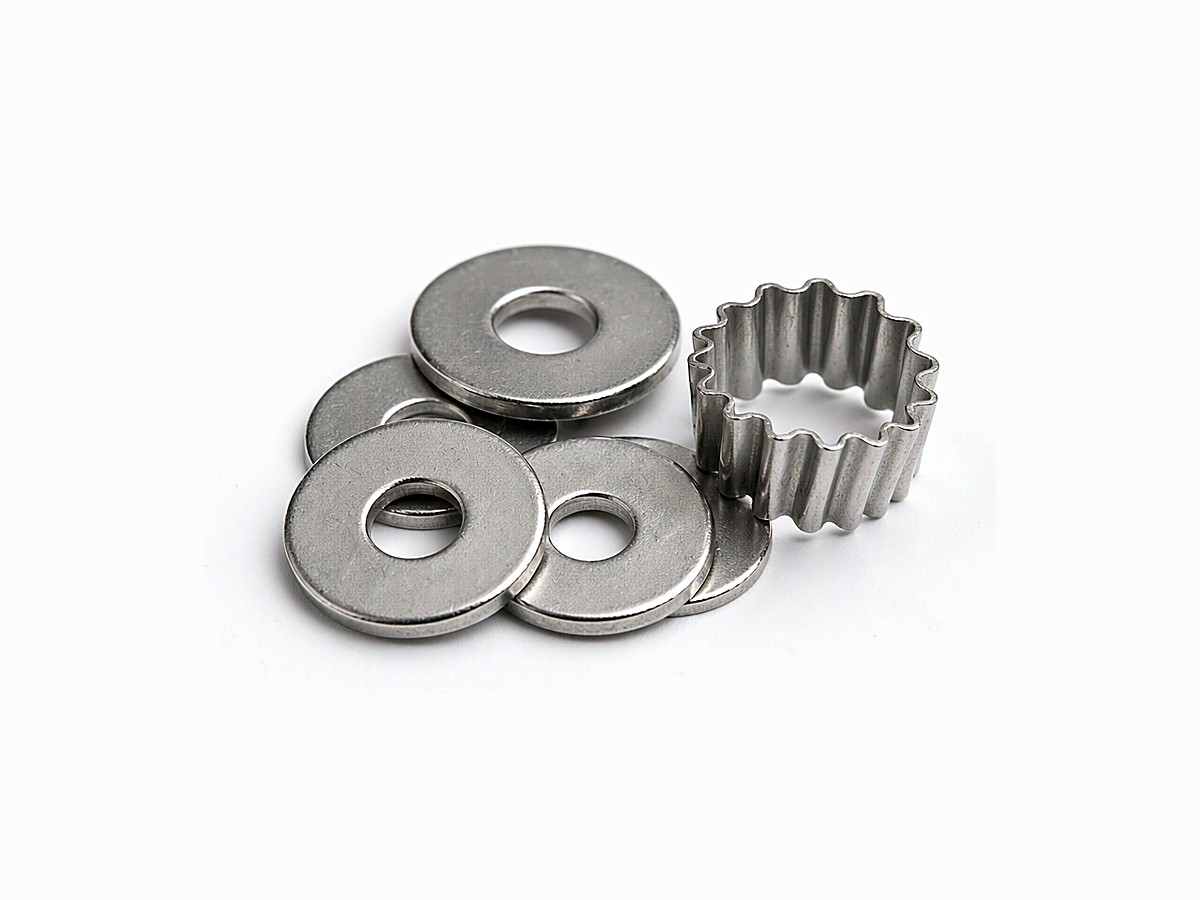
Lock washers are among the core anti-loosening fasteners for robot joints and transmission systems, holding preload where vibration would otherwise relax the joint.

Carbon & stainlessAlloy steel optionHigh-frequency vibration
High-strength aluminium bolts in a coated finish

Thread & Panel · Lightweight joints

High-Strength Aluminium Bolts

Cold-formed 7-series aluminium bolts that replace steel in magnesium and aluminium assemblies — removing galvanic corrosion and cutting fastener weight at the same time.

629 MPa tensileUp to 65% lighterNo galvanic couple
Rivet nuts and fasteners used in a server chassis

Thread & Panel · One-side access

Rivet Nuts & Blind Rivets

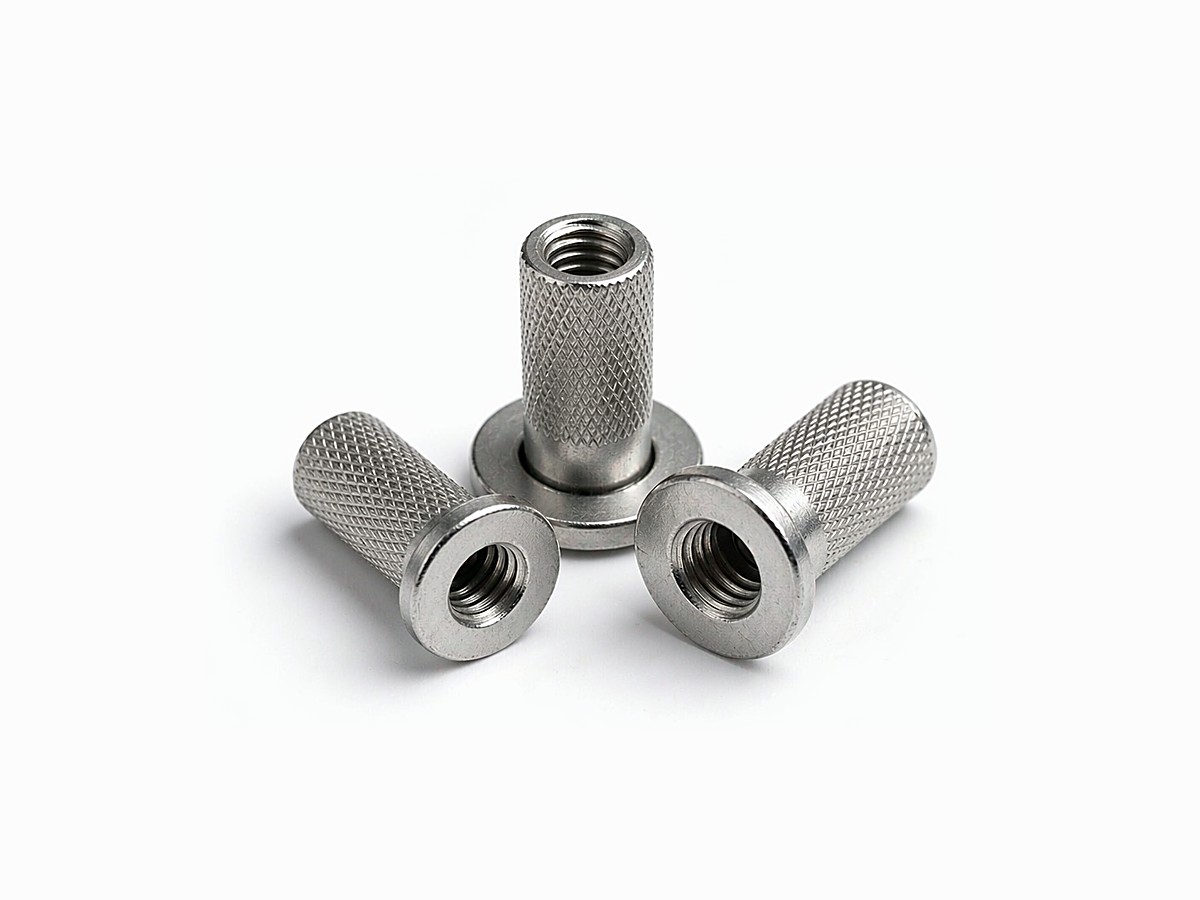
Rivet nuts and blind rivets install from the front face only, giving a threaded or permanent joint in a closed box, cabinet or duct where the back is unreachable.

Blind installationSealed & non-sealedPre-coated locking

Design notes

Four things to get right early

These decisions are cheap at concept stage and expensive after tooling is cut.

01

Design the joint for the coating, not after it

A plated thread behaves differently from a bare one — thickness moves the fit and friction moves the preload. Specifying the finish with the screw, rather than as a later purchasing decision, keeps the torque strategy honest.

02

Locking element or locking feature?

A precoat keeps the screw standard and adds the lock at our line; a flange or a special washer changes the part. For most automotive positions a precoat is the cheaper route, and it can be added or removed without redesigning the part.

03

Case hardening for thread-forming positions

Screws that form a thread in sheet metal need a hard skin over a tough core. The mesh belt and rotary furnaces are set up for exactly this case-hardening duty at volume.

04

Local supply is part of the specification

A fastener that is 40 minutes away can be topped up in the same shift. For high-runner sizes inside the Jababeka supply base, local stock agreements are often worth more than a marginal unit-price difference.

Joint review

Send us the assembly, not just the screw

A drawing gives us geometry. The mating material, the service cycles and the cleaning chemistry decide whether the joint works. Send all three and we will review the whole stack.

  • Tolerance stack and fit check
  • Torque and preload recommendation
  • Material and finish selection
  • Locking method and service strategy

Questions

Automotive fastening FAQ

Answers to the questions that come up most in this industry.

Have a specific joint? Send the section drawing and the service condition. We will reply with a recommended fastener and the reasoning behind it.
What sizes do you supply for automotive applications?
Machine thread screws from M2 to M12 — pan, hex, flange and socket heads, coarse or fine pitch. The M3–M12 band is produced on the larger heading and thread rolling machines, with heat treatment and coating in the same plant.
Can you hold an automotive property class?
The class is achieved through heat treatment — tempering and carburising on the mesh belt and rotary furnaces — and verified in-house by Vickers hardness and metallographic section. Records are issued per load.
Do you support PPAP submissions?
Yes. The documentation scope is agreed per project at quotation: material certificates, hardness records, coating thickness data, torque verification and dimensional results are all produced in-house, so the submission level can be matched.
How fast can a top-up order be supplied?
For a released part number, production and delivery inside the Jababeka corridor is measured in days, not shipping weeks. The exact response time depends on the size and the finish, and is agreed in the supply agreement.
Can you supply motorcycles and appliance makers as well?
Yes. The same screw families serve motorcycle assembly and home appliance production, which share the M2–M6 band and the zinc and precoat finishes most commonly specified in these segments.

Related industries

Adjacent platforms

The same fastener discipline applies across these industries, with different documentation and validation requirements.

Micro screws used in smartphone assembly

Industry

Consumer Electronics

Our core business: machine and self-tapping screws, PVD finishes and precoated locking for phones, wearables, boards and precision modules.

Captive panel screw used in an industrial enclosure

Industry

Industrial Electronics

Riveting, clinching, threaded inserts and sealed screws for control cabinets, industrial enclosures and equipment that must survive a long service life in the field.

Coated bolts used in lightweight vehicle assemblies

Industry

New Energy Vehicles

Aluminium bolts, anti-galvanic protection, thread inserts and sealed riveting for battery packs, chassis, e-powertrain and body structures.

Precision parts used in light alloy die-cast assemblies

Industry

Light Alloy Die-Casting

Thread rolling screws, reinforcing inserts, pre-coated sealing screws and anti-galvanic protection for magnesium and aluminium die-castings that must be joined without losing the casting.

Engineering support for automotive programmes

From a single prototype joint to a PPAP production launch, the same team reviews the drawing and the assembly context.