Micro Screws · M0.6 – M2
Machine Thread Micro Screws
Micro machine screws that engage a pre-formed thread — a tapped hole, a brass insert or a heat-set nut — and hold their clamp load through repeated disassembly.
Pins & Spacers
Drives that limit who can open the joint
Restricted access · Pins & Spacers Overview
Not every joint should be openable. Tamper resistance is a requirement in meters, access covers, battery compartments, medical housings and any product where an unauthorised opening creates a safety or warranty problem. The simplest effective answer is the drive: a recess that a standard Phillips or slotted driver physically cannot engage.
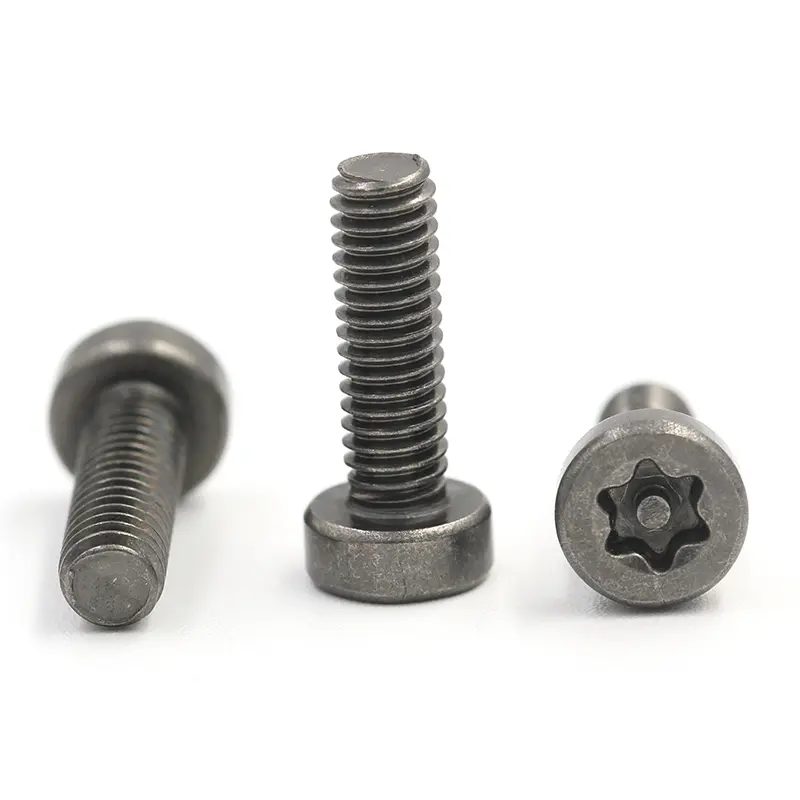
The most widely used form is the TORX® pin drive, which is a standard six-lobe recess with a pin in the centre so that an ordinary TORX® bit bottoms out on the pin instead of engaging the lobes. Tri-wing and Y-type drives achieve the same result with a three-lobed geometry. These are standardised, tool-compatible forms rather than proprietary designs, which matters for serviceability: your authorised technicians can buy the correct bit anywhere.
Drive forms
TORX® pin, Tri-wing, Y-type, and other restricted drives
Function
Restrict disassembly to authorised service
Thread
Machine thread, coarse or fine pitch
Head styles
Countersunk, pan, small pan, cheese
Materials
Stainless steel, carbon steel, titanium
Finishes
Passivation, nickel, zinc, PVD, black zinc
Design intent
Six engineering decisions that separate a micro fastener that works from one that merely fits the drawing.
A standard six-lobe recess with a central pin, so an ordinary TORX® bit cannot seat. The most common security drive in electronics.
Three-lobed recesses that require a matching driver. Used where a different level of restriction is wanted.
These are recognised drive forms, so authorised service teams can obtain the correct tool — the restriction is practical, not a lock-in.
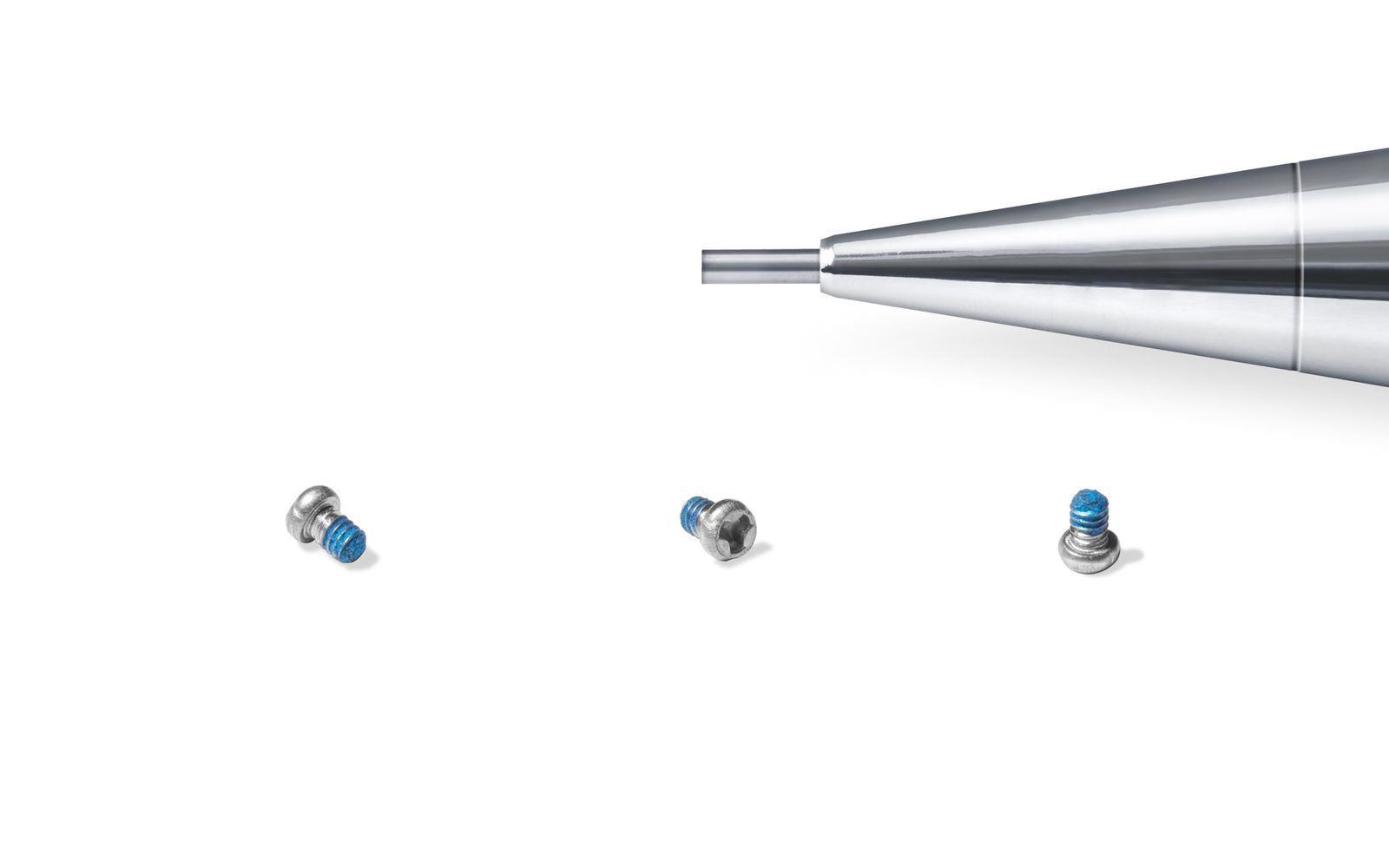
Security screws can carry the same pre-applied locking elements as standard screws, so the joint is both restricted and vibration-proof.
The same material and finish range as the rest of the catalogue, including decorative PVD where the screw is visible.
Security drives deter casual access. Where a genuine tamper-evident seal is required, the fastening design has to be considered as a system, not just a screw.
Technical data
Reference data for design and sourcing. For a specific part, the drawing governs — these tables are the starting point for a joint review.
| Drive | Geometry | Standard tool | Typical restriction level | Common use |
|---|---|---|---|---|
| TORX® pin | Six lobes with centre pin | Security TORX® bit | High — ordinary TORX® will not seat | Electronics housing, meters |
| Tri-wing | Three wings offset from centre | Tri-wing driver | High | Consumer devices, battery covers |
| Y-type | Three-lobe Y form | Y-type driver | Medium-high | Small appliance housing |
| TORX® (non-pin) | Six lobes | Standard TORX® bit | Low — standard tool fits | General high-torque assembly |
| Phillips | Cross recess | Phillips driver | None | General assembly |
Values are typical for the stated material and finish. Actual performance depends on the mating material, engagement length and assembly torque. Confirm with a sample test before design freeze.
Options
Mix these within one part number family. Where a combination is not manufacturable at your tolerance, we will say so at quotation rather than after the first lot.
Where it is used
Representative positions rather than an exhaustive list. Many of our parts are designed for one specific assembly and never appear in a catalogue.
| Assembly | Typical use |
|---|---|
| Equipment access cover | TORX® pin screws restricting who can open the housing |
| Battery compartment | Tri-wing screws on a consumer device |
| Meter and instrument case | Security screws preventing unauthorised adjustment |
| Medical device housing | Restricted drive with a sealed and locked thread |
| Robot joint cover | Security screws protecting calibration access |
| Outdoor enclosure | Security drive with a corrosion-resistant finish |
Quality control
Inspection is not a final gate. It is a set of checks placed where a process can actually drift, with the result recorded against the lot code.
01
Recess geometry and pin presence, pin gauge and vision
02
Driver engagement test with the specified security bit
03
Thread gauge, GO / NO-GO
04
Head dimensions against drawing
05
Coating thickness and appearance
06
Locking element position where applied
07
Hardness where a property class is specified
Questions
The questions our engineers answer most often on this product family.
Related products
These families are frequently used in the same assembly, or as an alternative when the joint requirement changes.
Micro Screws · M0.6 – M2
Micro machine screws that engage a pre-formed thread — a tapped hole, a brass insert or a heat-set nut — and hold their clamp load through repeated disassembly.
Micro Screws · M1.0 – M2.0
Physical vapour deposition puts a dense ceramic film on the screw in a vacuum chamber — hard enough to resist driver wear, thin enough that it does not close the thread or change the fit.
Micro Screws · From M0.8 × 1.0 mm
Screws supplied with a locking, sealing or vibration-damping element already applied — micro-encapsulated adhesive, nylon patch, sealant or damping coating, from M0.8 upward.
Send a drawing or 3D model with the mating material and finish requirement. The reply is a process route, a tolerance review and a price — with the assumptions stated.