Manufacturing in Bekasi, West Java — Indonesia ISO 9001 · IATF 16949 · ISO 14001 · ISO 45001

Micro Screws

Precoated Screws

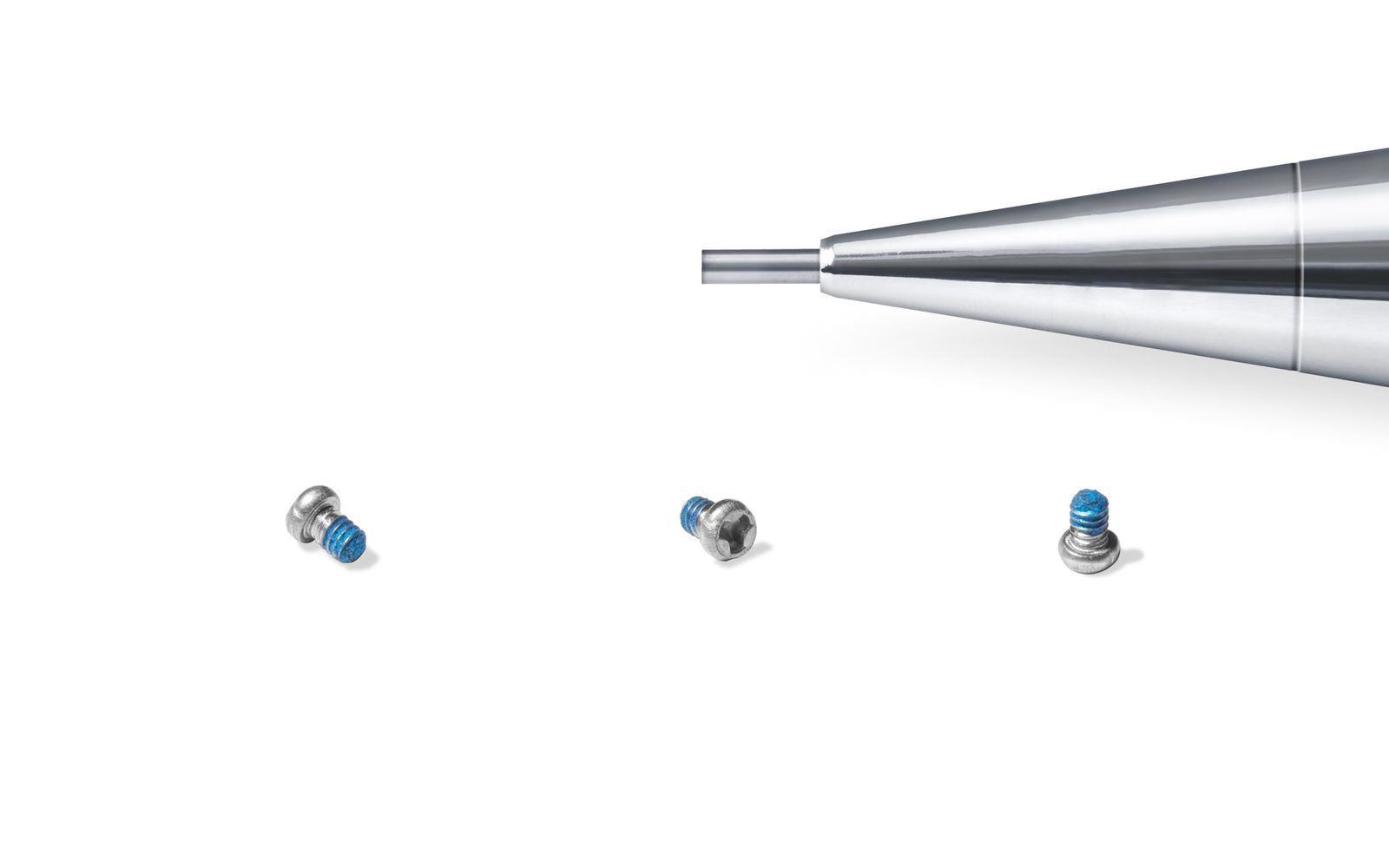
Nylon patch, micro-encapsulated adhesive and 3M tape for vibration-proof joints

Nylon patchMicro-encapsulated3M tapeVibration-proof
Micro screws with a blue nylon patch threadlocking element M0.8 – M6 · Micro Screws

Overview

Precoated Screws from M0.8 – M6

A precoated screw moves the locking operation out of your assembly line and into ours. Instead of dispensing liquid threadlocker at the station, waiting for cure and managing pot life, the line simply drives a screw that already carries the correct amount of locking material in the correct place on the thread.

We apply three families of product. A nylon patch is a fused nylon pellet that creates an interference fit and can be re-used several times. A micro-encapsulated adhesive is a dry film containing resin and hardener in separate microcapsules; it activates when the screw is driven and cures in 24 hours to a high-strength bond. A 3M tape or patch is used where a precise, thin, non-curing seal is needed. Each is applied at a controlled axial position so it sits inside the engaged thread rather than at the start of the chamfer.

Diameter range

M0.8 – M6

Locking systems

Nylon patch, micro-encapsulated adhesive, 3M tape / patch

Patch length

1.5 – 4 × pitch, positioned per drawing

Break-loose torque

0.02 – 3.5 N·m depending on size and system

Re-use cycles

Nylon patch 3 – 5, encapsulated 1 (permanent)

Cure time (encapsulated)

24 h at 23 °C, 30 min at 80 °C

Design intent

What this product solves

Six engineering decisions that separate a micro fastener that works from one that merely fits the drawing.

No dispensing at the line

Eliminates adhesive dispensers, pot-life control and operator variability — the locking element is already on the screw.

Position-controlled application

The patch or encapsulant is placed at a defined distance from the point so it engages the mating thread rather than sitting in the chamfer.

Reusable or permanent

Nylon patch gives 3–5 re-use cycles; micro-encapsulated adhesive gives a permanent, high-break-loose joint.

Sealing as well as locking

Precoat can seal against water and dust ingress in IP-rated enclosures, reducing the need for a separate O-ring.

Clean, dry process

No liquid spill, no solvent vapour and no contamination of nearby optics or electronics.

Verified break-loose torque

Every batch is sampled for first, fifth and tenth break-loose torque so the joint behaves as your specification predicts.

Technical data

Precoat selection by requirement

Reference data for design and sourcing. For a specific part, the drawing governs — these tables are the starting point for a joint review.

SystemLocking strengthRe-usableSealsCure requiredBest for
Nylon patchMedium3 – 5 cyclesPartialNoServiceable joints, adjustment screws
Micro-encapsulated (blue)Medium-highNoYes24 hVibration-prone joints, one-way assembly
Micro-encapsulated (red)HighNoYes24 hPermanent, high-security joints
3M tape / patchLow-medium1 – 2 cyclesYesNoThin sealing, low torque, delicate parts
Pre-applied dry sealNone1 cycleYesNoIP-rated enclosures, no locking needed

Values are typical for the stated material and finish. Actual performance depends on the mating material, engagement length and assembly torque. Confirm with a sample test before design freeze.

Options

Heads, drives, materials and finishes

Mix these within one part number family. Where a combination is not manufacturable at your tolerance, we will say so at quotation rather than after the first lot.

Head styles

  • Pan head — General assembly
  • Flat head — Flush panels with threadlocker
  • Cheese head — Adjustment screws with nylon patch
  • Set screw (grub) — Nylon patch on a fully threaded body

Drive types

  • Torx
  • Hex socket
  • Phillips
  • Slotted
  • Tri-wing

Materials

  • SUS304 / SUS316
  • SCM435
  • SWCH18A
  • C3604 brass
  • Aluminium 6061

Finishes

  • Zinc trivalent
  • Black oxide
  • Electroless nickel
  • PVD (patch applied after coating)
  • Passivation

Where it is used

Typical applications

Representative positions rather than an exhaustive list. Many of our parts are designed for one specific assembly and never appear in a catalogue.

Application reference by assembly position
Assembly Typical use
Robot finger linkages M1.4–M2.0 screws with blue encapsulant so joint preload survives 10⁷ cycles
Notebook hinges M2.0 nylon patch screws allowing tension adjustment after service
Drone motor mounts M3.0 encapsulated screws resisting high-frequency vibration
IP67 enclosures Pre-applied seal on M2.5 screws eliminating a separate gasket
Camera lens barrels Fine-pitch set screws with nylon patch for focus adjustment
E-bike battery packs M4.0 high-strength precoated screws for vibration and tamper resistance

Quality control

What we measure on every lot

Inspection is not a final gate. It is a set of checks placed where a process can actually drift, with the result recorded against the lot code.

01

Patch mass and position, gravimetric and optical

02

Break-loose torque, first / fifth / tenth cycle

03

Breakaway and prevailing torque per ISO 16047

04

Cure verification for encapsulated adhesive, FTIR

05

Sealing, IP68 immersion where specified

06

Adhesive coverage, UV inspection

07

Shelf life and storage trial

08

RoHS / REACH declaration

Questions

About precoated

The questions our engineers answer most often on this product family.

Still deciding? Send the assembly drawing and the service condition. We will recommend a size, finish and locking method — and tell you if a different product family is the better answer.
Nylon patch or encapsulated adhesive?
Choose nylon patch if the joint must be adjusted or serviced — it can be re-used 3–5 times and gives predictable prevailing torque. Choose encapsulated adhesive if the joint is permanent and must resist vibration and sealing; it cures after assembly and cannot be re-used.
Does precoat affect driving torque?
Yes, it increases prevailing torque, which is the point. Provide your target driving torque and we will select a patch mass that keeps driving torque inside your driver clutch range while meeting break-loose requirements.
Can precoat be applied over PVD?
Usually yes, but the patch adheres better to a blasted or primed surface than to a very smooth DLC film. We test adhesion on your actual finish before committing to a process.
What is the shelf life?
24 months from production when stored dry between 5 and 30 °C. Encapsulated adhesive is sensitive to humidity; keep cartons sealed until use.

Related products

Often specified together

These families are frequently used in the same assembly, or as an alternative when the joint requirement changes.

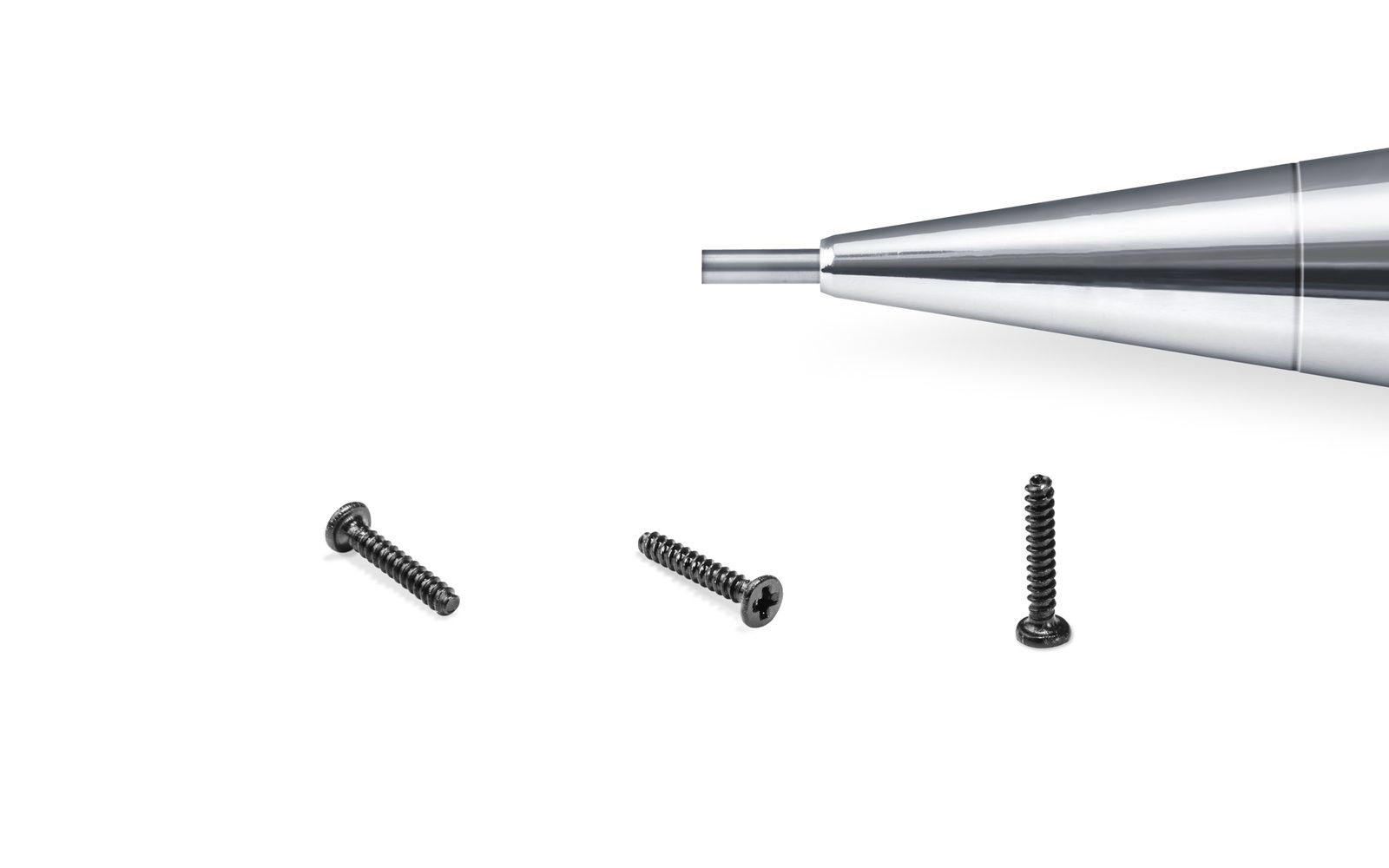
M0.8 machine thread micro screws shown beside a pencil tip for scale

Micro Screws · M0.5 – M6

Machine Thread Micro Screws

Precision machine screws from M0.5 to M6 with rolled Class 6g threads, tight head concentricity and clean drive recesses for automated driving.

Class 6g threadRolled threadStainless / carbon steel
PVD coated screws with a CD-pattern rainbow finish

Micro Screws · M0.8 – M6

PVD Coated Screws

Physical vapour deposition coatings that add 2–5 µm of hard ceramic film — for driver wear resistance, low friction and decorative black or gold finishes.

2–5 µm filmTiN · CrN · DLCHV 1800+
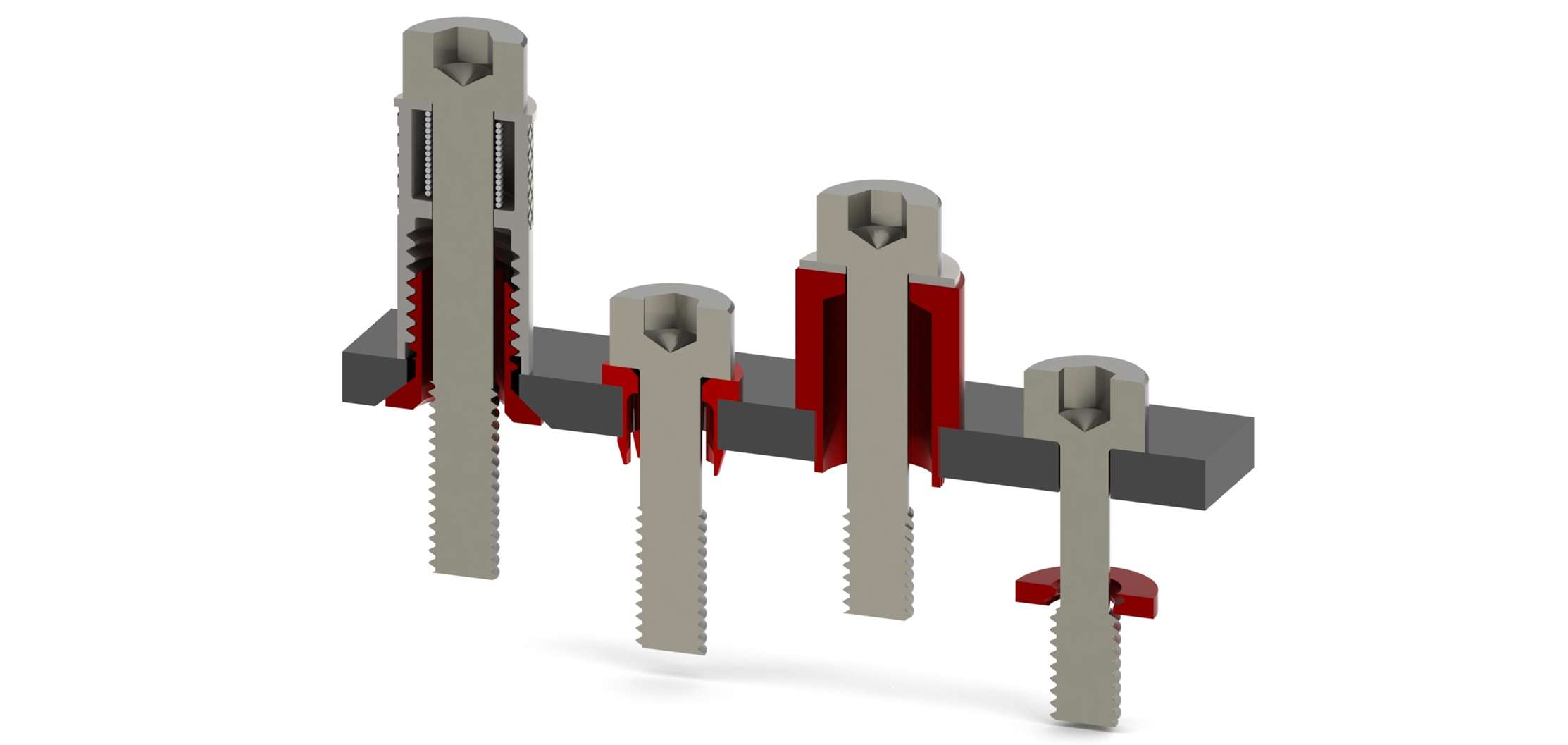
Section view of a captive screw assembly showing the spring and retaining collar

Precision Components · M2 – M6

Captive Screws

Captive panel screws that remain attached to the cover when opened — eliminating lost fasteners in field service, medical and rack-mount equipment.

Spring-loadedLost-fastener proofTool or hand
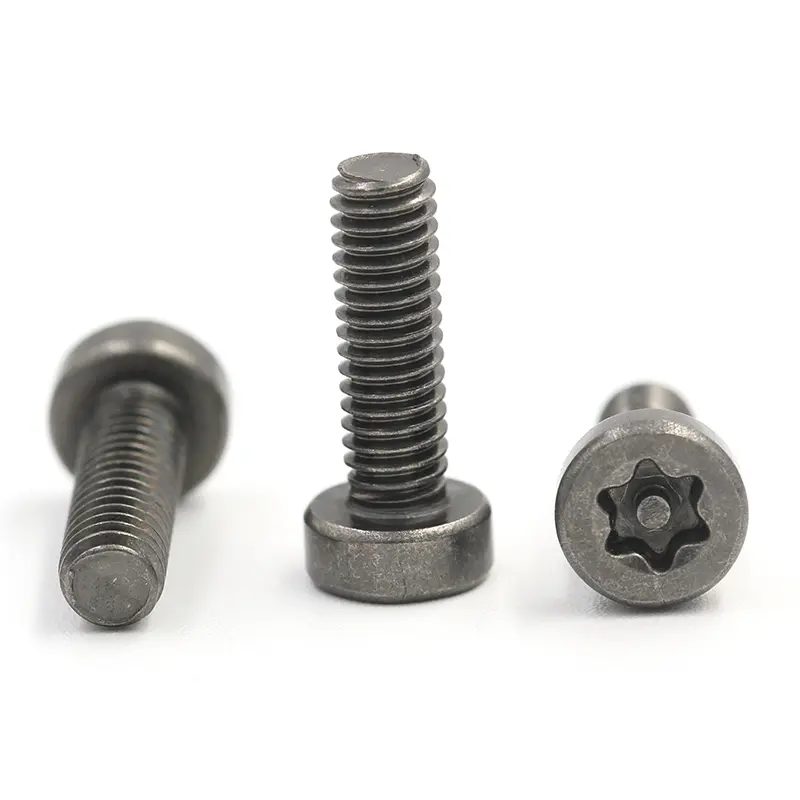
Stainless security screws with a pin in the Torx drive recess

Specialties · M0.8 – M6

Security & Tamper-Proof Screws

Tamper-resistant micro screws with pin-in-Torx, tri-wing, pentalobe and one-way drives — for products where access must be controlled or evidenced.

Pin-in-TorxTri-wingPentalobe

Need precoated to your drawing?

Send a drawing or 3D model with the mating material and finish requirement. We reply with a process route, tolerance review and price — usually within two working days.