Thread & Panel · Lightweight joints
High-Strength Aluminium Bolts
Cold-formed 7-series aluminium bolts that replace steel in magnesium and aluminium assemblies — removing galvanic corrosion and cutting fastener weight at the same time.
Industry
Lightweight joints that stay tight and do not corrode
New Energy Vehicles Why it matters
Electrification pushed vehicle structures toward aluminium and magnesium, and the fasteners did not follow quickly enough. A steel bolt in a magnesium housing creates a galvanic couple that consumes the housing, and a steel bolt in an aluminium housing loses preload as the joint heats up, because the two materials expand at different rates. Both problems come from the same source: the fastener and the structure are not made of compatible materials.
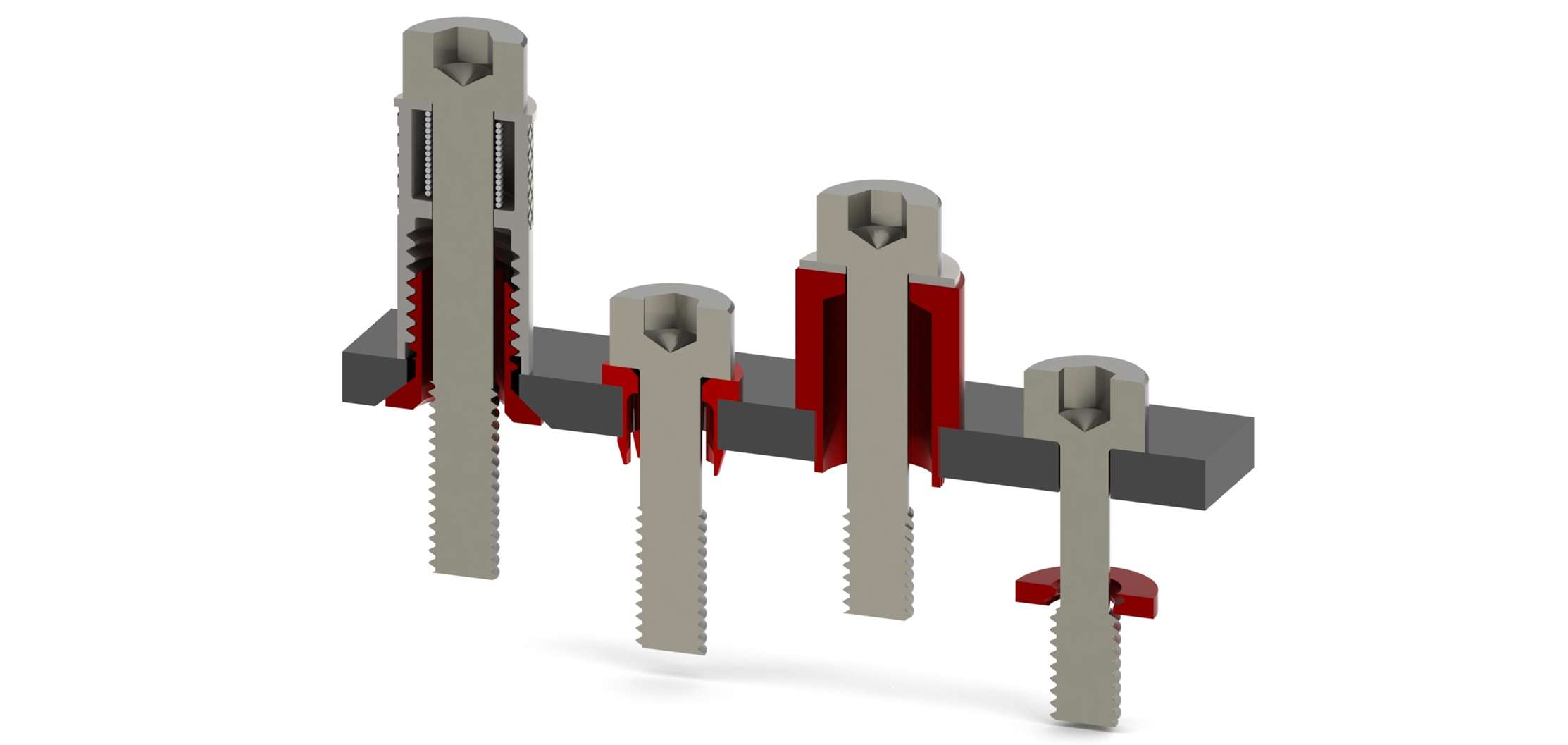
The answer is to make them compatible. A high-strength aluminium bolt is metallurgically close to the light alloy it clamps, so the corrosion driving force is very low and no isolating barrier is needed. Where a steel fastener must still be used, an anti-galvanic adhesive provides physical isolation at the interface. Around those two measures sit the rest of the range: thread inserts for light-alloy castings, sealed riveting for battery packs, and locking features for joints that see road vibration for a decade.
65%
Maximum weight saving vs steel
150 °C
Aluminium bolt service temperature
40–55%
Preload loss at 150 °C, vs >96% for steel
>8.8
Insert strength grade
Field problems
These are the failure modes we see most often, and the engineering response that addresses each one. Problems are stated as they appear on the line, not as they appear in a textbook.
| Problem observed | Engineering response |
|---|---|
| A steel bolt in a magnesium die-casting consumes the casting by galvanic corrosion. | An aluminium bolt has a small potential difference against magnesium, so the corrosion driving force is very low. Where steel must be used, an anti-galvanic adhesive on the bolt head provides physical isolation. |
| A bolted joint loses preload when the powertrain reaches operating temperature. | Steel and aluminium expand at different rates, so a steel bolt sheds preload as the joint heats. An aluminium bolt expands with the housing and retains 40–55% more of its preload at 150 °C. |
| Every kilogram of fastener mass is a kilogram off the range figure. | Aluminium is roughly one third the density of steel, so replacing steel fasteners can remove up to 65% of their mass — and the flange is formed in one piece, so the separate washer disappears too. |
| A light-alloy casting will not hold a thread through service and rework. | Thread inserts give the casting a steel or brass thread above grade 8.8, and can be replaced when worn instead of scrapping the casting. |
| A battery pack enclosure must stay watertight through years of thermal cycling. | Sealed rivet nuts and blind rivets with pre-applied adhesive on the head hold an IP68 seal at each fastener position in the pack structure. |
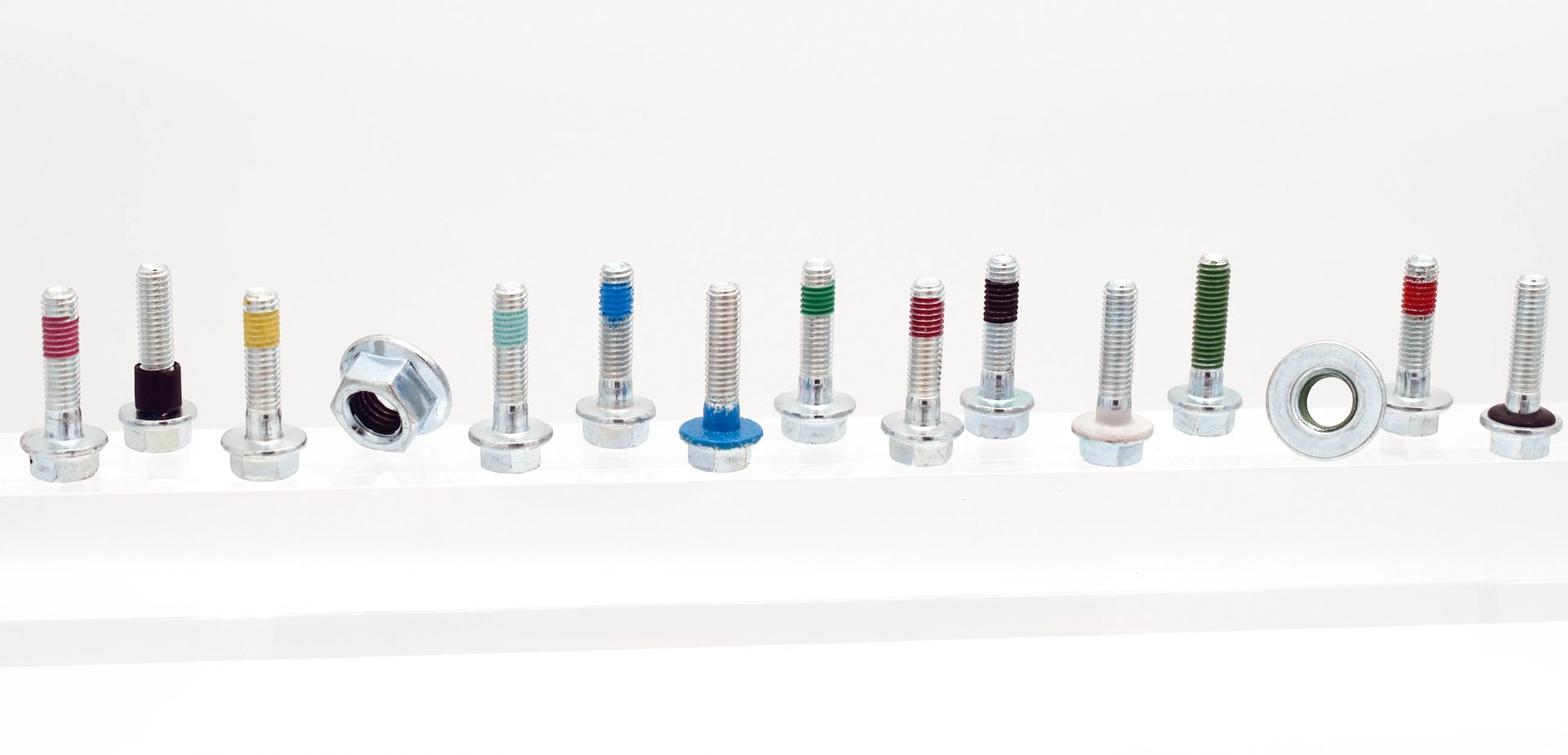
| Road vibration relaxes chassis and pack joints over time. | Pre-coated thread locking on bolts, and lock washers at the joint face, maintain preload through the vibration spectrum a vehicle actually sees. |
Specification basis
A starting specification, not a fixed menu. Most programmes adjust one or two of these after the first joint review.
Lightweight bolting
7-series high-strength aluminium bolts, 629 MPa tensile average
Galvanic protection
Anti-galvanic adhesive for steel-to-magnesium interfaces
Casting threads
Thread reinforcing inserts for magnesium and aluminium, above grade 8.8
Battery pack
Sealed rivet nuts, rivet bolts and blind rivets to IP68
Chassis and body
Clinching parts for sheet metal and thin die-castings, with grounding
Locking and sealing
Pre-coated locking compound, captive screws, sealing rings
Sleeves
Aluminium sleeves produced by cold forging plus CNC machining
Finishes
Anodising, lubricating coating, zinc-nickel, sealed coating
Recommended products
Chosen for the tolerance, finish and locking requirements typical of the assemblies described above.
Thread & Panel · Lightweight joints
Cold-formed 7-series aluminium bolts that replace steel in magnesium and aluminium assemblies — removing galvanic corrosion and cutting fastener weight at the same time.
Thread & Panel · Light alloy & plastic
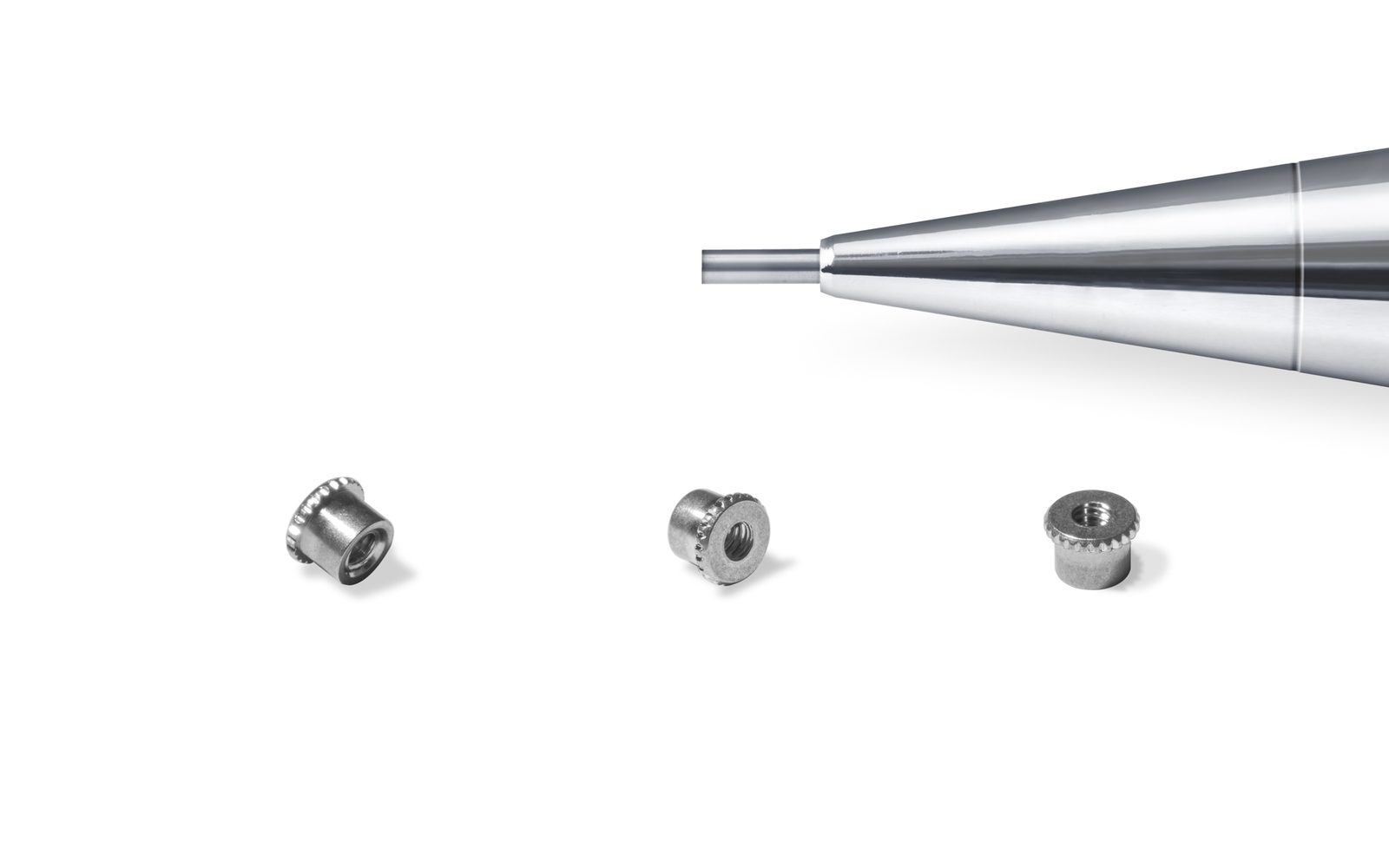
Thread inserts give a lightweight structure a thread that survives repeated assembly — wire thread inserts, self-tapping inserts and key-locking inserts for plastic, aluminium and magnesium.
Thread & Panel · One-side access
Rivet nuts and blind rivets install from the front face only, giving a threaded or permanent joint in a closed box, cabinet or duct where the back is unreachable.
Thread & Panel · Sheet metal panels
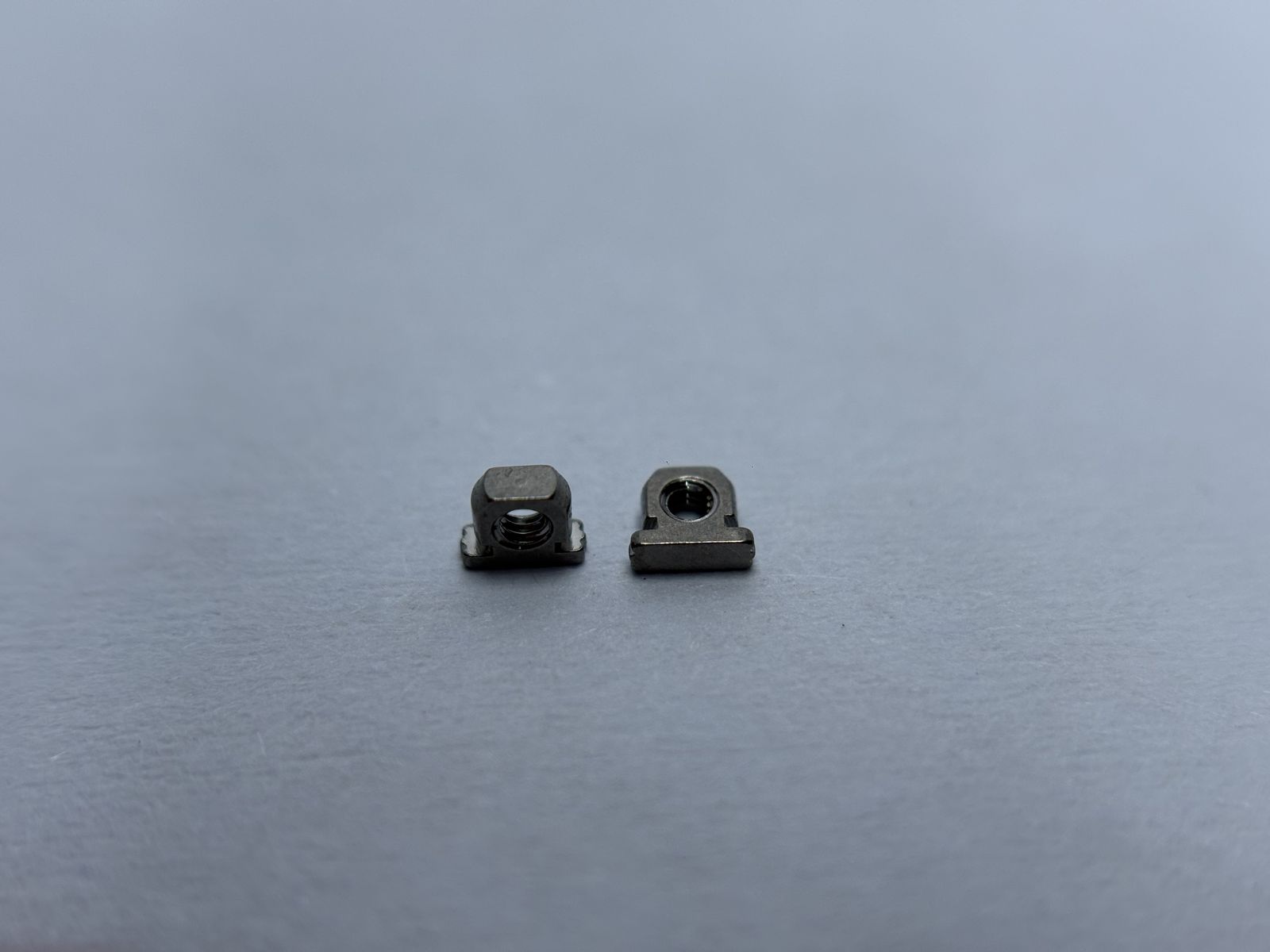
Clinching nuts, studs and grounding terminals are pressed into sheet metal with a press, giving a permanent load-bearing thread in a panel that is often thinner than the thread itself.
Thread & Panel · Joint anti-loosening
Lock washers are among the core anti-loosening fasteners for robot joints and transmission systems, holding preload where vibration would otherwise relax the joint.
Thread & Panel · Access panels & covers
Captive screws remain attached to the panel after loosening, so a cover can be removed without the fastener falling into the equipment or getting lost.
Design notes
These decisions are cheap at concept stage and expensive after tooling is cut.
01
The galvanic and thermal problems both come from a mismatch between fastener and structure. Selecting an aluminium bolt for an aluminium or magnesium joint solves both at once, and is cheaper than adding isolation and re-torque procedures.
02
A joint that holds torque on the bench can relax in service. If the assembly runs hot, the preload retention of the fastener at operating temperature is the number that matters.
03
A formed flange is part of the bolt, so there is no separate washer to be omitted, displaced or kept in stock. On a high-volume line that is a real assembly and logistics saving, not just a weight one.
04
A battery enclosure is only watertight if every penetration is sealed. Pre-applied adhesive on rivet nut and rivet heads is what holds IP68 at the fastener positions.
Joint review
A drawing gives us geometry. The mating material, the service cycles and the cleaning chemistry decide whether the joint works. Send all three and we will review the whole stack.
Questions
Answers to the questions that come up most in this industry.
Related industries
The same fastener discipline applies across these industries, with different documentation and validation requirements.
Industry
Thread rolling screws, reinforcing inserts, pre-coated sealing screws and anti-galvanic protection for magnesium and aluminium die-castings that must be joined without losing the casting.
Industry
Riveting, clinching, threaded inserts and sealed screws for control cabinets, industrial enclosures and equipment that must survive a long service life in the field.
Industry
Shoulder screws, thread inserts, high-strength screws and rod end bearings for the joints, frames and transmission systems of humanoid robots and dexterous hands.
From a single prototype joint to a PPAP production launch, the same team reviews the drawing and the assembly context.