Manufacturing in Bekasi, West Java — Indonesia ISO 9001 · IATF 16949 · ISO 14001 · ISO 45001

Industry

Light Alloy Die-Casting

Threads, seals and corrosion protection for magnesium and aluminium castings

Mg & Al castingsThread-formingIP68 sealingNo pre-tapping
Precision parts used in light alloy die-cast assemblies Light Alloy Die-Casting

Why it matters

Threads, seals and corrosion protection for magnesium and aluminium castings

A die-casting is designed for the shape, not for the thread. Wall sections are thin, draft angles dictate where material can sit, and the alloy is soft enough that a thread cut into it wears quickly. Joining a casting therefore needs fasteners that either form their own thread in the alloy, reinforce the thread that is there, or seal the hole entirely.

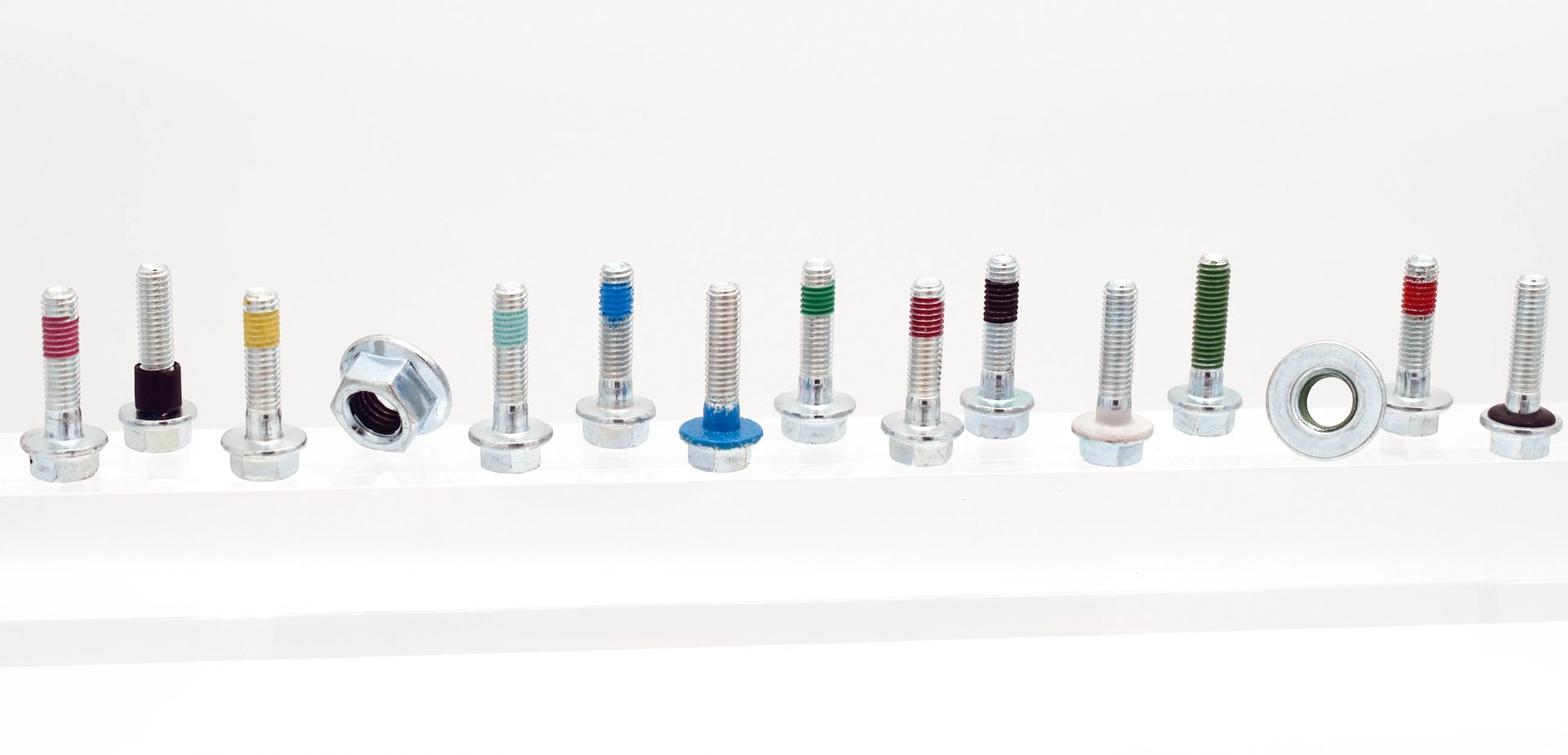
Thread rolling tapping screws are the most direct answer: only a hole has to be drilled in the casting, and the screw is driven straight in, forming its own thread as it goes. That removes the tapping operation and improves both assembly efficiency and reliability. Where the thread must survive repeated service, a reinforcing insert takes over. And where the hole is a leak path rather than a thread, a pre-coated sealing screw closes it — the coating forms a seal at the head instead of relying on an O-ring or a nylon washer, so it is simpler to install and does not tear.

IP68

Sealing with pre-coated thread

>8.8

Insert strength grade

M0.6

Smallest catalogue thread

No tap

Thread formed directly in the casting

Field problems

What actually goes wrong in this industry

These are the failure modes we see most often, and the engineering response that addresses each one. Problems are stated as they appear on the line, not as they appear in a textbook.

Failure mode and engineering response
Problem observed Engineering response
Tapping a thread in a die-casting adds an operation and a rejection risk. Thread rolling tapping screws need only a drilled hole — the screw forms the thread as it is driven, removing the tapping step and improving efficiency and reliability.
A thread in magnesium or aluminium strips after a few service cycles. A reinforcing insert provides a steel or brass thread above grade 8.8, and can be replaced without scrapping the casting.
A fastener hole in a casting is a leak path once the enclosure must be sealed. A pre-coated sealing screw forms its own seal at the head, so the sealing function moves from a separate O-ring or nylon washer to the fastener itself. That removes a part from the BOM and a failure mode from the line.
A steel bolt in a magnesium casting corrodes the casting. An aluminium bolt reduces the potential difference at the interface, and an anti-galvanic adhesive on the head provides physical isolation where a steel fastener must be used.
Thin casting walls cannot carry a deep thread. A thread-forming screw with a controlled minor diameter works within the wall the casting actually has, which is why the pilot hole and the screw are specified together rather than separately.
A casting is expensive to scrap, so a failed thread is a costly defect. Inserts and thread-forming screws both move the wear away from the casting, so the replaceable part is the fastener rather than the housing.

Specification basis

Typical requirements for this industry

A starting specification, not a fixed menu. Most programmes adjust one or two of these after the first joint review.

Direct threading

Thread rolling tapping screws — drill only, no tapping operation

Thread reinforcement

Inserts for magnesium and aluminium, above grade 8.8

Sealing

Pre-coated sealing screws; head seal instead of a separate O-ring or washer

Corrosion protection

Aluminium bolts and anti-galvanic adhesive against galvanic corrosion

Panel joining

Clinching parts for thin die-castings and sheet metal, with grounding

Locking

Pre-coated thread locking compound

Finishes

Anodising, passivation, zinc, nickel, sealed coating

Recommended products

Families we specify most in this industry

Chosen for the tolerance, finish and locking requirements typical of the assemblies described above.

Threaded inserts for plastic and light alloy assemblies

Thread & Panel · Light alloy & plastic

Thread Inserts

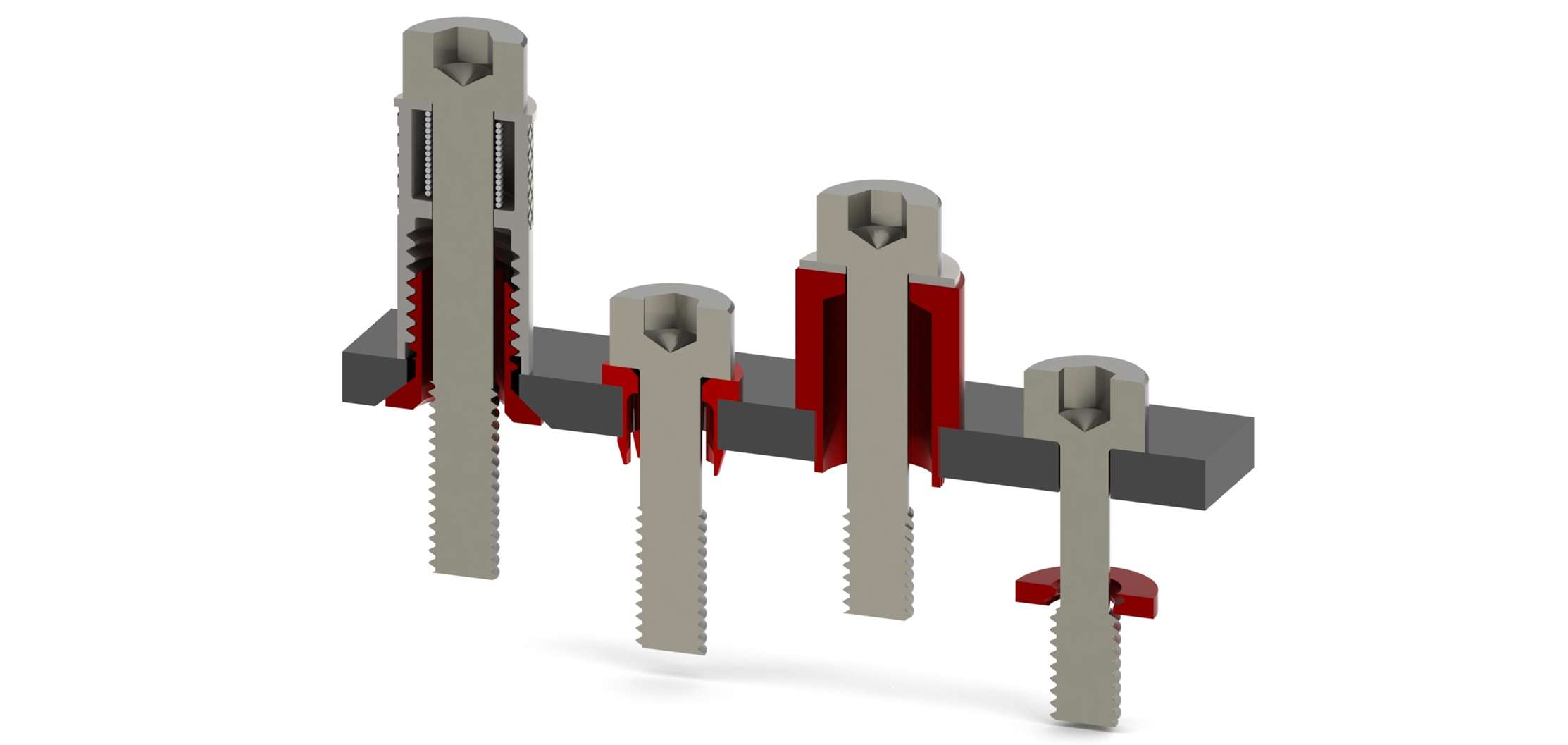
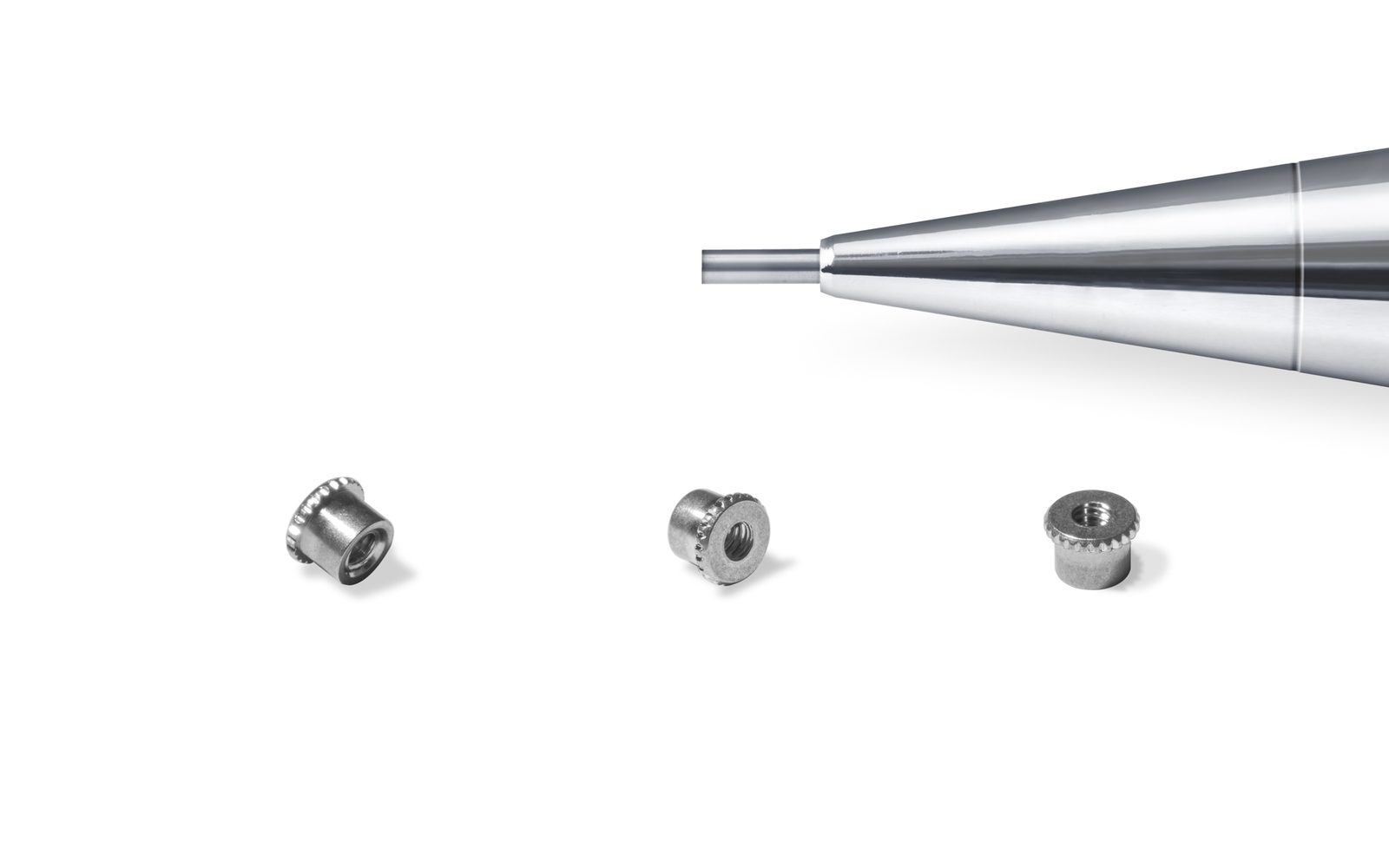
Thread inserts give a lightweight structure a thread that survives repeated assembly — wire thread inserts, self-tapping inserts and key-locking inserts for plastic, aluminium and magnesium.

Wire · self-tapping · key-lockingBrass / steel / titaniumRepeated assembly
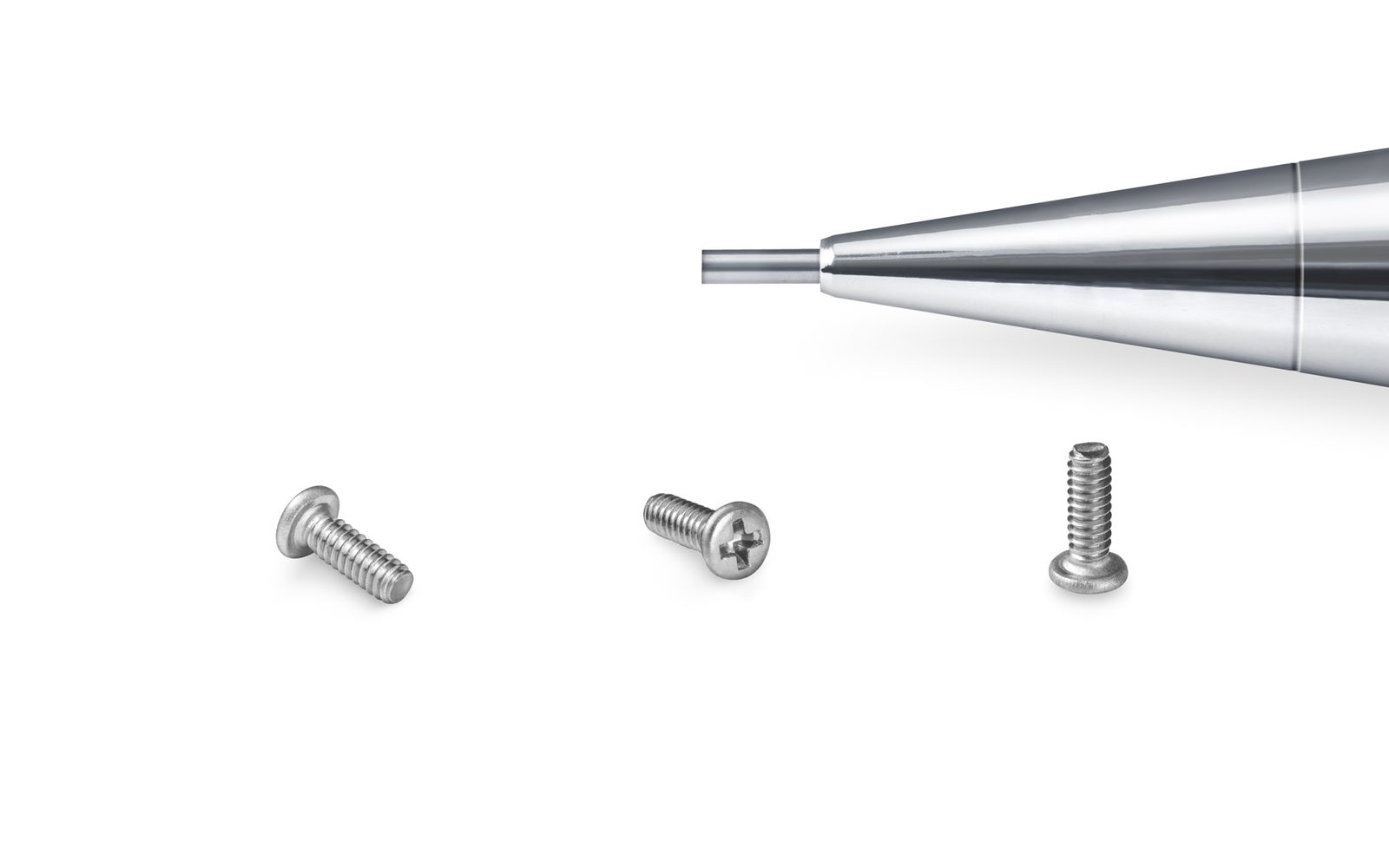
Pan head self-tapping micro screws arranged in a row

Micro Screws · M1.0 – M2.0

Self-Tapping Micro Screws

Self-tapping micro screws remove the tapping operation: the screw forms its own thread in a plain pilot hole in plastic or thin metal, so the housing needs no insert.

No insert requiredPlastic & sheet metalCase hardened
High-strength aluminium bolts in a coated finish

Thread & Panel · Lightweight joints

High-Strength Aluminium Bolts

Cold-formed 7-series aluminium bolts that replace steel in magnesium and aluminium assemblies — removing galvanic corrosion and cutting fastener weight at the same time.

629 MPa tensileUp to 65% lighterNo galvanic couple
Clinching nuts and threaded standoffs for sheet metal panels

Thread & Panel · Sheet metal panels

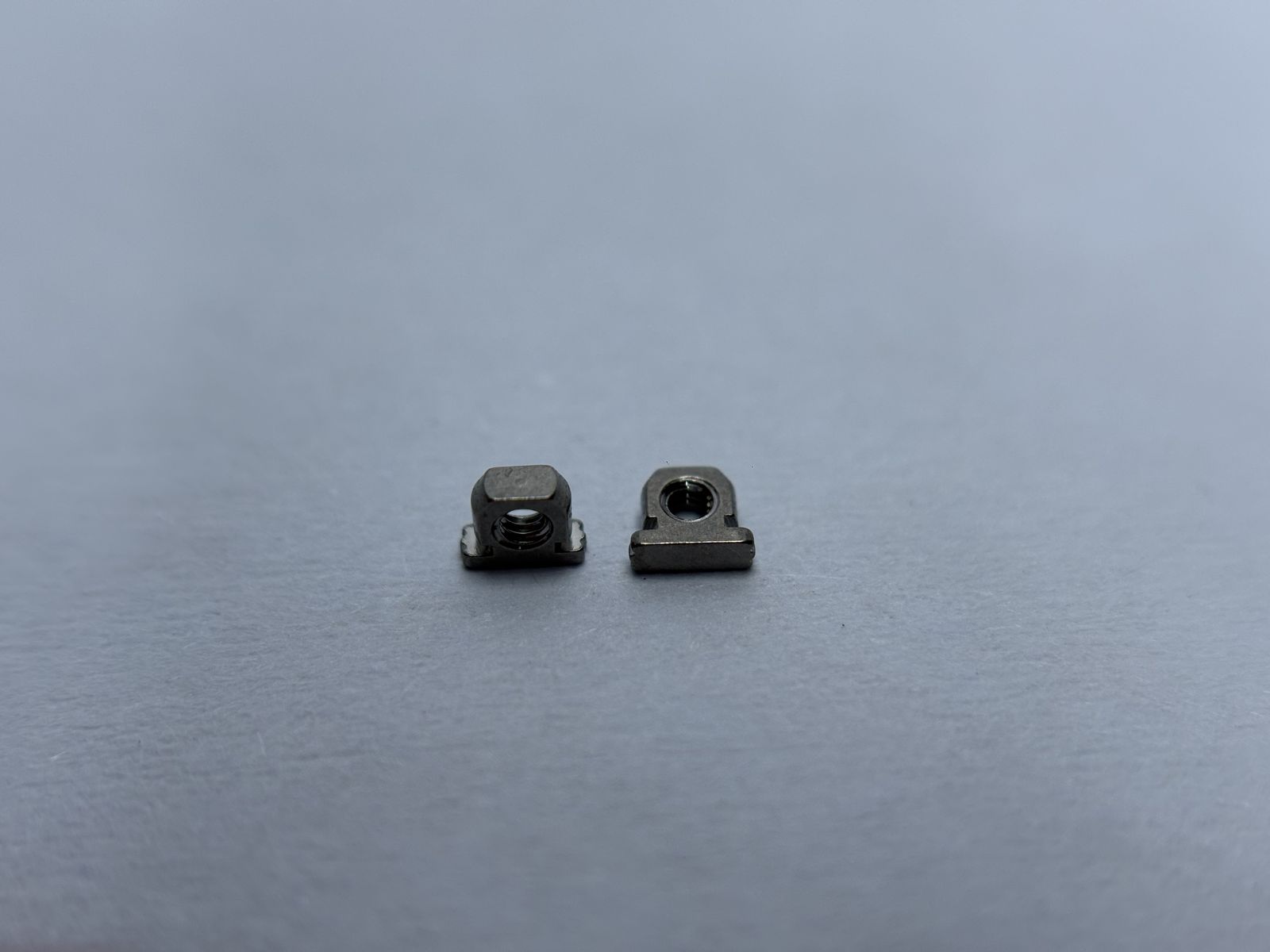
Clinching Nuts & Studs

Clinching nuts, studs and grounding terminals are pressed into sheet metal with a press, giving a permanent load-bearing thread in a panel that is often thinner than the thread itself.

Pressed installationNylon locking optionIP68 sealed variants
Rivet nuts and fasteners used in a server chassis

Thread & Panel · One-side access

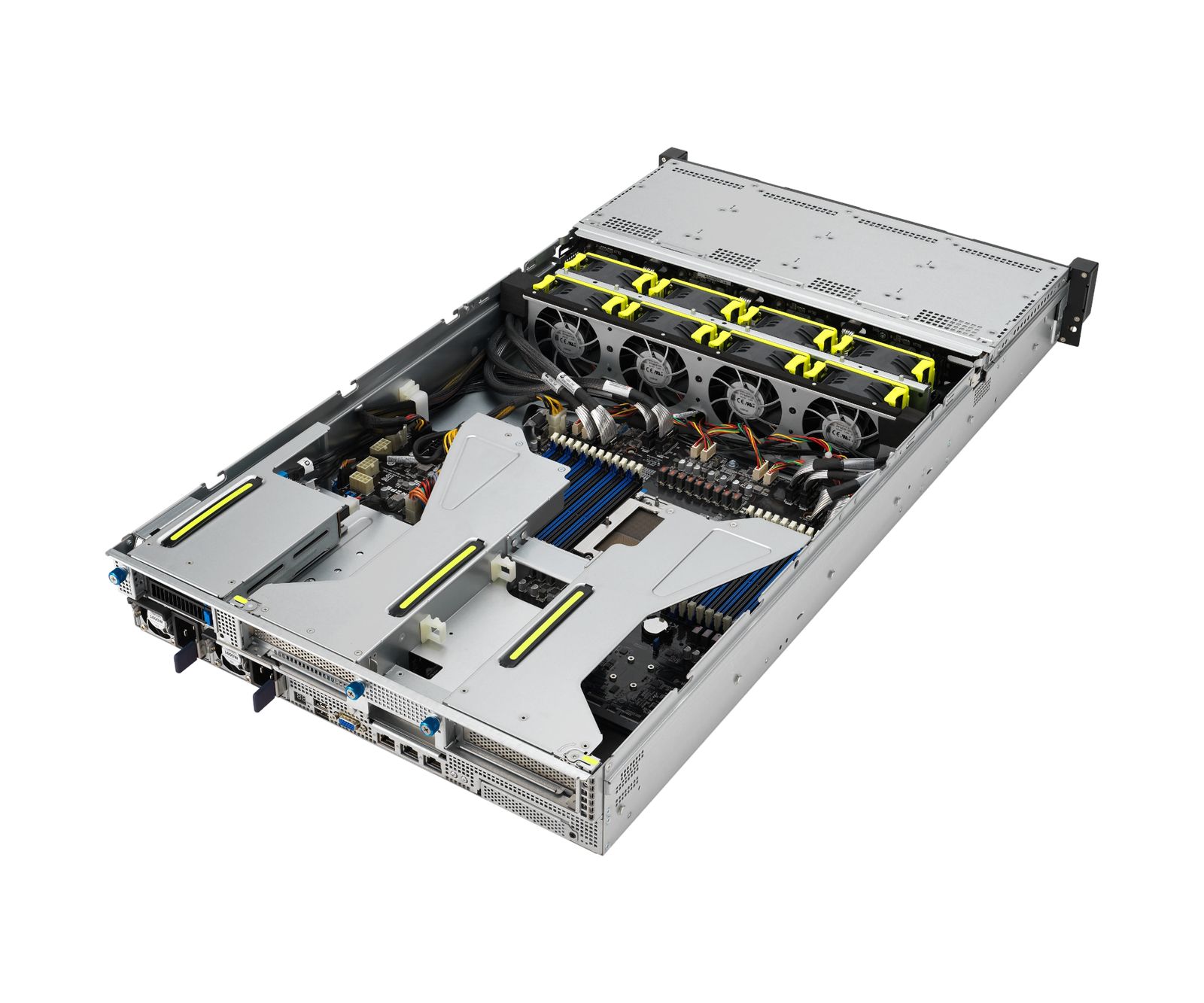
Rivet Nuts & Blind Rivets

Rivet nuts and blind rivets install from the front face only, giving a threaded or permanent joint in a closed box, cabinet or duct where the back is unreachable.

Blind installationSealed & non-sealedPre-coated locking

Design notes

Four things to get right early

These decisions are cheap at concept stage and expensive after tooling is cut.

01

Design the hole, not the thread

With a thread-forming screw the drawing controls the pilot hole and the screw controls the thread. That means the hole diameter and the wall thickness are the two dimensions that decide whether the joint works.

02

Use an insert where the joint will be serviced

A thread formed directly in the casting is adequate for a joint assembled once. Any position that will be opened repeatedly needs an insert, because the casting cannot be re-threaded economically.

03

The fastener can be the seal

A pre-coated thread puts the sealing function on the screw rather than on a separate washer. That is cheaper to assemble and removes a part that can be installed incorrectly — but it only works if the coating and the mating surface are specified together.

04

Do not mix materials without a plan

Every steel fastener in a magnesium casting is a corrosion cell waiting for moisture. Specify aluminium bolts or anti-galvanic isolation at the drawing stage, not as a field fix.

Joint review

Send us the assembly, not just the screw

A drawing gives us geometry. The mating material, the service cycles and the cleaning chemistry decide whether the joint works. Send all three and we will review the whole stack.

  • Tolerance stack and fit check
  • Torque and preload recommendation
  • Material and finish selection
  • Locking method and service strategy

Questions

Die-Casting fastening FAQ

Answers to the questions that come up most in this industry.

Have a specific joint? Send the section drawing and the service condition. We will reply with a recommended fastener and the reasoning behind it.
Can a screw be driven directly into a die-casting?
Yes — a thread rolling tapping screw only needs a drilled hole in the substrate and forms its own thread as it is driven. That is why it removes the tapping operation and improves both efficiency and reliability.
Why use a pre-coated sealing screw instead of an O-ring?
Because it removes a component. The coating forms the seal at the head, so there is no separate washer to fit, tear or install the wrong way round. For a high-volume enclosure the assembly simplification is usually worth more than the material cost.
Why do magnesium castings need special fasteners?
Magnesium is electrochemically far from steel, so a steel fastener creates a strong galvanic couple and the casting is the part that corrodes. An aluminium bolt is close to magnesium in the galvanic series and greatly reduces the driving force.
When is a thread insert better than a thread-forming screw?
When the joint will be opened more than a few times. A formed thread in the casting wears with each cycle and cannot be renewed; an insert provides a replaceable steel or brass thread at the same position.

Engineering support for die-casting programmes

From a single prototype joint to a PPAP production launch, the same team reviews the drawing and the assembly context.