Manufacturing in Bekasi, West Java — Indonesia ISO 9001 · IATF 16949 · ISO 14001 · ISO 45001

Precision Components

Threaded Inserts

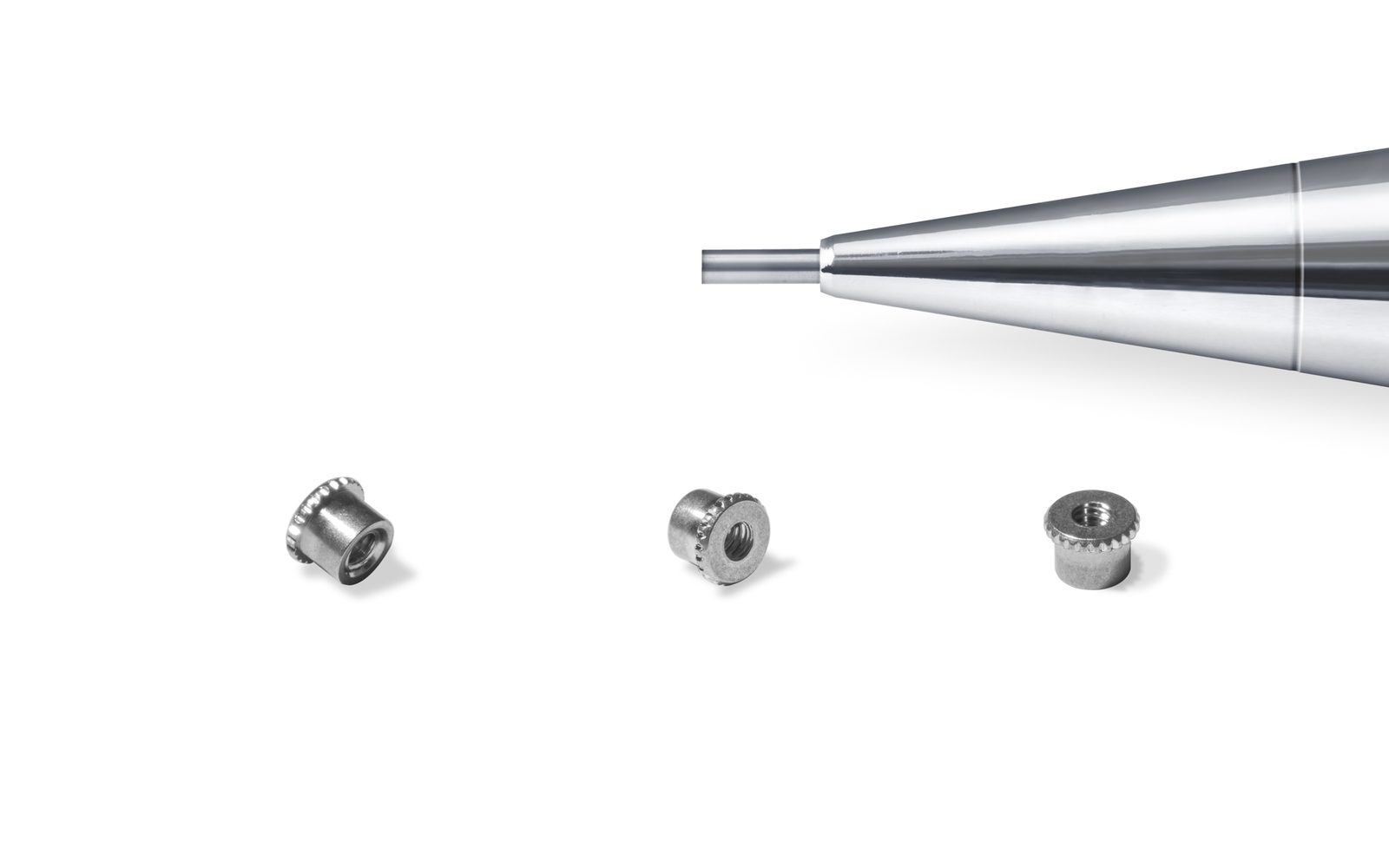
Heat-set, moulded-in and press-fit inserts for plastic housings

Heat-setMoulded-inBrass / SSPull-out tested
Brass threaded inserts for plastic housings M1 – M6 · Precision Components

Overview

Threaded Inserts from M1 – M6

Plastic threads are the weakest point of any moulded enclosure. They strip after a handful of service cycles, creep under sustained load and cannot carry real preload. A threaded insert moves the thread into metal, and the plastic only has to hold the insert — a much easier job that can be engineered with a defined pull-out and torque-out strength.

We supply heat-set inserts with a knurled or barbed outer profile, moulded-in inserts with an anti-rotation knurl, ultrasonic inserts and press-fit types. Brass is the default for heat-set because it conducts heat evenly and machines cleanly; stainless is used where corrosion resistance or higher strength is needed. Each insert design is characterised by pull-out force, torque-out and recommended hole diameter in a specified resin.

Thread range

M1 – M6

Types

Heat-set, moulded-in, ultrasonic, press-fit

Outer profile

Knurled, barbed, hex, straight knurl

Materials

C3604 brass, SUS303, SUS316

Insert length

2 – 20 mm

Hole diameter

Matched to insert and resin, ±0.05 mm

Design intent

What this product solves

Six engineering decisions that separate a micro fastener that works from one that merely fits the drawing.

Defined pull-out strength

Each insert profile is tested in a reference resin so you can design the boss around a measured pull-out force rather than a rule of thumb.

Anti-rotation geometry

Knurls, barbs or hex flats resist torque-out, preventing the insert from spinning when the screw is over-tightened.

Heat-set without cracking

Installation temperature and time windows are published per resin, so the boss softens enough to accept the insert without stress-cracking.

Moulded-in for high volume

Inserts placed in the mould eliminate the secondary heat-set operation and give the strongest retention in glass-filled resins.

Flush or protruding

Flush inserts for cosmetic surfaces, protruding inserts where a standoff function is also needed.

Thread sizes down to M1

Micro inserts for wearables and earbuds, where the wall section may be only 1.2 mm.

Technical data

Heat-set insert selection for common resins

Reference data for design and sourcing. For a specific part, the drawing governs — these tables are the starting point for a joint review.

ThreadInsert Ø (mm)Insert length (mm)Hole Ø (mm)Pull-out (N, ABS)Boss Ø (mm)
M1.02.02.51.951803.2
M1.22.43.02.352303.6
M1.63.04.02.953804.5
M2.03.65.03.555205.4
M2.54.26.04.157506.3
M3.05.07.04.951,0507.5
M4.06.59.06.451,8009.8
M5.08.011.07.952,80012.0
M6.09.513.09.454,00014.3

Values are typical for the stated material and finish. Actual performance depends on the mating material, engagement length and assembly torque. Confirm with a sample test before design freeze.

Options

Heads, drives, materials and finishes

Mix these within one part number family. Where a combination is not manufacturable at your tolerance, we will say so at quotation rather than after the first lot.

Head styles

  • Flush insert — Top face level with the plastic surface
  • Protruding insert — Adds a standoff above the surface
  • Closed-end insert — Seals the hole against debris and moisture
  • Open-end insert — Allows a screw to pass through
  • Hex body — Maximum torque-out resistance

Drive types

  • Heat-set tool
  • Ultrasonic horn
  • Moulded-in
  • Press-fit

Materials

  • C3604 brass
  • SUS303
  • SUS316
  • Aluminium (lightweight)

Finishes

  • Bare brass
  • Nickel plating
  • Passivation
  • Tin plating

Where it is used

Typical applications

Representative positions rather than an exhaustive list. Many of our parts are designed for one specific assembly and never appear in a catalogue.

Application reference by assembly position
Assembly Typical use
Notebook and tablet housings M1.6–M2.0 heat-set inserts in 1.5 mm PC/ABS bosses
Wearable and earbud cases M1.0 micro inserts in thin-wall shells
Robot cosmetic covers M3.0 inserts for repeated removal during service
Automotive interior modules Moulded-in M4.0 inserts in glass-filled PA
Medical device enclosures Closed-end M3.0 inserts for cleanability
Industrial control boxes M5.0 inserts carrying cover and earth bond

Quality control

What we measure on every lot

Inspection is not a final gate. It is a set of checks placed where a process can actually drift, with the result recorded against the lot code.

01

Insert dimensions, optical comparator

02

Hole diameter recommendation verified by trial install

03

Pull-out force, tensile tester, per lot

04

Torque-out, torque tester

05

Installation temperature profile, thermal camera

06

Boss crack inspection after installation

07

Thread gauge, GO / NO-GO

08

Plating thickness where specified

Questions

About inserts

The questions our engineers answer most often on this product family.

Still deciding? Send the assembly drawing and the service condition. We will recommend a size, finish and locking method — and tell you if a different product family is the better answer.
Heat-set or moulded-in?
Moulded-in gives the strongest retention and eliminates a secondary operation, but it adds mould complexity and risk of resin flashing into the thread. Heat-set is more flexible for lower volumes and design changes. Above roughly 100,000 units per year, moulded-in usually wins on cost.
How do I size the boss?
As a starting point, boss outside diameter should be at least 2× the insert diameter, and the wall around the insert at least 0.8 mm. We publish tested boss dimensions per resin and insert size — ask for the installation guide.
Why do inserts pull out?
Usually the hole is too large, the boss wall is too thin, or the resin was too cold during installation so the insert sheared the wall instead of melting into it. Glass-filled resins also reduce pull-out because the fibres do not flow around the knurl.
Can you install the inserts?
We supply inserts as components. For customers who prefer a finished part we can arrange installation through our moulding partners, but the standard offer is insert supply with a validated installation window.

Related products

Often specified together

These families are frequently used in the same assembly, or as an alternative when the joint requirement changes.

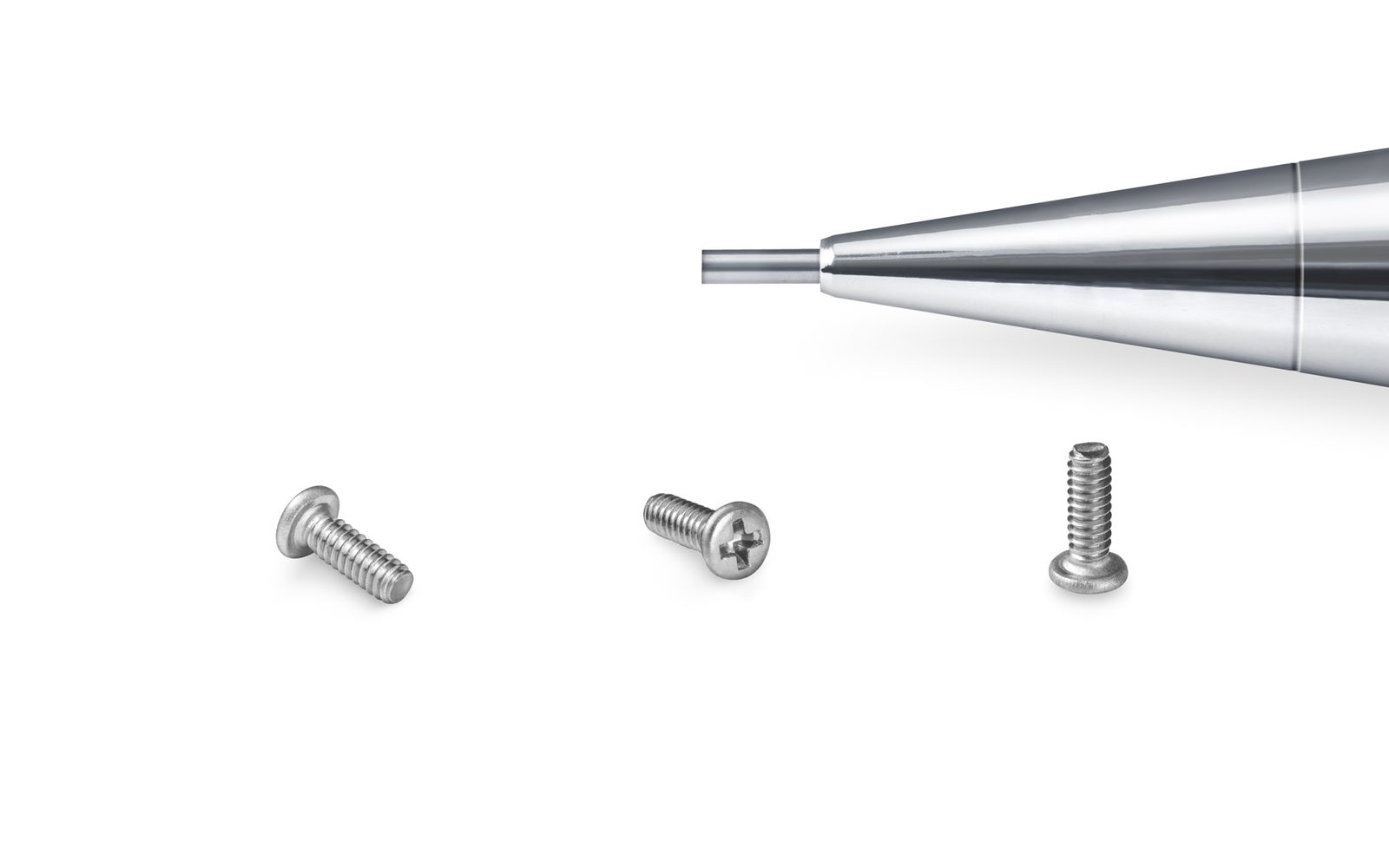
M0.8 machine thread micro screws shown beside a pencil tip for scale

Micro Screws · M0.5 – M6

Machine Thread Micro Screws

Precision machine screws from M0.5 to M6 with rolled Class 6g threads, tight head concentricity and clean drive recesses for automated driving.

Class 6g threadRolled threadStainless / carbon steel
Female-female threaded standoffs in brass and stainless steel

Precision Components · M1 – M4

Standoffs & Spacers

Male-female and female-female standoffs from M1 to M4, plus plain spacers, in brass, stainless and aluminium — with length tolerances that keep board stacks parallel.

Hex / roundBrass · SS · Al±0.05 mm length
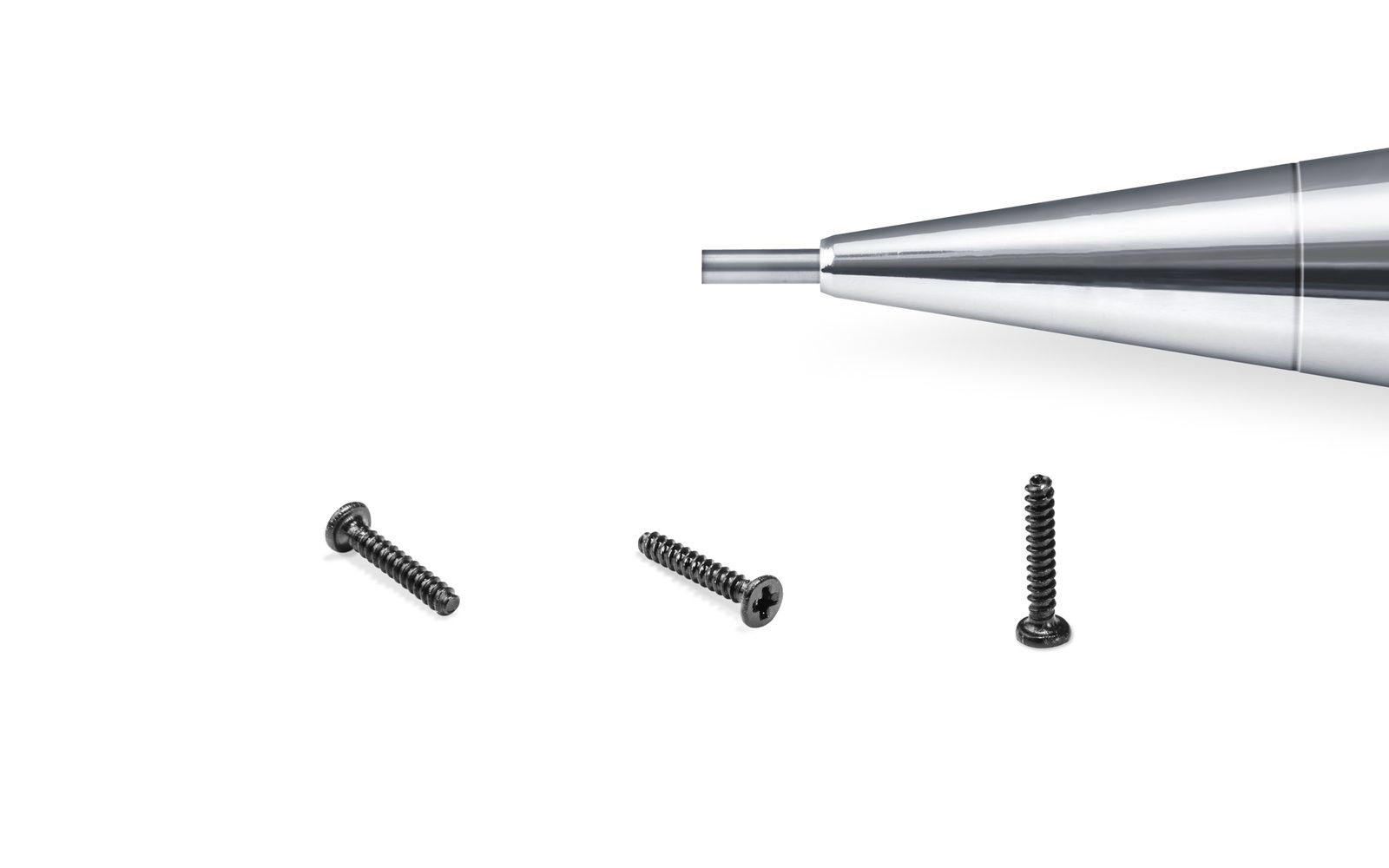
Pan head self-tapping micro screws arranged in a row

Micro Screws · M0.6 – M4

Self-Tapping Micro Screws

Self-tapping micro screws from M0.6 to M4 with controlled point geometry, engineered to form clean threads in engineering plastics without cracking the boss.

Thread formingPlastic & sheet metalSharp thread root
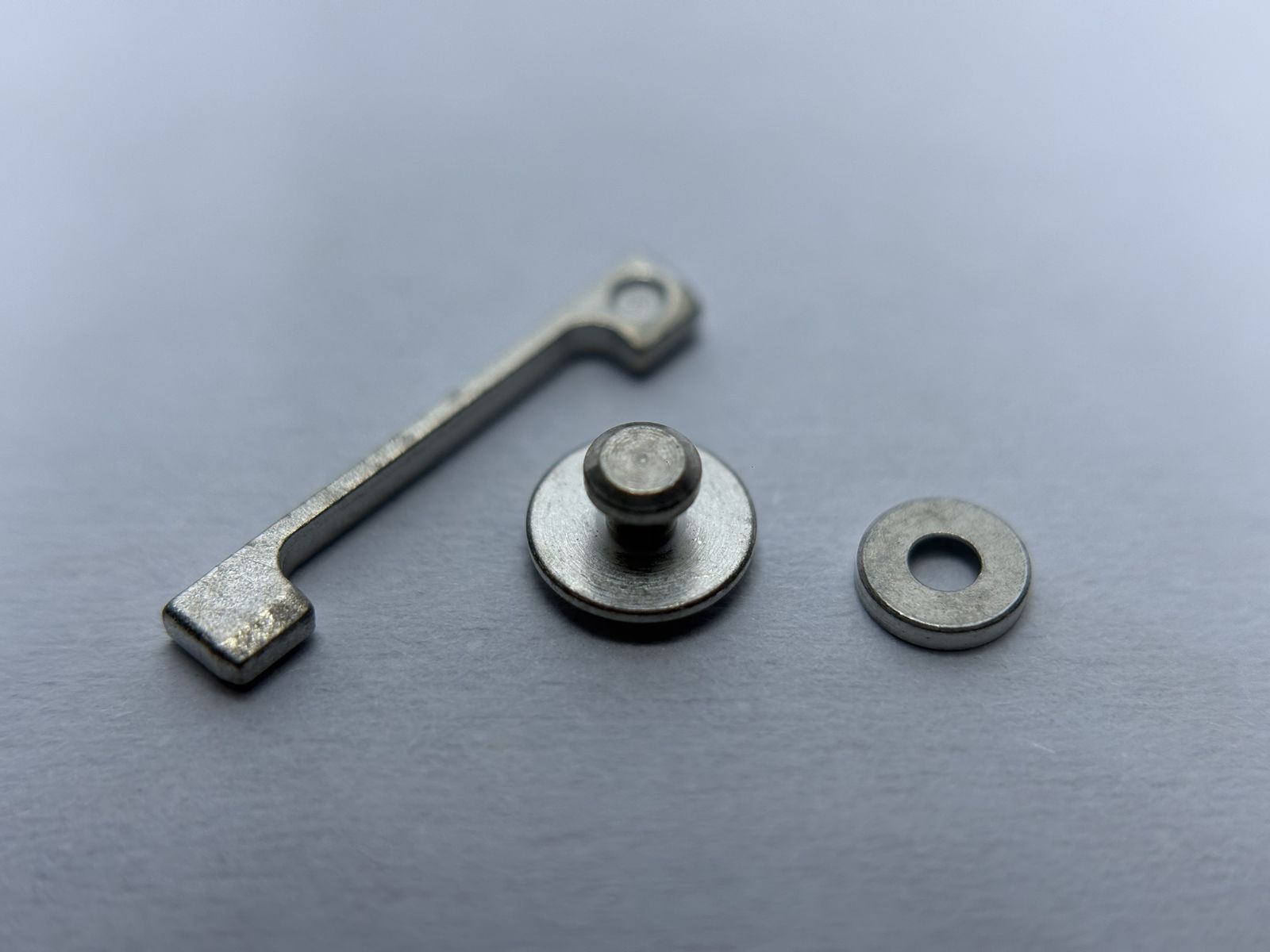
Precision stamped metal parts including clips and contacts

Specialties · 0.05 – 1.5 mm strip

Precision Stamped Parts

Progressive-die stamped parts from 0.05 to 1.5 mm strip — contacts, spring clips, EMI shields and mounting brackets produced alongside our screw lines.

Progressive dieIn-die tappingReel or loose

Need inserts to your drawing?

Send a drawing or 3D model with the mating material and finish requirement. We reply with a process route, tolerance review and price — usually within two working days.