Capability
Precoating & Patch
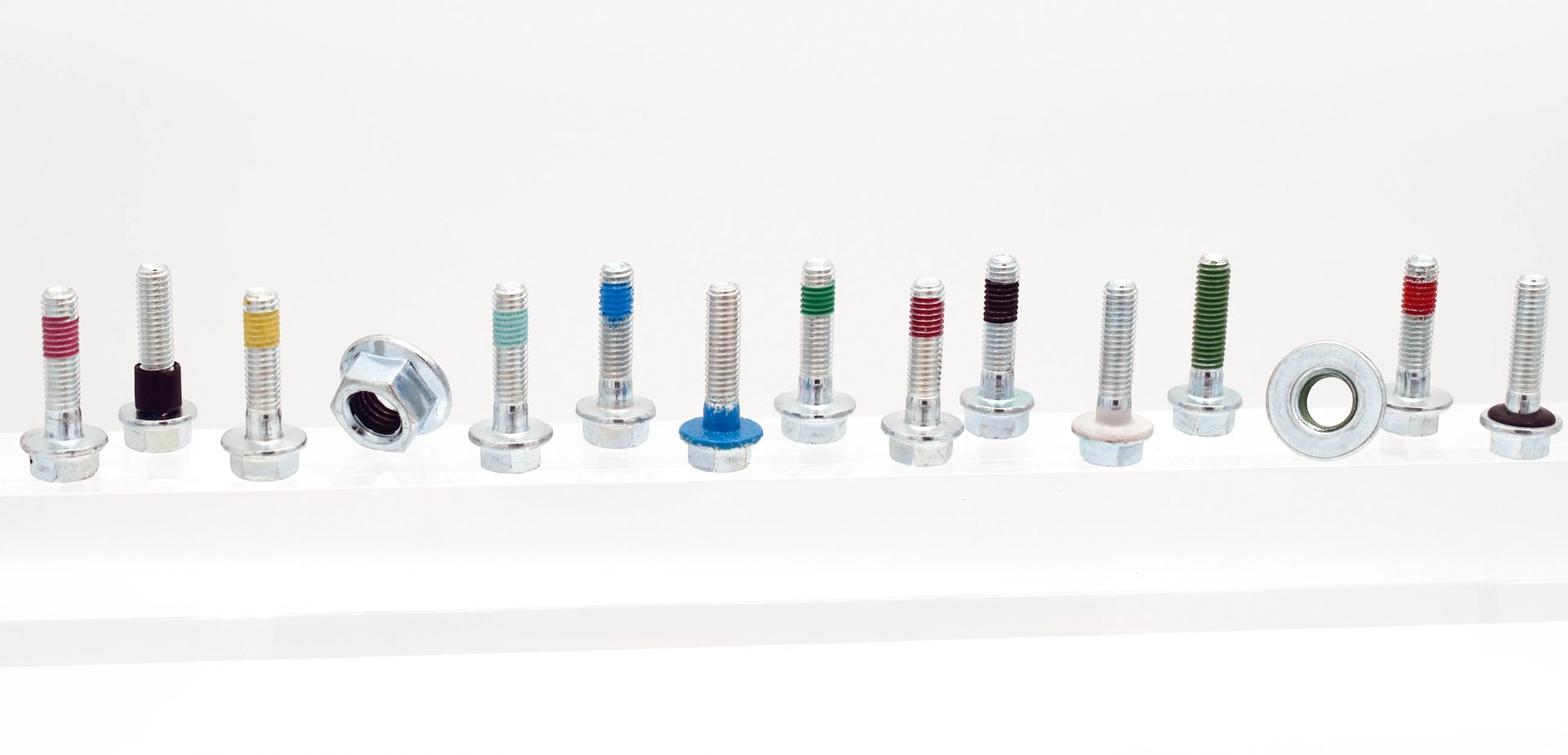
Nylon patch, encapsulated adhesive and sealing tape
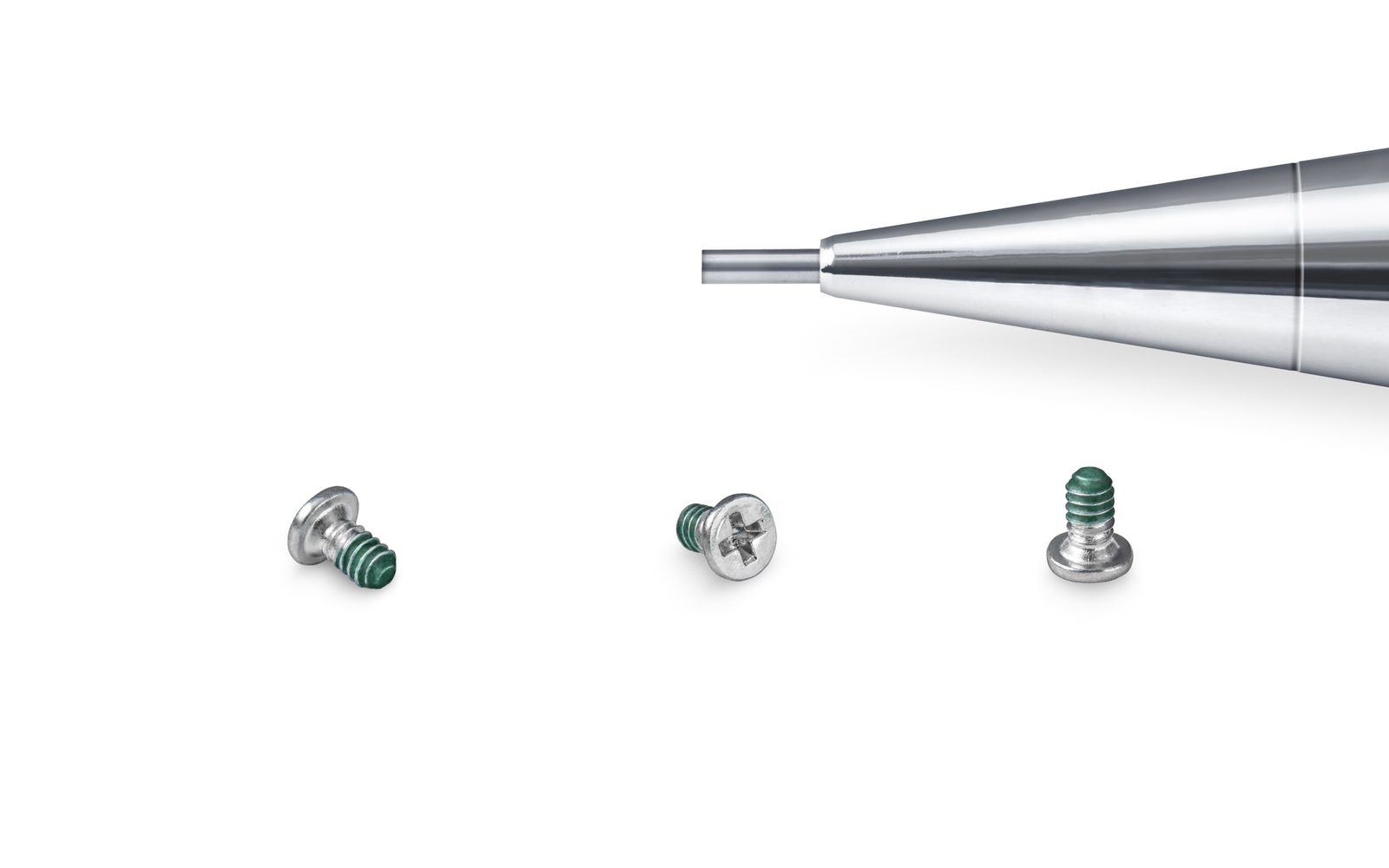 Precoating & Patch · Bekasi plant
Process overview
Nylon patch, encapsulated adhesive and sealing tape
Precoating looks like a small value-add and behaves like a process control problem. The locking element has to sit at a defined distance from the screw point, cover a defined number of threads and carry a defined mass. If it sits too close to the chamfer it does not engage; if it covers too many threads the driving torque exceeds the driver clutch and the line stops.
Our precoating cell applies nylon powder, micro-encapsulated adhesive and 3M tape or patch with position and mass controlled per part family. Each batch is sampled for first, fifth and tenth break-loose torque, and for encapsulated adhesive we verify cure and capsule distribution before release.
Step by step
How the process runs
Each step has a defined control point. The sequence is not arbitrary — changing it changes the result.
Surface preparation
Parts are degreased and, where required, primed or blasted so the patch adheres to the coating.
Positioning
Screws are oriented and indexed so the patch is applied at a fixed distance from the point, inside the engaged thread length.
Application
Nylon powder is fused, adhesive is deposited as a metered dot, or tape is applied and pressed.
Curing
Nylon is cooled and set; encapsulated adhesive is dried but not cured, so it remains dormant until assembly.
Verification
Patch mass, position and coverage are checked optically and gravimetrically; torque is tested on a sample.
Packing
Parts are packed in moisture-barrier bags with a desiccant where the adhesive is humidity-sensitive.
Specification
Process window and capability
The numbers below define what the process can hold repeatably. They are not laboratory bests.
Systems
Nylon patch, micro-encapsulated, 3M tape / patch
Patch position
1.5 – 4 × pitch from the point
Patch mass tolerance
±10%
Break-loose torque
0.02 – 3.5 N·m depending on size
Cure time
24 h at 23 °C, 30 min at 80 °C
Re-use cycles
3 – 5 (nylon), 1 (encapsulated)
Temperature range
−55 to +150 °C (nylon)
Sealing
Up to IP68 with full-length application
Shelf life
24 months, dry storage 5 – 30 °C
Colour coding
Blue, green, red, yellow
Equipment
What the line is built on
Capacity figures are per machine and assume a standard part. Complex geometry reduces throughput.
| Equipment | Specification |
|---|---|
| Nylon patch cell | Powder fusion, position-controlled, 3,000 pcs/h |
| Encapsulant dispenser | Metered dot, vision verified |
| Tape applicator | 3M tape and patch, alignment controlled |
| Torque tester | Break-loose and prevailing torque, 0.01 N·m resolution |
| Optical inspection | Patch presence, position and coverage |
| Moisture barrier packing | Desiccant and humidity indicator |
Process control
What is checked, and when
A control that is not recorded is not a control. Each item below generates a record linked to the lot code, retained for the programme duration.
01
Patch mass by gravimetric sampling
02
Patch position and coverage by vision
03
Break-loose torque, first / fifth / tenth cycle
04
Prevailing torque per ISO 16047
05
Capsule distribution and cure by FTIR
06
Adhesion on the actual coating, pull test
07
Sealing by IP68 immersion where specified
08
Shelf-life and humidity exposure trial
Questions
Precoating FAQ
Practical questions from sourcing and engineering teams.
Can precoat be applied to a PVD-coated screw?
How do I know the patch will not fall off in transit?
Does the patch affect the thread gauge?
What is the minimum order for precoating?
Related capabilities
What happens before and after
These processes are usually sequenced with the one above.
Capability
Surface Finishing
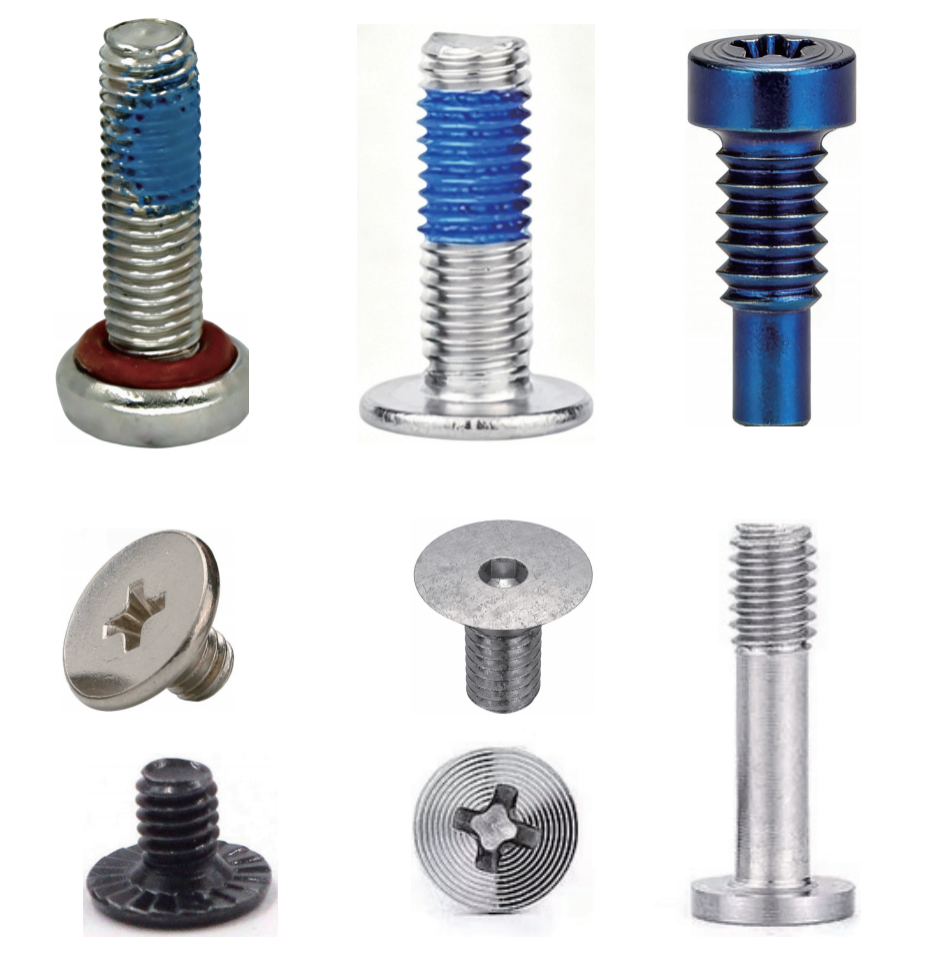
Barrel plating, passivation and PVD coating lines for corrosion resistance, conductivity and cosmetic appearance — with coating thickness verified at the thread root.
Capability
Quality Laboratory
An in-house laboratory covering dimensional metrology, hardness, torque, salt spray and material verification — so results are not outsourced and delayed.
Capability
Optical Sorting & Packaging
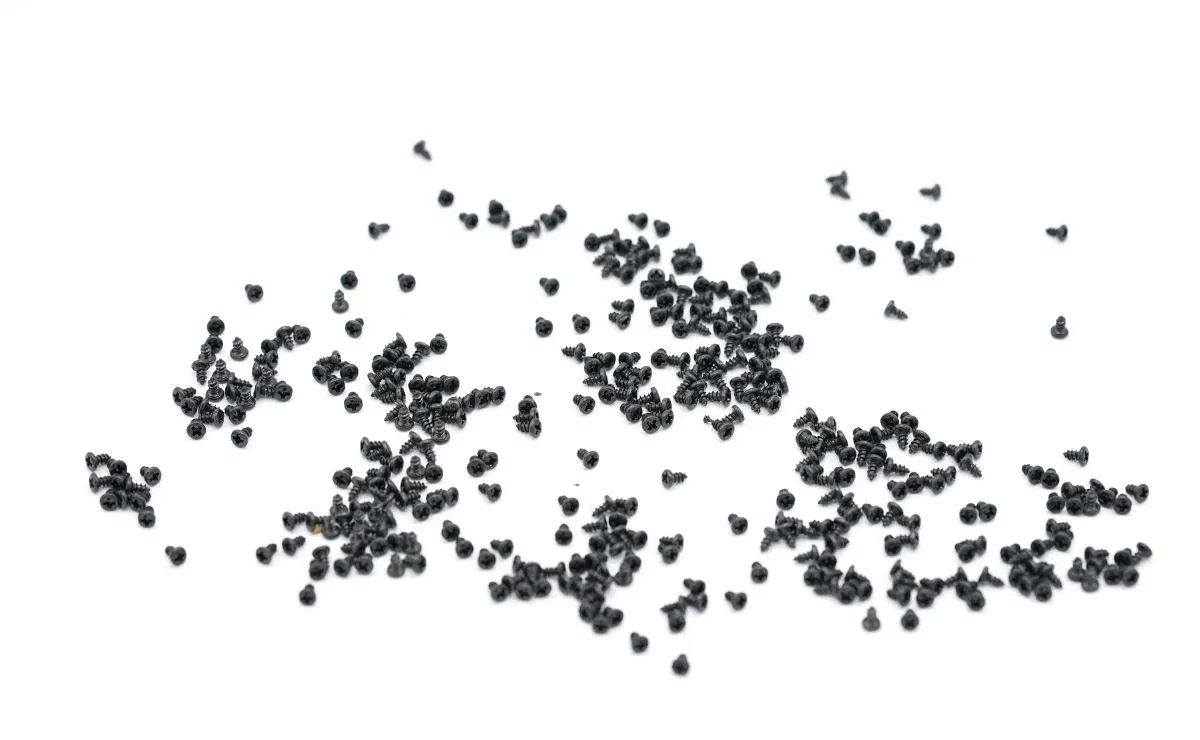
Vision-based sorting removes bent, short, mixed and defective parts before packing, with reel, tray and cleanroom bag options.

Capability
Cold Forging
Two-, three- and four-station cold heading machines form micro screw blanks from wire without cutting, preserving grain flow through the head and shank.
Need precoating for your part?
Send the drawing and the annual volume. We will confirm feasibility, tolerance and lead time in the quotation.