Manufacturing in Bekasi, West Java — Indonesia ISO 9001 · IATF 16949 · ISO 14001 · ISO 45001

Specialties

Precision Stamped Parts

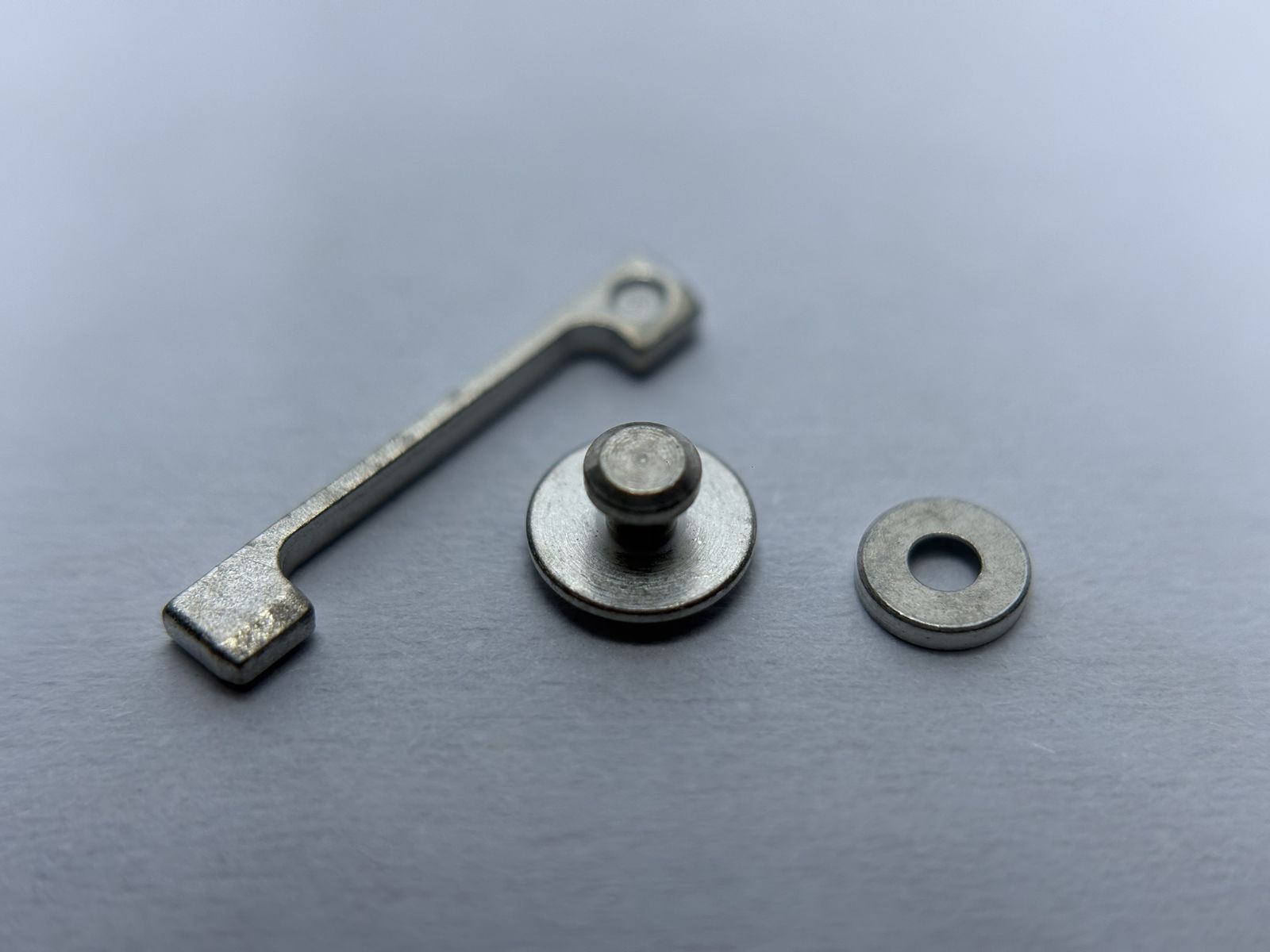
Micro stamped contacts, clips, shields and brackets in strip material

Progressive dieIn-die tappingReel or looseCpk tracked
Precision stamped metal parts including clips and contacts 0.05 – 1.5 mm strip · Specialties

Overview

Precision Stamped Parts from 0.05 – 1.5 mm strip

Many assemblies need more than a screw. A spring clip that retains a battery, a contact that carries current to a motor, a shield that keeps EMI away from an antenna — these are stamped parts, and sourcing them from the same supplier as the fasteners shortens the qualification chain and reduces the number of incoming inspections.

We run progressive dies on strip from 0.05 to 1.5 mm in brass, phosphor bronze, beryllium copper, stainless and nickel-plated steel. In-die tapping, forming, coining and selective plating are available, and parts can be delivered on reel for automated insertion or loose in bulk. Critical dimensions are tracked with Cpk on an ongoing basis rather than checked only at first article.

Strip thickness

0.05 – 1.5 mm

Part size

Up to 120 × 120 mm

Tolerance

±0.02 mm on critical features

Burr height

≤ 10% of strip thickness

Materials

Brass, phosphor bronze, BeCu, SUS301, SUS304, nickel-plated steel

Processes

Progressive stamping, forming, coining, in-die tapping, selective plating

Design intent

What this product solves

Six engineering decisions that separate a micro fastener that works from one that merely fits the drawing.

Progressive die from 0.05 mm

Fine blanking and progressive tooling handle strip as thin as 0.05 mm without burr or distortion that would affect contact resistance.

In-die tapping and forming

Threads, bends and coined features are produced in the die, eliminating secondary operations and the handling damage they cause.

Selective plating

Gold on the contact area, tin on the solder tail — plating only where it is needed keeps cost down without compromising performance.

Cpk tracked, not just inspected

Critical dimensions are monitored with process capability indices, so drift is caught before it becomes a rejected lot.

Reel or loose delivery

Taped reel for high-speed automated insertion, or loose parts in bulk for manual assembly.

Material breadth

Brass, phosphor bronze, beryllium copper, SUS301, SUS304 and nickel-plated steel for conductivity, spring temper or corrosion resistance.

Technical data

Typical stamped part families

Reference data for design and sourcing. For a specific part, the drawing governs — these tables are the starting point for a joint review.

Part familyMaterialThickness (mm)PlatingKey requirement
Battery contactsPhosphor bronze0.10 – 0.20Gold / nickelContact resistance < 20 mΩ
Spring clipsSUS3010.08 – 0.25None / tinDeflection and fatigue life
EMI shieldsNickel-plated steel0.10 – 0.30TinShielding effectiveness
Mounting bracketsSUS3040.30 – 1.00PassivationFlatness and hole position
Motor laminationsSilicon steel0.20 – 0.50Insulation coatingBurr and stacking factor
Antenna springsBeCu0.05 – 0.15GoldSpring rate and conductivity

Values are typical for the stated material and finish. Actual performance depends on the mating material, engagement length and assembly torque. Confirm with a sample test before design freeze.

Options

Heads, drives, materials and finishes

Mix these within one part number family. Where a combination is not manufacturable at your tolerance, we will say so at quotation rather than after the first lot.

Head styles

  • Flat blank — Two-dimensional part, no forming
  • Formed clip — Bent to retain a component
  • Coined contact — Local thickening for wear resistance
  • Tapped bracket — In-die tapped thread
  • Reel-to-reel plated — Selective plating on strip

Drive types

  • N/A — component part

Materials

  • C2600 brass
  • Phosphor bronze C5191
  • Beryllium copper C17200
  • SUS301
  • SUS304
  • Nickel-plated steel

Finishes

  • Gold over nickel
  • Silver
  • Tin
  • Nickel
  • Passivation
  • Anti-tarnish

Where it is used

Typical applications

Representative positions rather than an exhaustive list. Many of our parts are designed for one specific assembly and never appear in a catalogue.

Application reference by assembly position
Assembly Typical use
Battery compartments Phosphor bronze contacts with gold flash
Motor and actuator assemblies Laminations and retaining clips
PCB shielding Nickel-silver EMI cans and fence clips
Wearable charging Pogo pin contacts and spring fingers
Robot cable routing Stainless retaining clips
Panel mounting Tapped brackets combining thread and locating feature

Quality control

What we measure on every lot

Inspection is not a final gate. It is a set of checks placed where a process can actually drift, with the result recorded against the lot code.

01

First article, CMM with GD&T report

02

Critical dimensions, Cpk monitoring

03

Burr height, profile projector

04

Plating thickness, XRF

05

Contact resistance, four-wire measurement

06

Spring force, load-deflection test

07

Flatness, surface plate and indicator

08

Salt spray where specified

Questions

About stamped parts

The questions our engineers answer most often on this product family.

Still deciding? Send the assembly drawing and the service condition. We will recommend a size, finish and locking method — and tell you if a different product family is the better answer.
Can you build new tooling?
Yes. We design and build progressive dies in-house for part families up to 120 mm. Tooling is quoted separately and becomes your property after amortisation; lead time is typically 4–6 weeks for a new die.
What is the minimum order quantity?
For a new die, the economic quantity is usually 50,000 pieces or one year of demand, whichever is smaller. For parts transferred to an existing die the minimum can be much lower — ask with your drawing.
Can you stamp and assemble in one line?
Yes for simple assemblies such as contact plus spring or shield plus gasket. For multi-part assemblies we can integrate insertion and riveting into the die or into a dedicated assembly cell.
How do you control burr?
Burr direction is defined in the die layout, and burr height is held below 10% of strip thickness. For contacts where burr affects resistance, we specify a coining or shaving station and verify with a profile projector.

Related products

Often specified together

These families are frequently used in the same assembly, or as an alternative when the joint requirement changes.

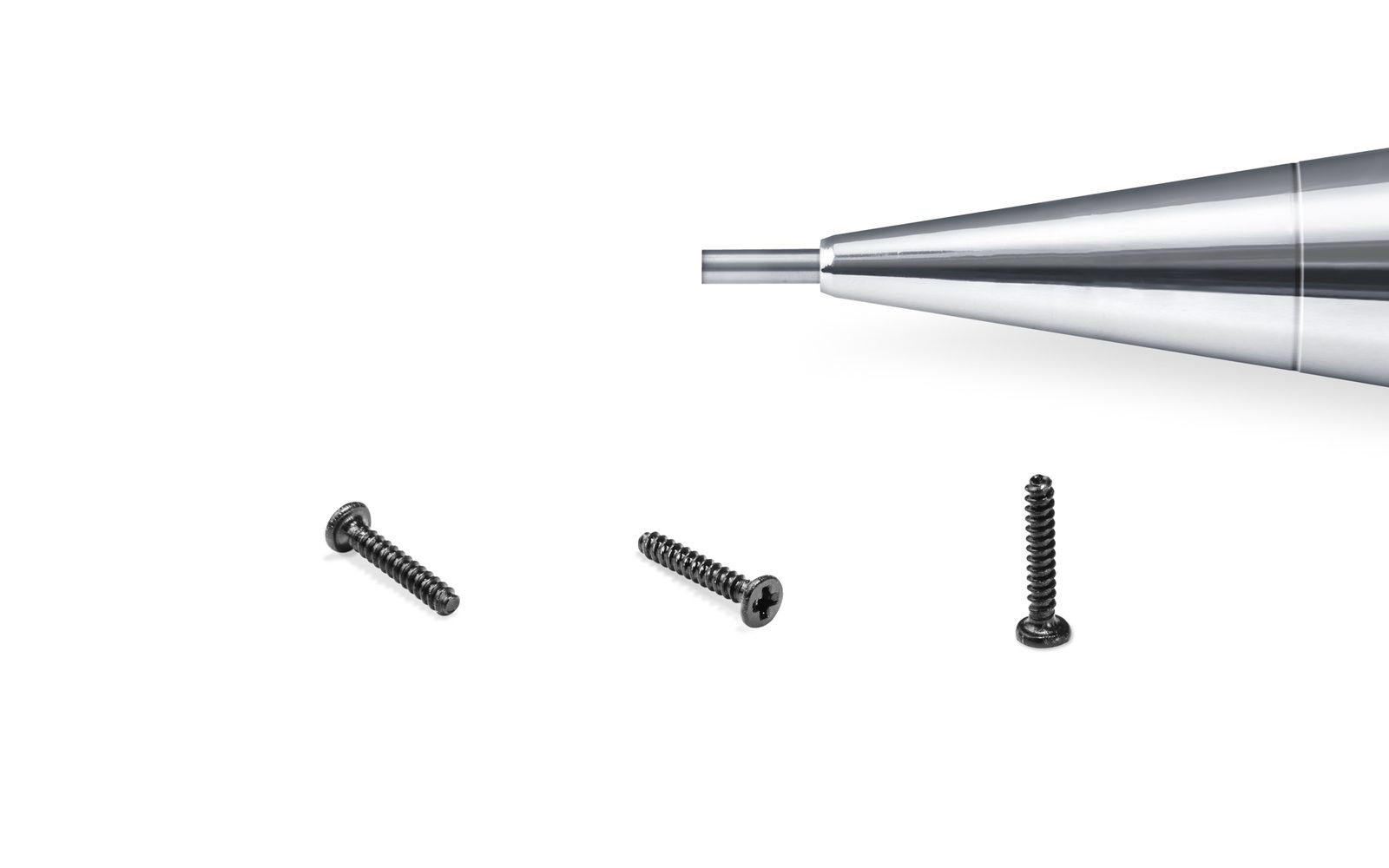
M0.8 machine thread micro screws shown beside a pencil tip for scale

Micro Screws · M0.5 – M6

Machine Thread Micro Screws

Precision machine screws from M0.5 to M6 with rolled Class 6g threads, tight head concentricity and clean drive recesses for automated driving.

Class 6g threadRolled threadStainless / carbon steel
Female-female threaded standoffs in brass and stainless steel

Precision Components · M1 – M4

Standoffs & Spacers

Male-female and female-female standoffs from M1 to M4, plus plain spacers, in brass, stainless and aluminium — with length tolerances that keep board stacks parallel.

Hex / roundBrass · SS · Al±0.05 mm length
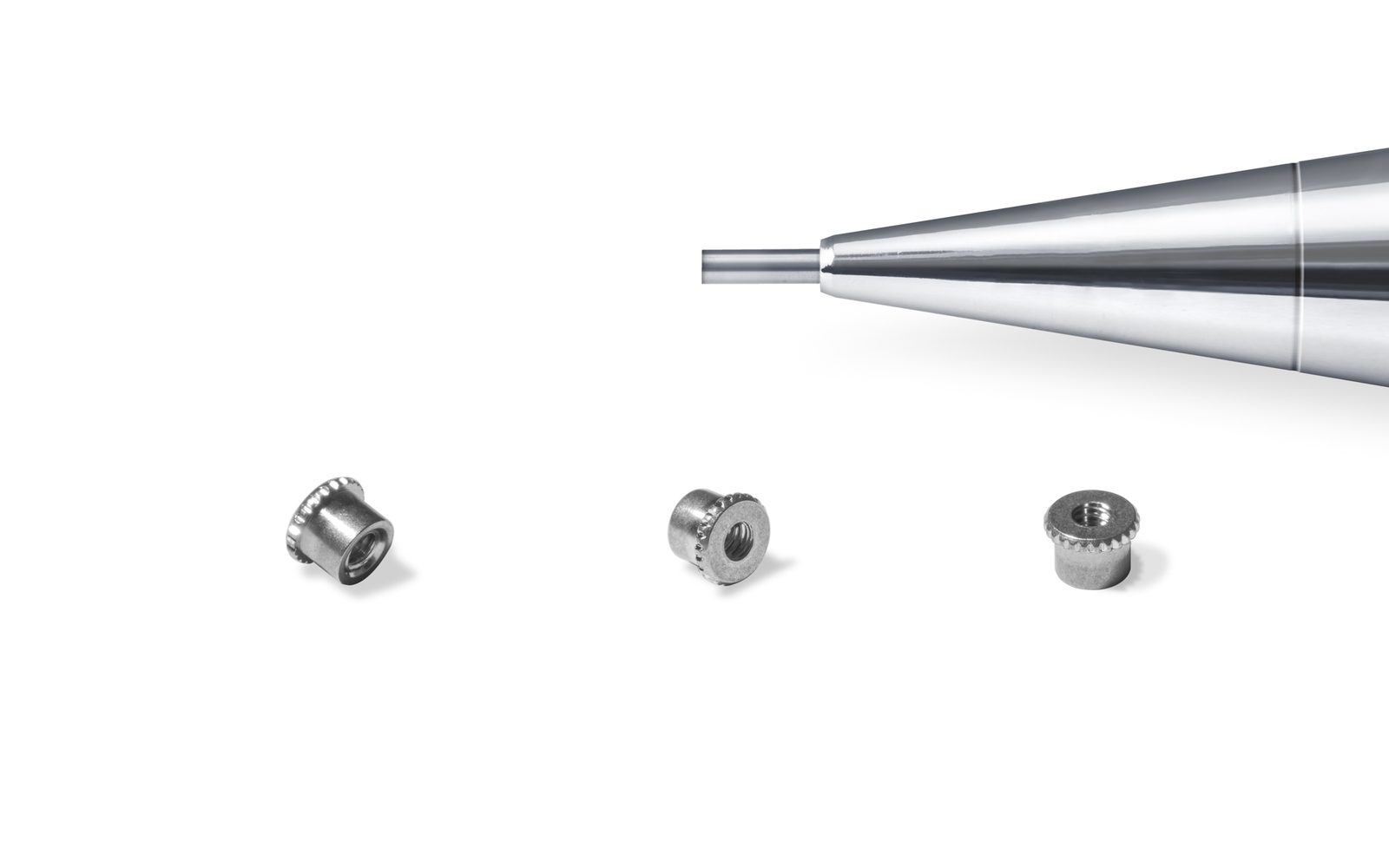
Brass threaded inserts for plastic housings

Precision Components · M1 – M6

Threaded Inserts

Brass and stainless threaded inserts that give plastic parts a durable metal thread — heat-set, moulded-in, ultrasonic and press-fit versions from M1 to M6.

Heat-setMoulded-inBrass / SS
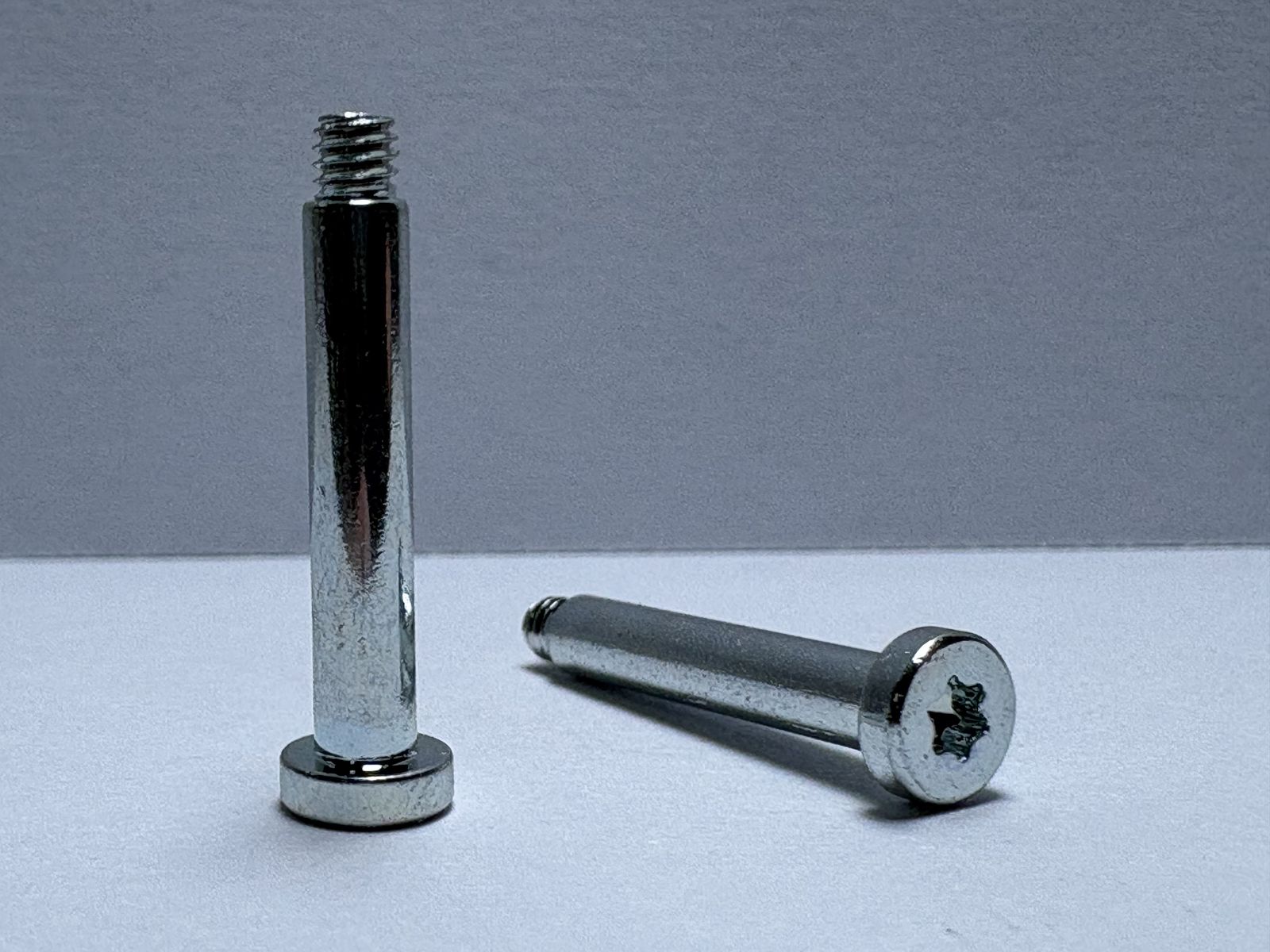
Chrome-plated shoulder screws with precision ground shanks

Precision Components · Ø1.0 – Ø10 mm

Shoulder Screws & Pins

Precision shoulder screws, dowel pins and stepped pins ground to h9 for pivot, locating and alignment duties in miniature mechanisms.

h9 ground shankPivot & locatingStainless / alloy

Need stamped parts to your drawing?

Send a drawing or 3D model with the mating material and finish requirement. We reply with a process route, tolerance review and price — usually within two working days.