Manufacturing in Bekasi, West Java — Indonesia ISO 9001 · IATF 16949 · ISO 14001 · ISO 45001

Industry

Electronics Manufacturing

Micro fasteners for consumer devices, boards and precision modules

M0.5 – M3Cosmetic finishesCleanroom packingPPAP ready
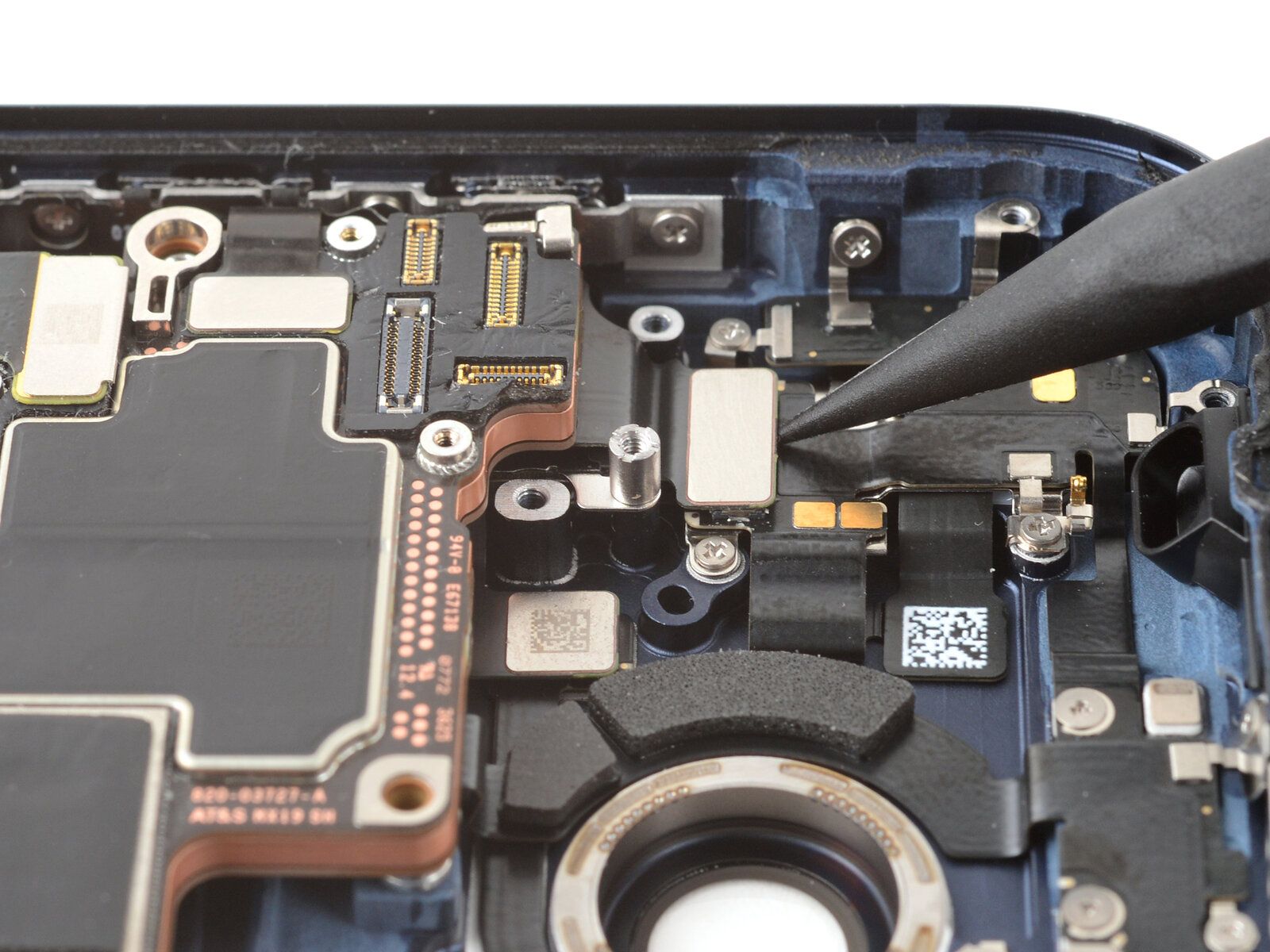
Micro screws used in smartphone assembly Electronics Manufacturing

Why it matters

Micro fasteners for consumer devices, boards and precision modules

Consumer electronics is where micro fasteners are pushed hardest. The screws are small enough that a 0.02 mm burr matters, visible enough that a colour mismatch is a defect, and produced in volumes where a single process drift becomes a million rejected parts. A phone may use 20–30 screws, a notebook 40–60, and each position has its own head height, drive and finish requirement.

We build to electronics conventions: PPAP documentation, first article inspection reports, Cpk on critical dimensions, cleanroom-compatible packing and full material declarations. The same plant that forges the screw also runs the PVD line and the optical sorter, so finish and dimensional control are not handed off between suppliers.

M0.5

Smallest diameter produced

±0.03

Head diameter tolerance (mm)

100%

Optical sorting before packing

1 day

Typical prototype lead time

Field problems

What actually goes wrong in this industry

These are the failure modes we see most often, and the engineering response that addresses each one. Problems are stated as they appear on the line, not as they appear in a textbook.

Failure mode and engineering response
Problem observed Engineering response
Screws drop or jam in automated drivers because the head is not concentric to the shank. Head-to-shank concentricity held within 0.03 mm, verified by vision on every production lot.
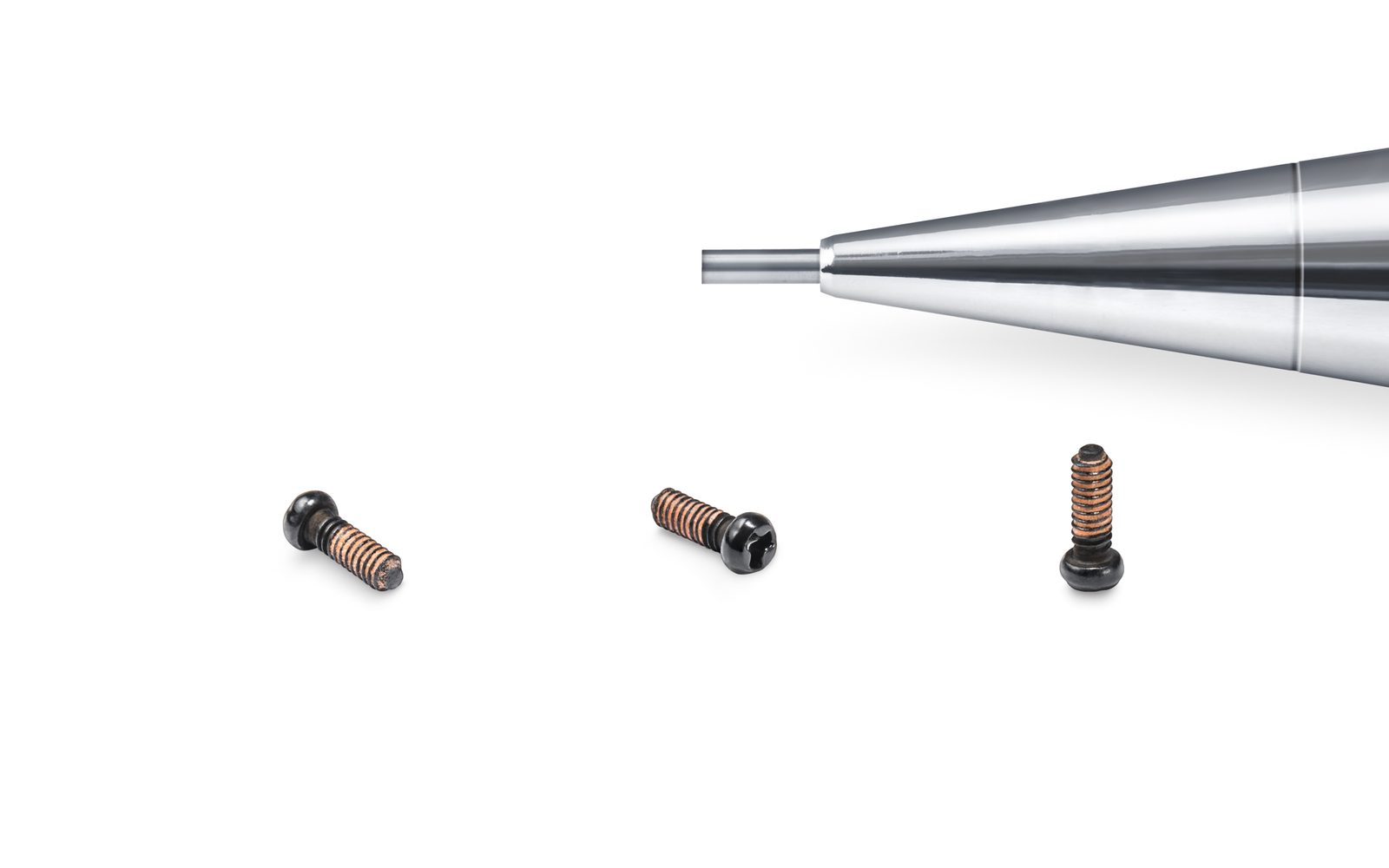
Cosmetic black screws show colour variation between lots on a visible external surface. DLC or matte black PVD applied in-house against a retained master chip, with spectrophotometer verification per batch.
Drive recess deforms after repeated automated engagement, causing cam-out and line stoppage. Punch geometry dressed on a fixed interval, recess depth gauged, optional TiCN coating for high-cycle lines.
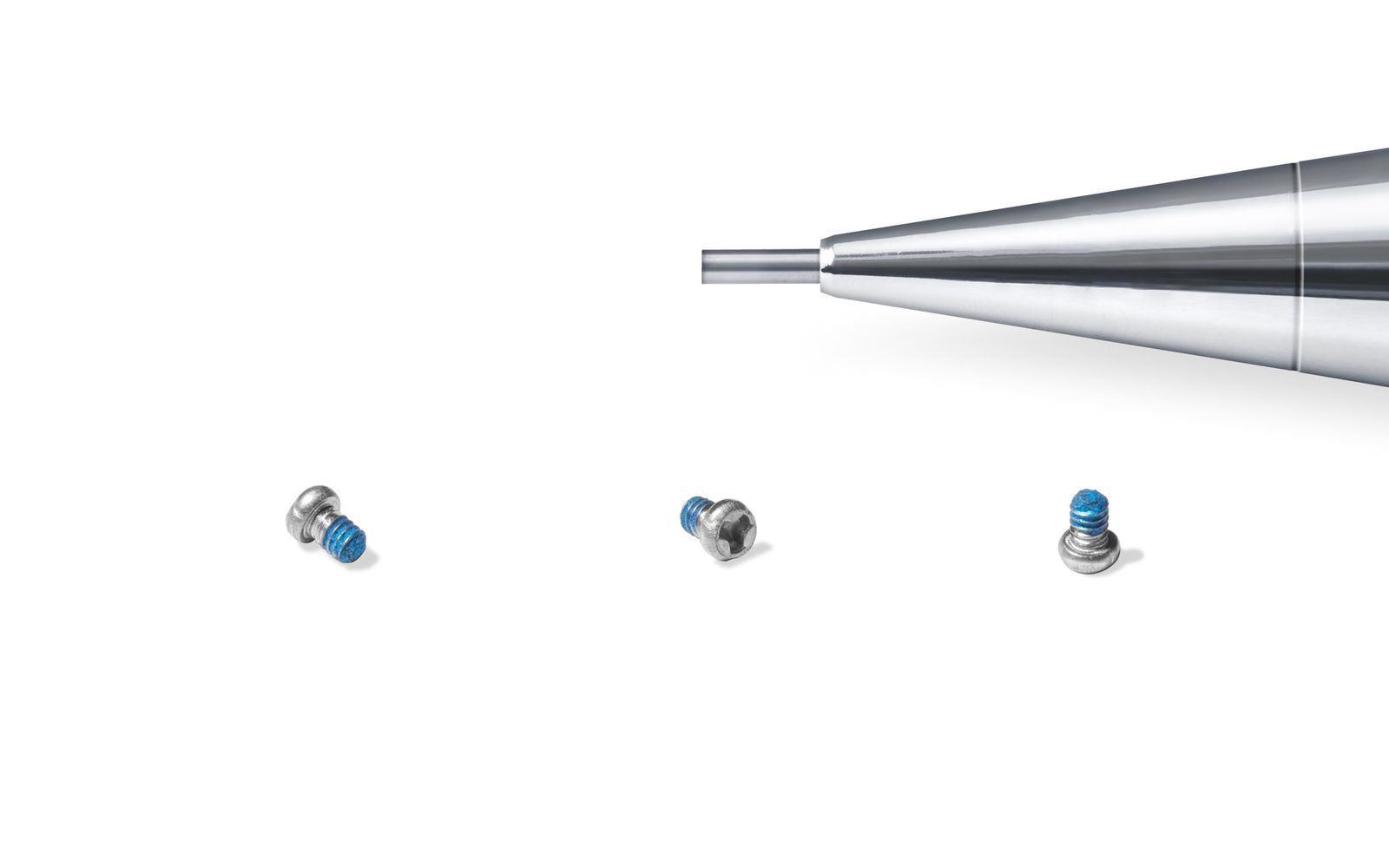
Threadlocker applied at the line varies in volume and contaminates nearby optics. Factory-applied nylon patch or encapsulated adhesive at a controlled axial position, eliminating line dispensing.
Incoming inspection finds mixed sizes in a reel, stopping the line. 100% optical sorting by head diameter and length, with reel-level lot traceability.
A last-minute design change requires a new screw length before the next build. In-house tooling and a one-day prototype cell for lengths and head variants within the existing diameter family.

Specification basis

Typical requirements for this industry

A starting specification, not a fixed menu. Most programmes adjust one or two of these after the first joint review.

Diameter

M0.5 – M3.0, with M1.0 – M1.6 the highest volume band

Length tolerance

±0.05 mm below 3 mm, ±0.10 mm above

Head tolerance

±0.03 mm diameter, ±0.02 mm height

Material

SUS304, SUS410, SWCH18A, brass, titanium

Finish

PVD black, nickel, zinc trivalent, passivation

Cleanliness

Degreased, no oil residue, cleanroom bagging available

Documentation

PPAP, FAI, material cert, RoHS / REACH

Packing

Reel, tray or bag, anti-static where required

Recommended products

Families we specify most in this industry

Chosen for the tolerance, finish and locking requirements typical of the assemblies described above.

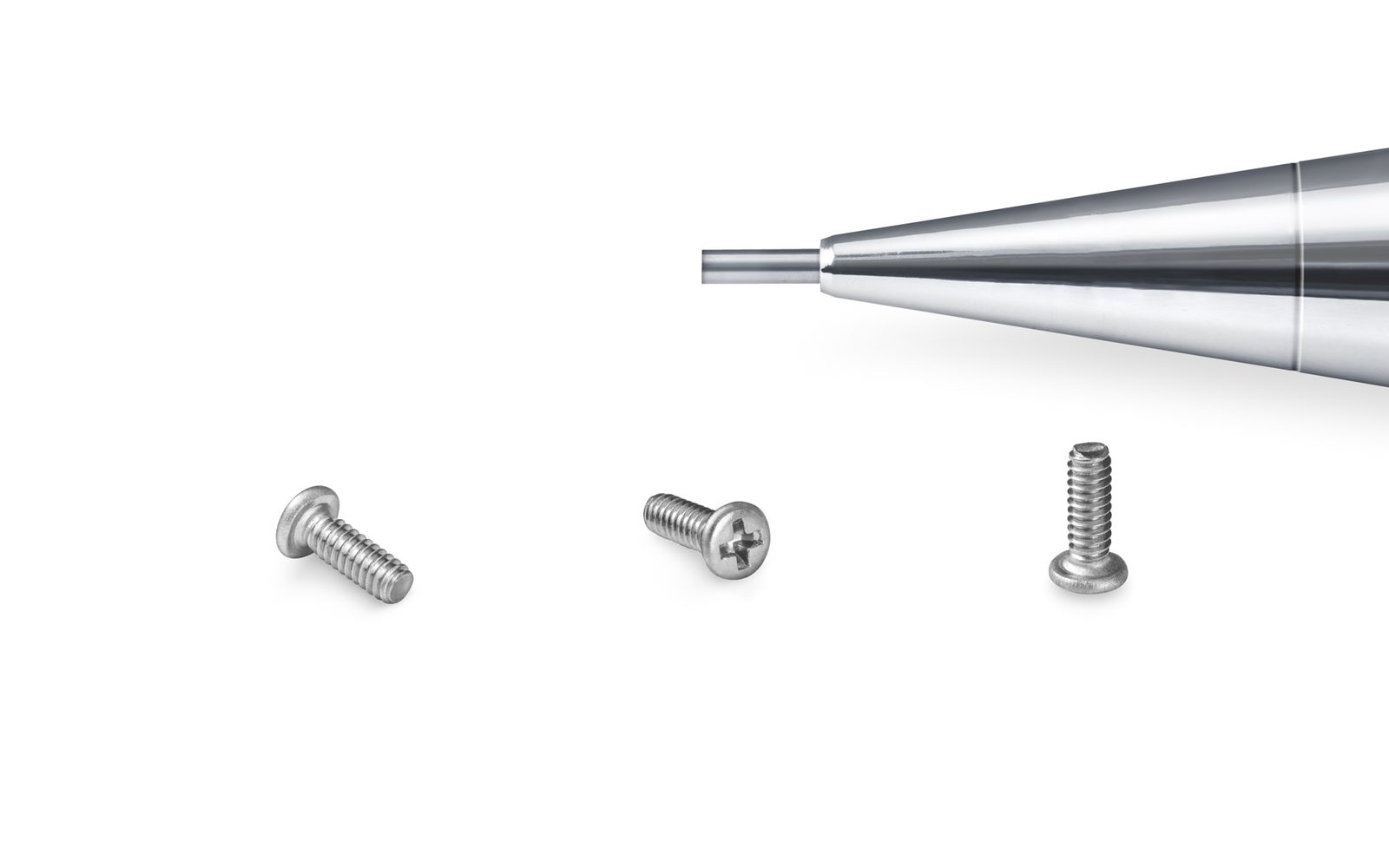
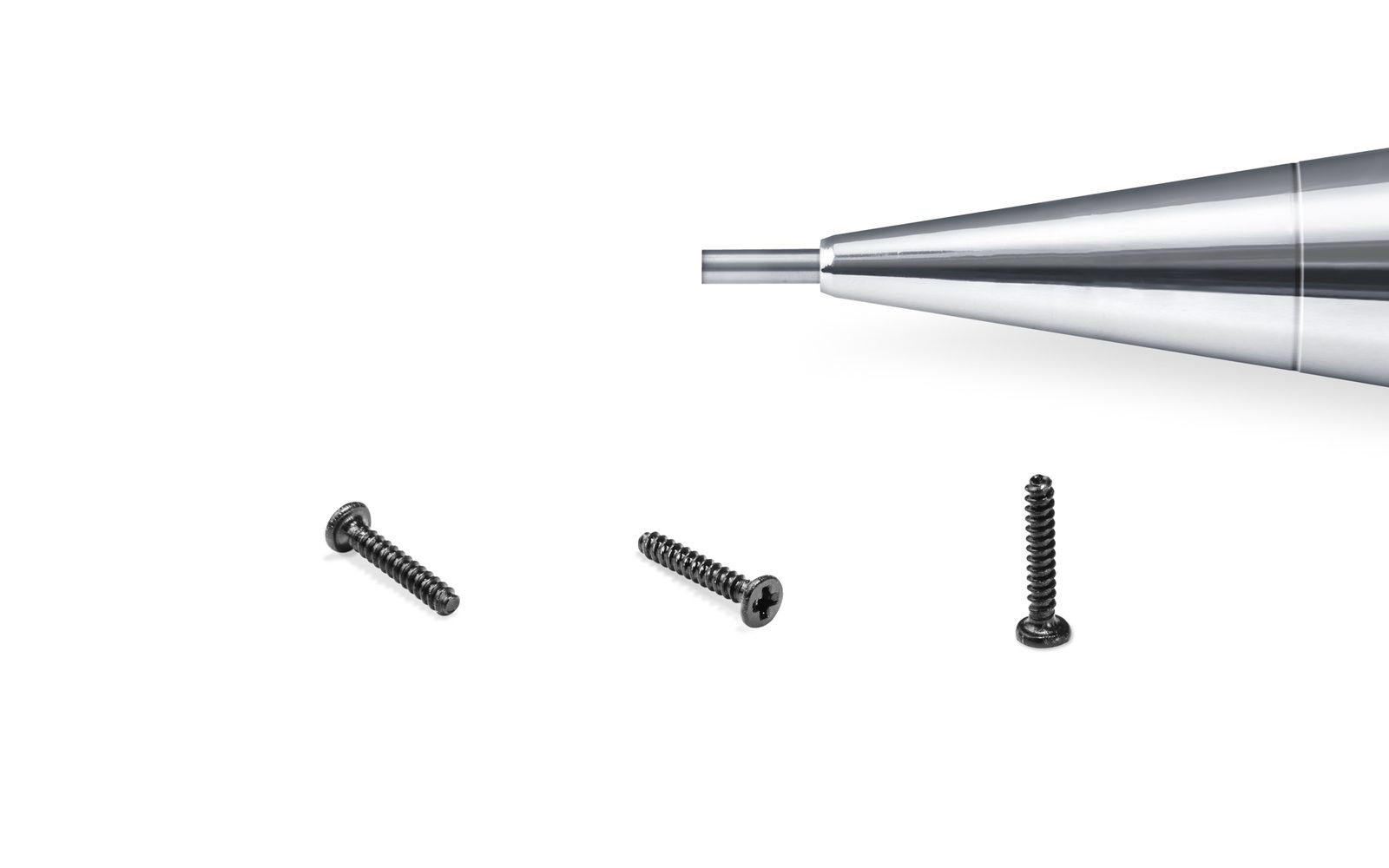
M0.8 machine thread micro screws shown beside a pencil tip for scale

Micro Screws · M0.5 – M6

Machine Thread Micro Screws

Precision machine screws from M0.5 to M6 with rolled Class 6g threads, tight head concentricity and clean drive recesses for automated driving.

Class 6g threadRolled threadStainless / carbon steel
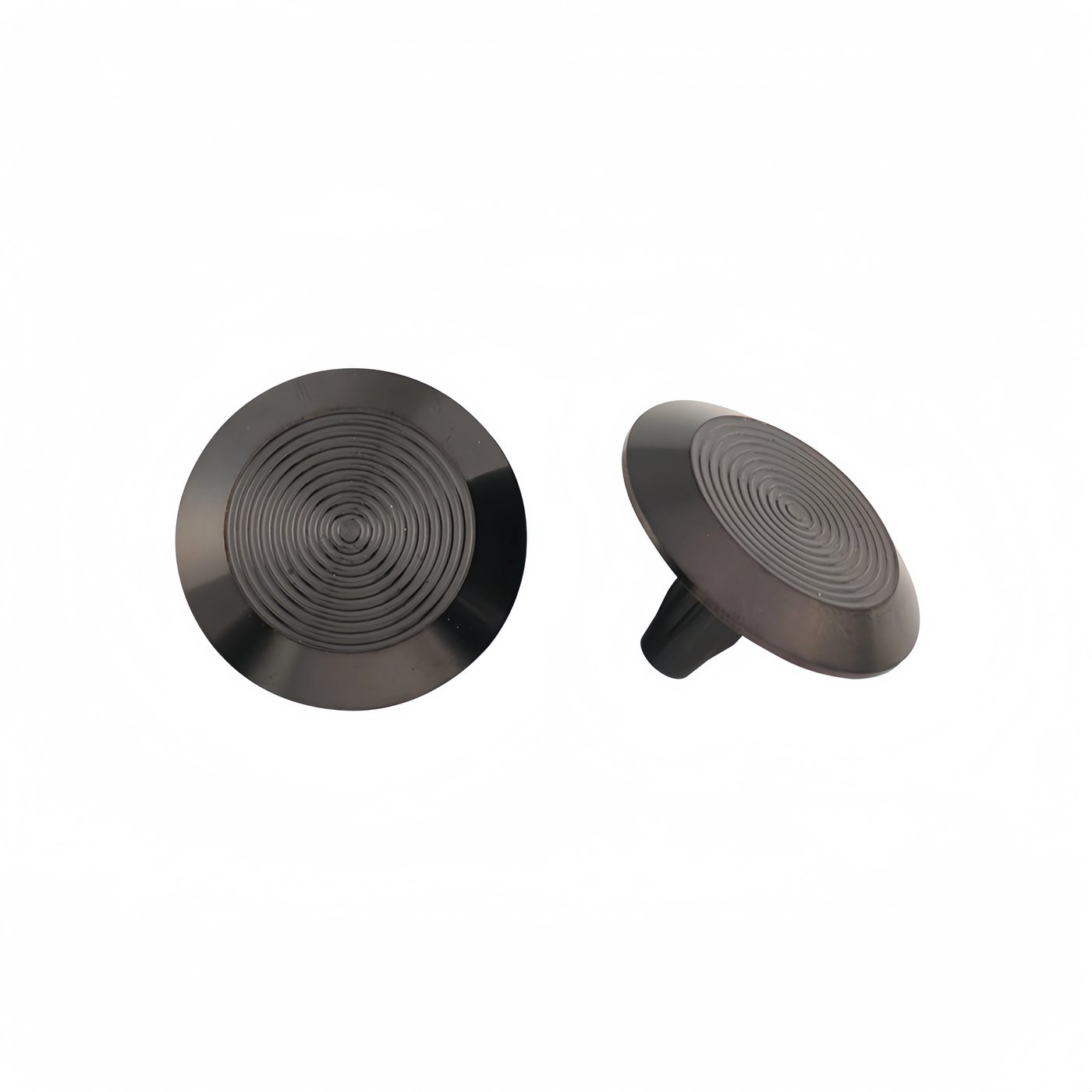
PVD coated screws with a CD-pattern rainbow finish

Micro Screws · M0.8 – M6

PVD Coated Screws

Physical vapour deposition coatings that add 2–5 µm of hard ceramic film — for driver wear resistance, low friction and decorative black or gold finishes.

2–5 µm filmTiN · CrN · DLCHV 1800+
Micro screws with a blue nylon patch threadlocking element

Micro Screws · M0.8 – M6

Precoated Screws

Screws with a factory-applied locking or sealing element, so the assembly line receives a ready-to-drive fastener with no liquid adhesive and no cure time.

Nylon patchMicro-encapsulated3M tape
Pan head self-tapping micro screws arranged in a row

Micro Screws · M0.6 – M4

Self-Tapping Micro Screws

Self-tapping micro screws from M0.6 to M4 with controlled point geometry, engineered to form clean threads in engineering plastics without cracking the boss.

Thread formingPlastic & sheet metalSharp thread root

Design notes

Four things to get right early

These decisions are cheap at concept stage and expensive after tooling is cut.

01

Watch the head height, not just the diameter

In a stacked camera or display module the head height often sets the stack. Low-profile and wafer heads can recover 0.2–0.3 mm, which is frequently more valuable than reducing the screw diameter.

02

Specify the finish on the drawing

Black is not a specification. DLC, matte PVD, black oxide and black zinc look different and age differently. Name the process and, where the part is visible, the gloss level.

03

Match the drive to the line, not the drawing

A Torx drive costs more per screw but reduces cam-out and bit replacement. On a high-volume line the trade often pays back within a month.

04

Plan for rework

If a device may be opened in service, a nylon patch allows re-use. Encapsulated adhesive does not. Decide this before the screw is released.

Joint review

Send us the assembly, not just the screw

A drawing gives us geometry. The mating material, the service cycles and the cleaning chemistry decide whether the joint works. Send all three and we will review the whole stack.

  • Tolerance stack and fit check
  • Torque and preload recommendation
  • Material and finish selection
  • Locking method and service strategy

Questions

Electronics fastening FAQ

Answers to the questions that come up most in this industry.

Have a specific joint? Send the section drawing and the service condition. We will reply with a recommended fastener and the reasoning behind it.
Do you support PPAP documentation?
Yes. We provide PPAP levels 1–4 including dimensional results, material and performance test reports, process flow, PFMEA and control plan. Tell us the level your quality team requires at RFQ stage.
What is the typical lead time for a new electronics screw?
Samples from existing tooling in 1–3 days. A new heading die typically takes 7–10 working days, plus coating and sorting. Production orders run 3–4 weeks depending on finish.
Can you pack for cleanroom use?
Yes. Parts are degreased and packed in cleanroom-compatible bags or trays. We can supply particle count data and use low-outgassing lubricants where optics are nearby.
How do you handle colour matching?
We retain a physical master chip per project and verify each coating batch with a spectrophotometer. If your industrial design team changes the reference, send a new chip and we will re-baseline.

Engineering support for electronics programmes

From a single prototype joint to a PPAP production launch, the same team reviews the drawing and the assembly context.