Micro Screws · M0.5 – M6
Machine Thread Micro Screws
Precision machine screws from M0.5 to M6 with rolled Class 6g threads, tight head concentricity and clean drive recesses for automated driving.
Industry
Sub-M1.6 fasteners for the thinnest consumer devices
Smartphones & Wearables Why it matters
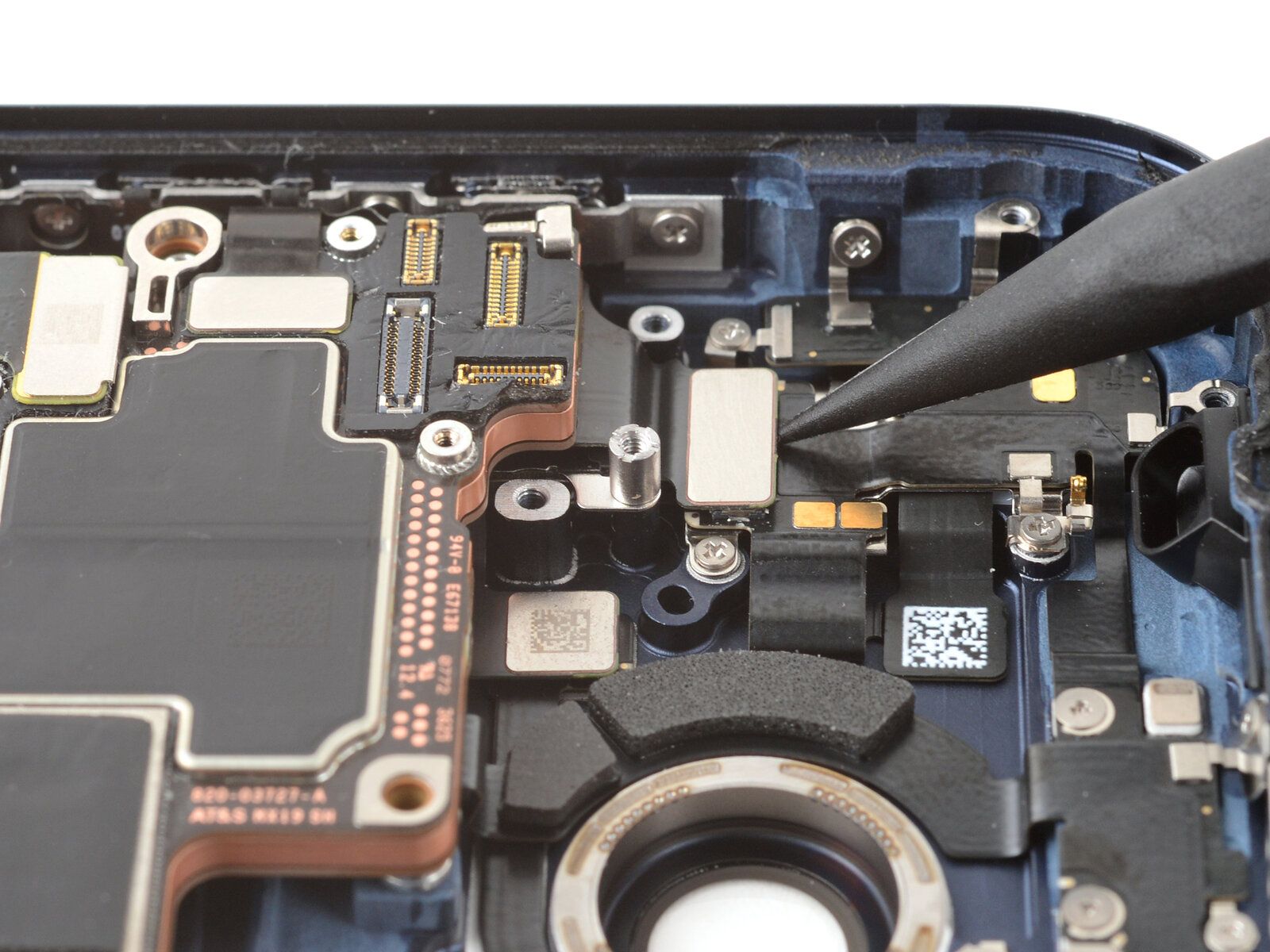
A smartwatch has less internal volume than a single M3 nut. At this scale the fastener is no longer a commodity — it is a design feature that determines how thin the case can be, how the antenna performs and whether the device survives a drop test. Every tenth of a millimetre of head height is contested between industrial design and mechanical engineering.
We produce M0.5 to M1.6 screws with wafer and low-profile heads, micro standoffs from 2.0 mm across flats, and heat-set inserts down to M1.0. For visible exterior screws we match PVD colour to the case finish; for internal joints we pre-apply nylon patch or encapsulated adhesive so that drop and vibration testing does not loosen the assembly.
M0.5
Smallest screw diameter
0.35
Minimum head height (mm)
2.0
Minimum hex standoff A/F (mm)
±0.02
Head height tolerance (mm)
Field problems
These are the failure modes we see most often, and the engineering response that addresses each one. Problems are stated as they appear on the line, not as they appear in a textbook.
| Problem observed | Engineering response |
|---|---|
| The screw head protrudes into the battery or display stack. | Wafer and low-profile heads down to 0.35 mm height, with head height held at ±0.02 mm. |
| Exterior screws do not match the anodised case colour. | PVD colour matched to the case against a physical chip, verified by spectrophotometer. |
| Drop testing loosens internal screws and the device rattles. | Nylon patch or encapsulated adhesive applied at a controlled thread position, tested to your drop profile. |
| The boss cracks when a self-tapping screw is driven into a 0.4 mm wall. | Thread-forming geometry and pilot diameter matched to the resin, with boss wall at least 0.6× screw diameter. |
| A wearables customer needs a thread in a 1.2 mm wall. | M1.0 heat-set insert with a 3.2 mm boss, tested for pull-out in the actual resin. |
| Assembly line rejects screws because they jam in the feeder at M0.8. | Optical sorting removes bent and short parts, and reel packing is specified to suit the feeder track width. |
Specification basis
A starting specification, not a fixed menu. Most programmes adjust one or two of these after the first joint review.
Diameter
M0.5 – M1.6
Head height
From 0.35 mm, tolerance ±0.02 mm
Drive
Phillips 000, Torx T1–T4, pentalobe P2
Material
SUS304, SUS316L, titanium Grade 5
Finish
PVD black, gold, champagne, rainbow; passivation
Locking
Nylon patch, encapsulated adhesive
Packing
Reel or tray, anti-static, cleanroom bag
Testing
Drop, vibration, salt spray, torque-to-preload
Recommended products
Chosen for the tolerance, finish and locking requirements typical of the assemblies described above.
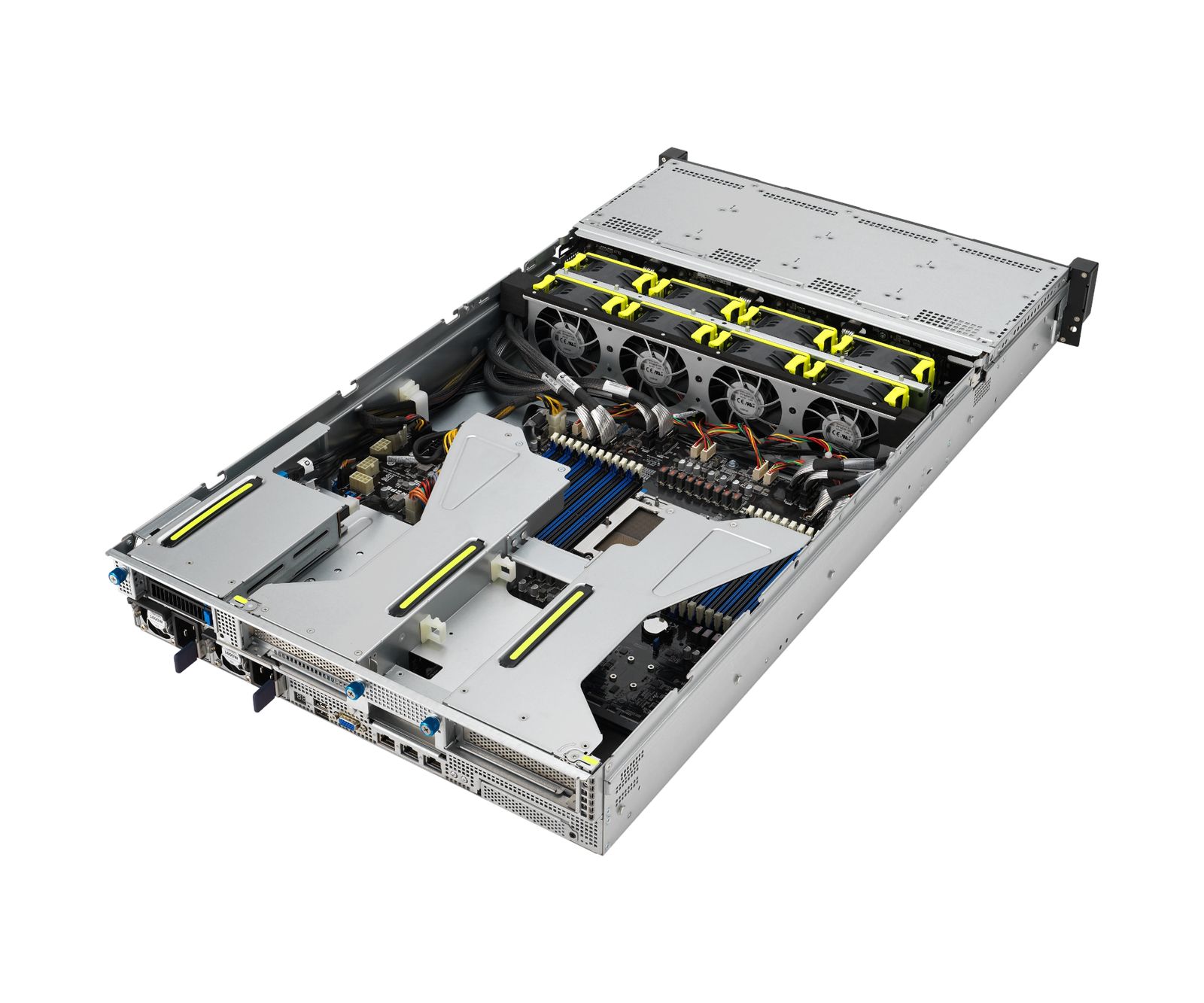
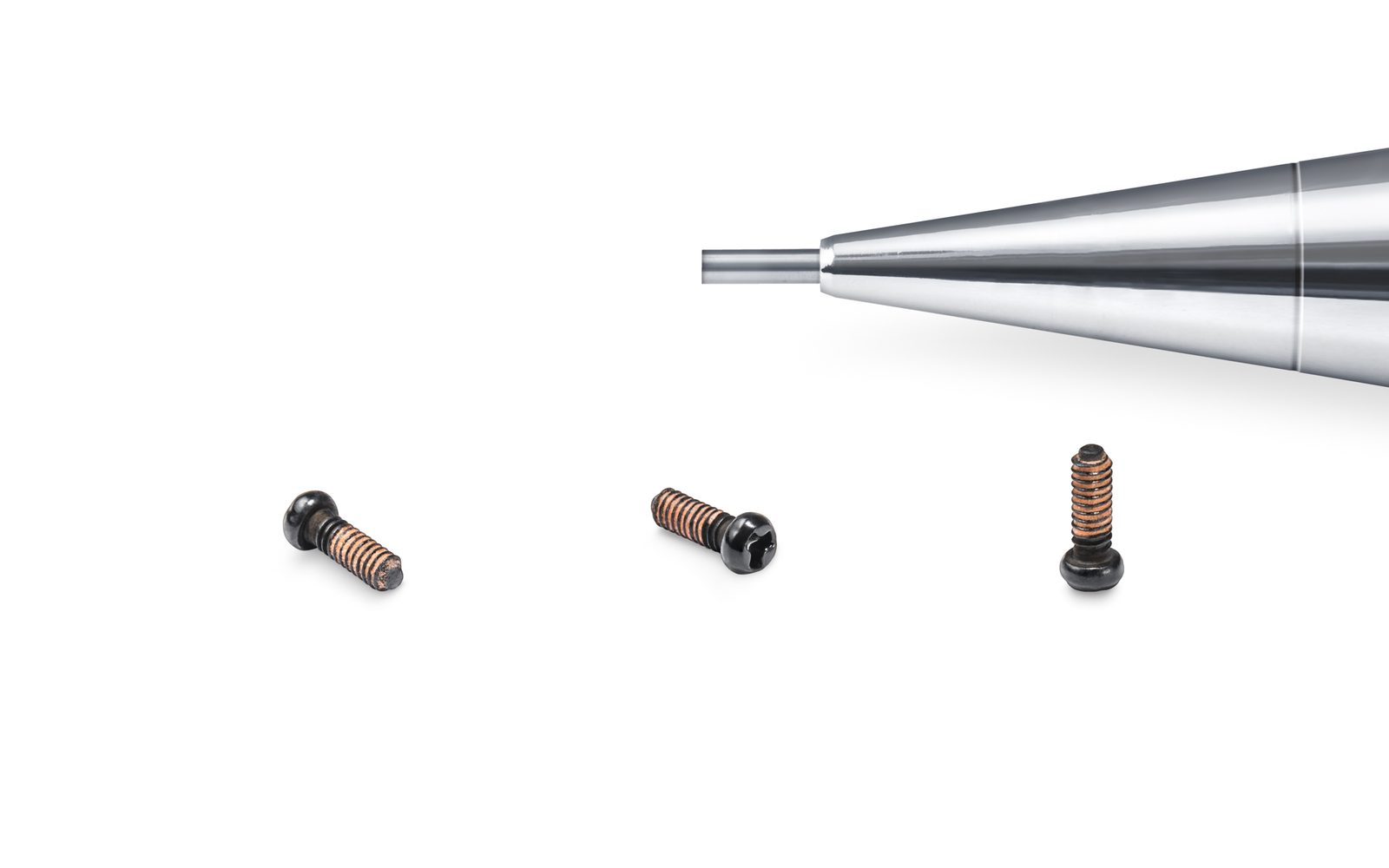
Micro Screws · M0.5 – M6
Precision machine screws from M0.5 to M6 with rolled Class 6g threads, tight head concentricity and clean drive recesses for automated driving.
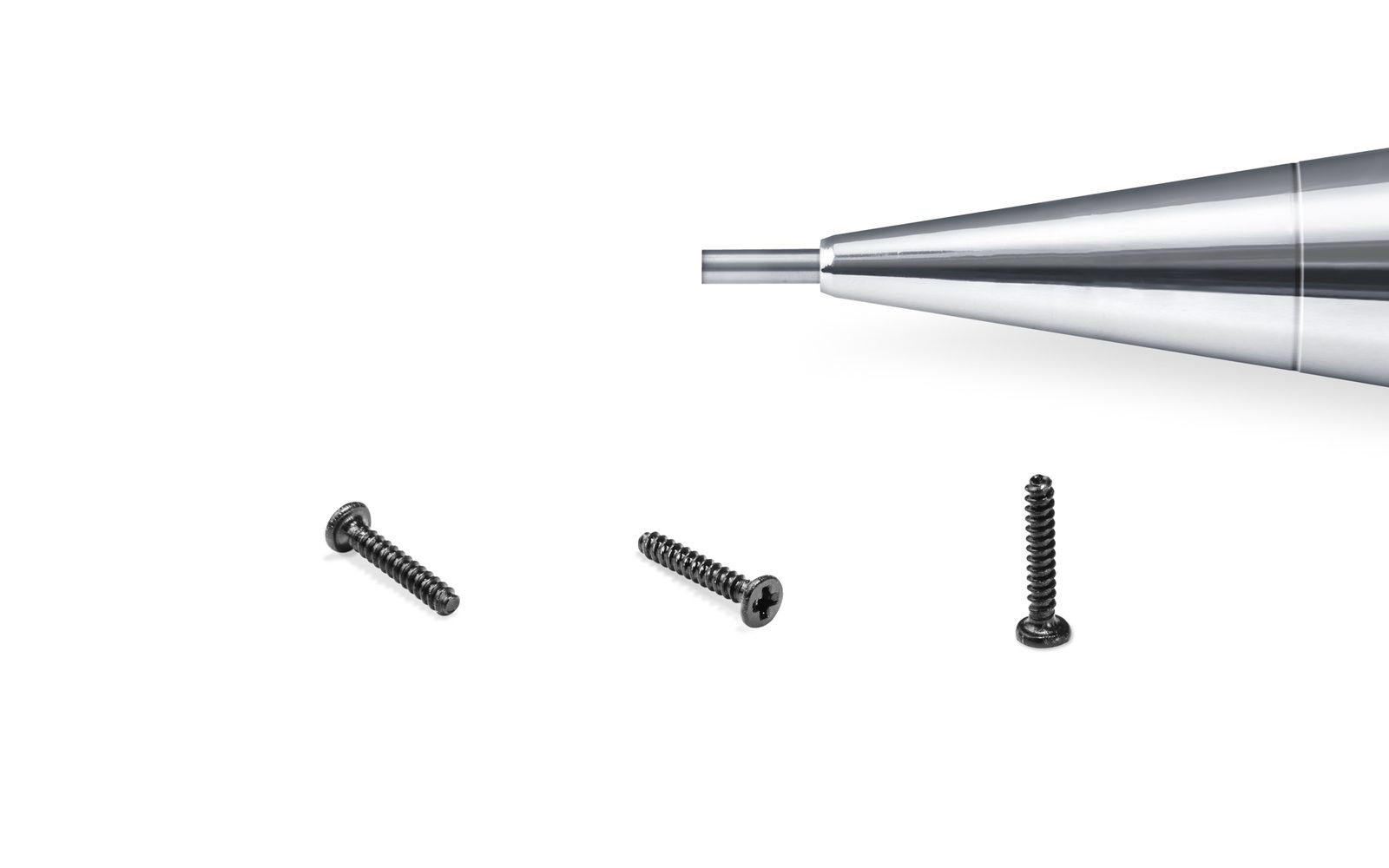
Micro Screws · M0.8 – M6
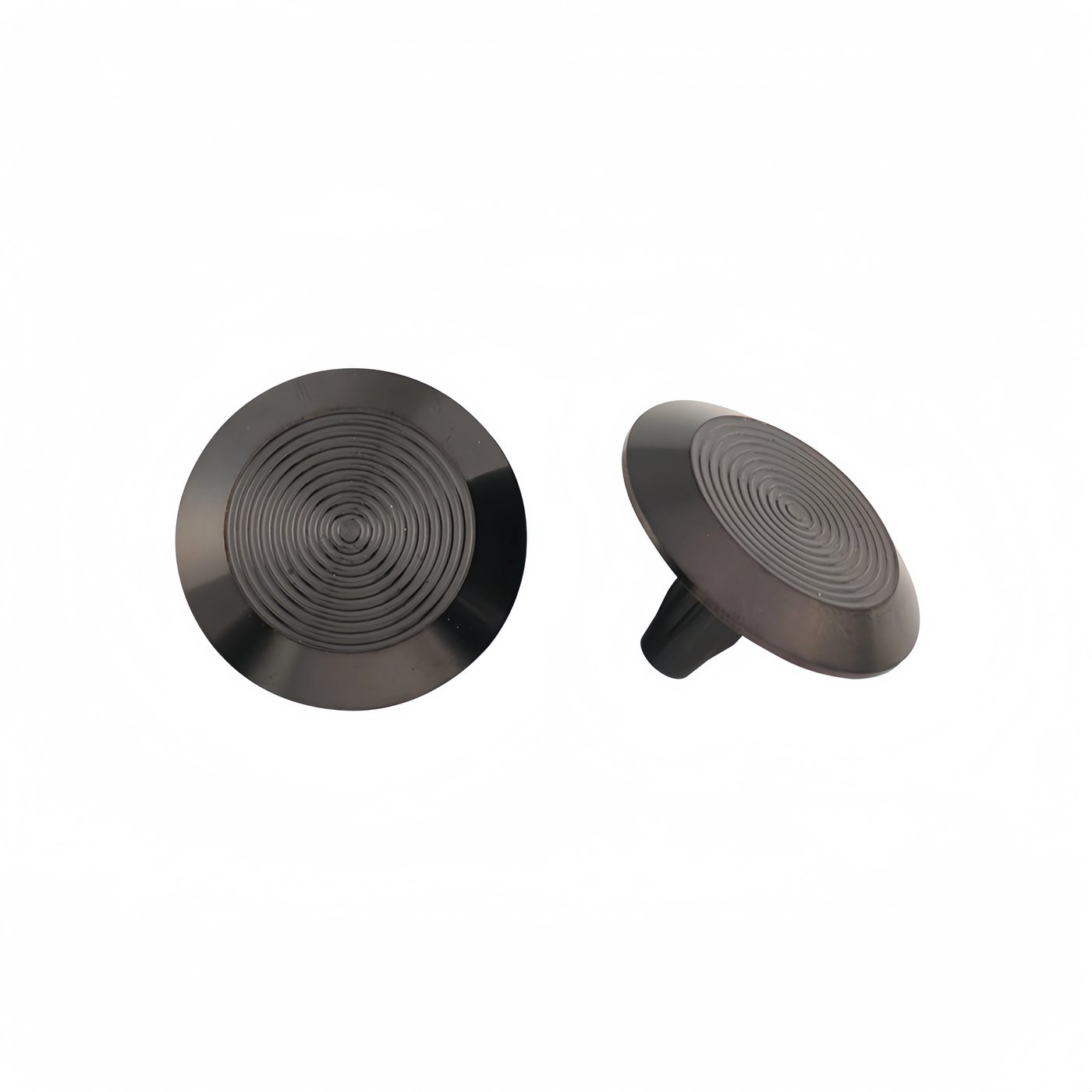
Physical vapour deposition coatings that add 2–5 µm of hard ceramic film — for driver wear resistance, low friction and decorative black or gold finishes.
Precision Components · M1 – M6
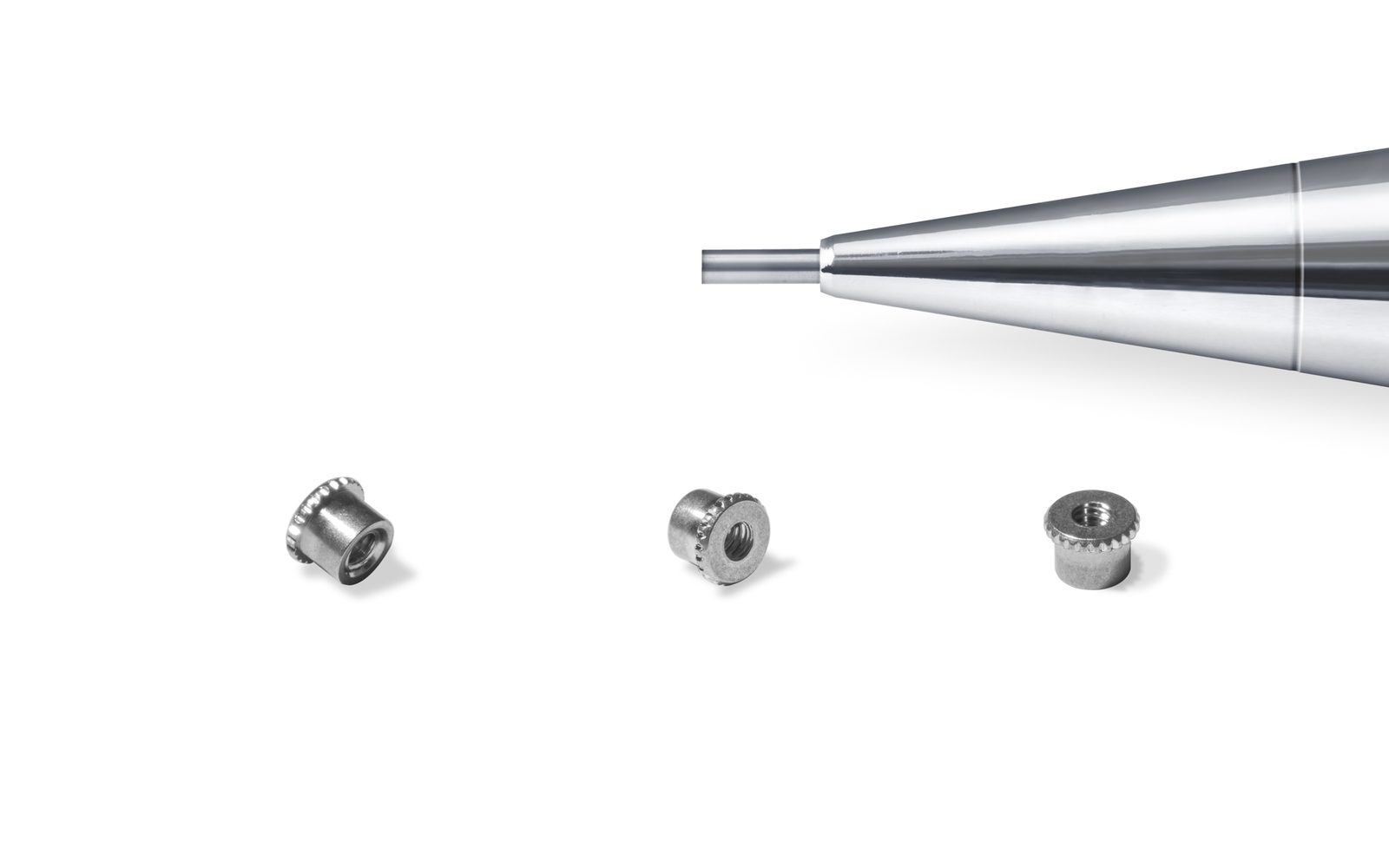
Brass and stainless threaded inserts that give plastic parts a durable metal thread — heat-set, moulded-in, ultrasonic and press-fit versions from M1 to M6.
Precision Components · M1 – M4
Male-female and female-female standoffs from M1 to M4, plus plain spacers, in brass, stainless and aluminium — with length tolerances that keep board stacks parallel.
Design notes
These decisions are cheap at concept stage and expensive after tooling is cut.
01
Below 0.5 mm head height the punch becomes fragile and tool life drops. If your stack allows 0.6 mm, specifying 0.5 mm will add cost without adding value.
02
At T1–T2 the bit is delicate and cam-out risk rises. On sub-M1 screws, Phillips 000 or a custom drive is often more robust on the line than a very small Torx.
03
Ti-6Al-4V saves roughly 40% of the mass of a steel screw but has lower stiffness. In a thin-wall wearable that can matter more than the weight saving.
04
Pull-out and strip torque figures are resin-specific. A result in PC/ABS does not transfer to glass-filled PA. Send the resin grade with the drawing.
Joint review
A drawing gives us geometry. The mating material, the service cycles and the cleaning chemistry decide whether the joint works. Send all three and we will review the whole stack.
Questions
Answers to the questions that come up most in this industry.
Related industries
The same fastener discipline applies across these industries, with different documentation and validation requirements.
Industry
The core of our business: M0.5–M3 fasteners for smartphone modules, notebooks, wearables and PCB assemblies, with the finish control that cosmetic electronics demand.
Industry
Standoffs, board screws, captive panel fasteners and high-strength screws for server chassis, GPU cards and data centre equipment.
Industry
Our second focus industry: M1–M4 high-strength fasteners for dexterous hands, finger linkages and tendon-driven mechanisms, where fasteners see millions of cycles.
Industry
Stainless and titanium micro fasteners for surgical instruments, diagnostic equipment and analytical instruments — cleanable, non-magnetic and documented.
From a single prototype joint to a PPAP production launch, the same team reviews the drawing and the assembly context.