

Thread Geometry Essentials: Pitch, Class and Why M6×1 Is Not Just M6
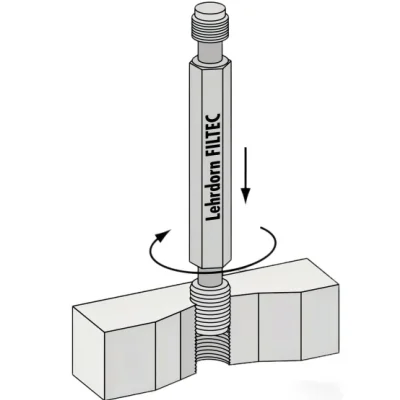
Thread compatibility is decided by two independent parameters that drawings routinely compress into one: pitch and tolerance class.
Pitch: the coarse assumption
"M6" conventionally means coarse pitch (1.0 mm), but fine pitches (M6×0.75, M6×0.5) are common in precision equipment for vibration resistance and thin-wall strength. A coarse-pitch screw will not start in a fine-pitch hole — and forcing it destroys both. Always carry the pitch through drawings: M6×1, not M6.
Tolerance class: the fit within the fit
Tolerance class (6g external, 6H internal for typical bolts) defines clearance between thread flanks. Standard class 6g/6H assembles reliably. Tighter 5g6g reduces wobble for precision instrument screws; looser 8g suits hot-dip galvanized coating thickness. Mismatched classes either bind or rattle.
Practical implications
- Coated fasteners: class may shift after plating — verify post-coating gaging, not pre-coating stock.
- Cross-standard purchases: GB, DIN and ISO classes align, but older JIS conventions differ.
- Roll-formed vs cut threads both achieve class, but measure differently — gage everything.
Topprecision gages thread class on 100% of precision screw lots and states the class on every datasheet — because "M6" alone has failed too many assemblies.