

O-Ring Under-Head Sealing Screws: How the Bead Does Its Job
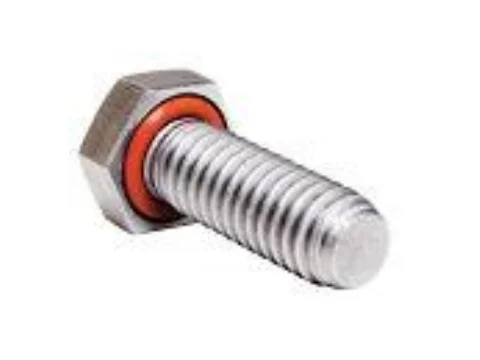
Not every leak path can be gasketed. Vent bosses, sensor mounts and single-hole penetrations need localized sealing — the O-ring under-head screw solves exactly this.
Anatomy and mechanism
A vulcanized or mechanically retained elastomer ring sits in an undercut below the screw head. As the screw tightens against a flat, the bead compresses radially and axially, filling surface irregularities and blocking the annular gap. Unlike flat gaskets, the bead is pre-confined, so it cannot squeeze sideways out of the joint.
Where they outperform alternatives
- Sheet-metal enclosures: one fastener seals one hole without a full gasket die.
- Drain and vent plugs: removable repeatedly, the bead re-seals within limits.
- Dissimilar-material joints where sealants would contaminate assembly.
The compression window is everything
Overtorque splits the bead; undertorque leaves micro-gaps. Specify a torque window tied to bead compression — typically 70–85% squeeze — and verify with a few mock joints before production. Toprecision offers under-head sealing screws in M3–M10 with NBR and FKM beads, temperature-rated to 200 °C, with torque windows documented per size.