

Why Bolts Come Loose: The Physics of Transverse Vibration, Explained Simply
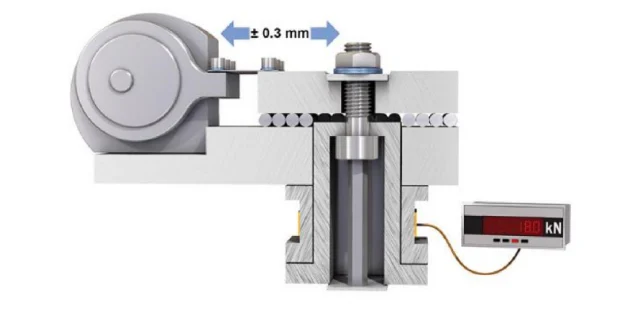
The popular image of a bolt rattling loose like a wind-up toy is misleading. Real self-loosening starts with micro-slip at the bearing surfaces and thread flanks.
The mechanism in three steps
First, transverse loads make the joint members flex relative to each other. Second, when lateral force exceeds friction at the contact faces, the surfaces slip a few microns. Third, on the return stroke the thread flanks ratchet the bolt slightly backward — each cycle stealing a fraction of rotation. Repeat thousands of times and preload drains to zero.
What this explains
- Why smooth, hard, well-lubricated faying surfaces loosen faster: lower friction means slip starts sooner.
- Why loosening correlates with short clamp lengths: a springy joint stores less energy and slides more.
- Why torque alone is not a lock: torque sets preload once; it does not resist ratcheting.
Design responses that actually work
Attack the slip, not just the rotation: increase clamp length, add friction or positive locking, and eliminate relative motion with proper preload. Toprecision's anti-loosening product family — locking inserts, prevailing-torque nuts and captive hardware — is built around this mechanism, and our application notes map each product to the load case it defeats.