Many customers who are new to the fastener industry often ask about the difference between standard and custom fasteners. While both types of fasteners serve the same basic purpose—connecting components—they differ significantly in design, production, application, and cost. Understanding these differences is critical to choosing the right type of fastener for your specific needs. In this section, we will compare standard and custom fasteners in detail, highlighting their key differences, advantages, disadvantages, and suitable applications.
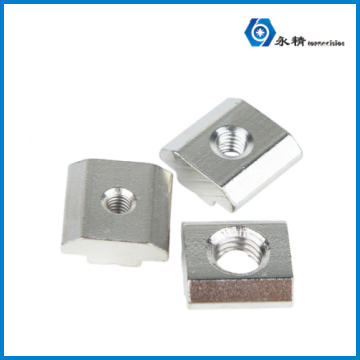
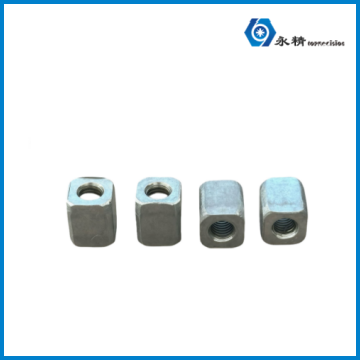
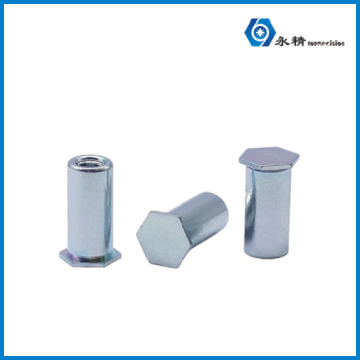
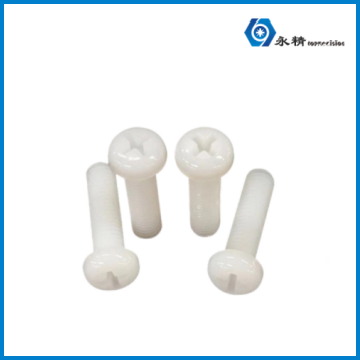
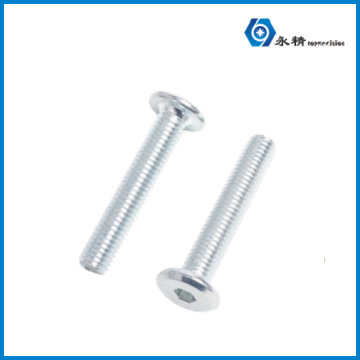
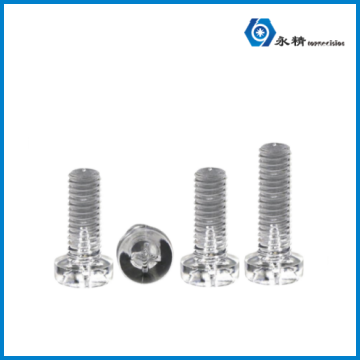
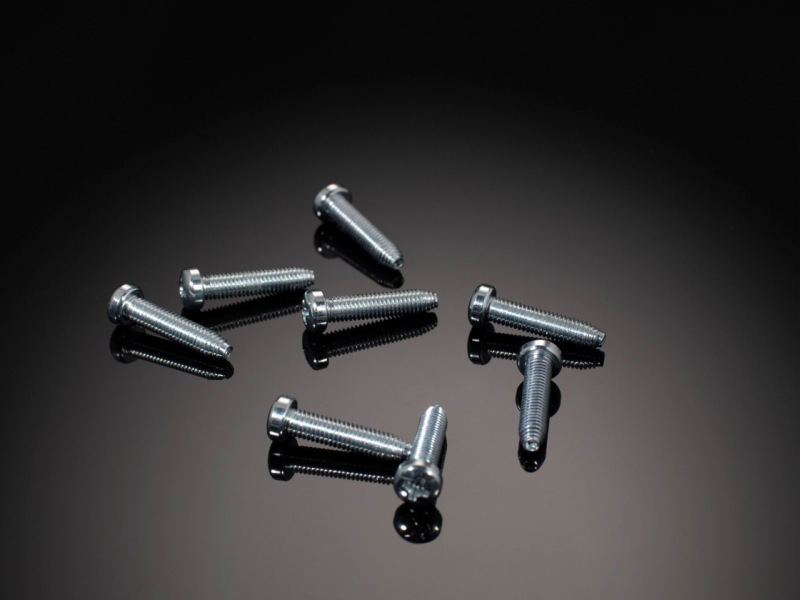
First, let’s define standard and custom fasteners. Standard fasteners are mass-produced fasteners that follow established industry standards, such as ISO, ASTM, DIN, or GB. They have fixed dimensions, materials, and performance characteristics, and are designed to meet the general needs of most applications. Examples of standard fasteners include hexagon head bolts, cross-recessed screws, nuts, and washers. Custom fasteners, on the other hand, are designed and produced according to the specific needs of a customer or application. They have unique dimensions, materials, or performance characteristics that are not available in standard fasteners, and are tailored to meet the specific requirements of a particular project or industry.
One of the key differences between standard and custom fasteners is their design and production process. Standard fasteners are designed to meet general industry standards, so their design is fixed and does not require customization. They are mass-produced using high-efficiency production processes such as cold heading, which allows for large quantities of fasteners to be produced at a low cost. The production process for standard fasteners is highly automated, which ensures consistency and accuracy, and reduces the risk of defects. Custom fasteners, on the other hand, require a custom design process that involves working with the customer to clarify their requirements, create a unique design, and optimize it for performance. The production process for custom fasteners is often more complex, as it may involve specialized processes such as CNC machining, 3D printing, or custom tooling. This complexity increases the production time and cost, but allows for greater flexibility in design.
Another key difference is their application scenarios. Standard fasteners are suitable for general applications where the requirements are not overly strict. For example, they are used in construction, furniture, and general industrial equipment, where the load-bearing requirements, corrosion resistance needs, and dimensional accuracy requirements are relatively low. Standard fasteners are also suitable for applications where cost is a major consideration, as they are more affordable than custom fasteners. Custom fasteners, on the other hand, are suitable for applications where standard fasteners cannot meet the specific requirements. For example, they are used in aerospace, automotive, medical, and high-performance industrial applications, where the requirements for tensile strength, corrosion resistance, dimensional accuracy, and shape are extremely strict. Custom fasteners are also suitable for applications where the fastener needs to fit into a unique or complex structure, such as a custom machine part or a medical implant.
Cost is another important difference between standard and custom fasteners. Standard fasteners are mass-produced, so their unit cost is relatively low. They are available in large quantities from most fastener suppliers, and there is no additional cost for design or tooling. Custom fasteners, on the other hand, are more expensive due to the custom design, specialized production processes, and small batch sizes. The cost of custom fasteners depends on several factors, including the complexity of the design, the material used, the production process, and the order quantity. For small batch sizes, the unit cost of custom fasteners can be significantly higher than standard fasteners, but for large batch sizes, the cost can be reduced through economies of scale.
Lead time is also a key difference. Standard fasteners are readily available in stock, so the lead time is typically 1-3 days for small orders and 7-14 days for large orders. Custom fasteners, on the other hand, require a longer lead time due to the design, prototyping, testing, and production processes. As discussed earlier, the lead time for custom fasteners can range from 14-42 days, depending on the complexity of the design and the order quantity. This longer lead time means that customers need to plan ahead when ordering custom fasteners.
Performance is another area where standard and custom fasteners differ. Standard fasteners are designed to meet general performance requirements, so their performance is limited by the industry standards they follow. For example, standard high-strength steel fasteners have a fixed tensile strength and yield strength, which may not be sufficient for high-load applications. Custom fasteners, on the other hand, can be designed to meet specific performance requirements, such as higher tensile strength, better corrosion resistance, or unique mechanical properties. For example, custom fasteners can be made from advanced materials such as titanium or composite materials, which offer superior performance compared to standard materials. They can also be designed with unique structures to improve their load-bearing capacity or fatigue resistance.
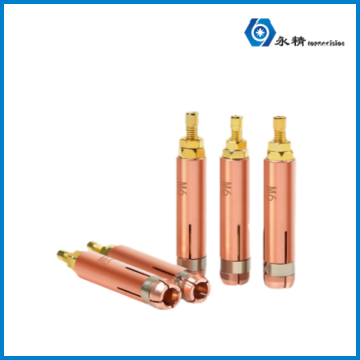
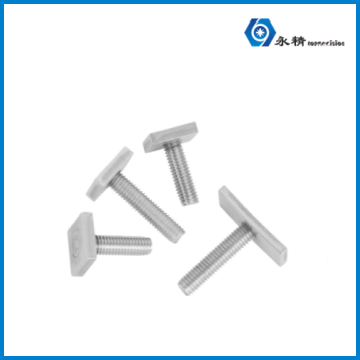
Flexibility is another advantage of custom fasteners. Standard fasteners have fixed designs, so they cannot be modified to meet specific needs. Custom fasteners, on the other hand, can be designed to fit any application, regardless of the complexity or uniqueness of the requirements. For example, if a customer needs a fastener with a unique thread design, a non-standard length, or a specific surface treatment, a custom fastener can be designed to meet these needs. This flexibility makes custom fasteners ideal for innovative projects or applications where standard fasteners are not suitable.
To summarize the key differences between standard and custom fasteners: Standard fasteners are mass-produced, follow industry standards, are affordable, have short lead times, and are suitable for general applications. Custom fasteners are designed and produced to specific requirements, are more expensive, have longer lead times, offer superior performance and flexibility, and are suitable for specialized applications. When choosing between standard and custom fasteners, it is important to consider your specific needs, including performance requirements, application scenario, budget, and lead time. If your application has general requirements and cost is a major consideration, standard fasteners are the best choice. If your application has specific requirements that cannot be met by standard fasteners, custom fasteners are the way to go.
At our company, we offer both standard and custom fasteners to meet the diverse needs of our customers. We have a large inventory of standard fasteners that meet ISO, ASTM, DIN, and GB standards, ensuring quick delivery. We also have a professional R&D team and advanced production equipment to provide custom fastener solutions, leveraging industry-university-research collaboration to ensure that our custom fasteners meet the highest standards of performance and quality. Whether you need standard or custom fasteners, we can provide the right solution for your application.





 Chinese Website:
盈锋志诚嘉精密五金(深圳)有限公司 |
深圳市永精精密技术有限公司 |
永精商城 |
志诚嘉金属科技(襄阳)有限公司 |
盈锋志诚嘉英文站 |
盈锋志诚嘉西班牙语站 |
盈锋志诚嘉德语站 |
盈锋志诚嘉日语站 |
盈锋志诚嘉俄语站 |
盈锋志诚嘉葡萄牙语站 |
深圳市三和朝阳科技股份有限公司 |
PT. Toprecision Fastening Indonesia |
Shenzhen Sunhe Energy Co., Ltd. |
Zishine Energy (Shenzhen) Co., Ltd.
Chinese Website:
盈锋志诚嘉精密五金(深圳)有限公司 |
深圳市永精精密技术有限公司 |
永精商城 |
志诚嘉金属科技(襄阳)有限公司 |
盈锋志诚嘉英文站 |
盈锋志诚嘉西班牙语站 |
盈锋志诚嘉德语站 |
盈锋志诚嘉日语站 |
盈锋志诚嘉俄语站 |
盈锋志诚嘉葡萄牙语站 |
深圳市三和朝阳科技股份有限公司 |
PT. Toprecision Fastening Indonesia |
Shenzhen Sunhe Energy Co., Ltd. |
Zishine Energy (Shenzhen) Co., Ltd.