When it comes to custom fasteners, choosing the right material is critical to ensuring performance, durability, and compatibility with specific application scenarios. Many customers, especially those in industries like automotive, aerospace, and medical devices, often ask which materials are best for their customized fastener needs. The answer depends on several key factors, including the working environment, load-bearing requirements, corrosion resistance needs, and budget constraints. In this section, we will break down the most common materials used for custom fasteners, their characteristics, and suitable applications, helping you make an informed decision.
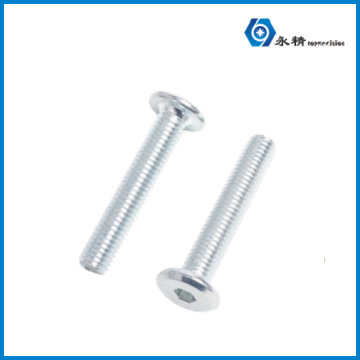
First, high-strength steel is one of the most widely used materials for custom fasteners, especially in applications that require high tensile strength and load-bearing capacity. High-strength steel fasteners are typically made of alloy steel, such as 10.9-grade and 12.9-grade alloy steel, which have tensile strengths ranging from 1040 MPa to 1220 MPa. These fasteners are ideal for automotive engine systems, construction machinery, and industrial equipment, where they need to withstand high loads and harsh working conditions. One of the key advantages of high-strength steel is its cost-effectiveness; it provides excellent mechanical performance at a relatively low cost compared to other high-end materials. However, it is important to note that high-strength steel is prone to corrosion if not properly treated, so surface treatments such as galvanizing, zinc plating, or chrome plating are often required to enhance its corrosion resistance.
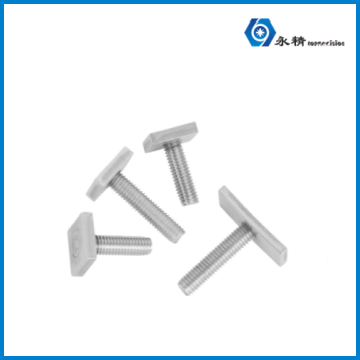
Stainless steel is another popular material for custom fasteners, particularly in applications that require corrosion resistance. There are several types of stainless steel used in fastener production, including 304, 316, and 430 stainless steel. 304 stainless steel is the most common, offering good corrosion resistance in mild environments such as indoor applications, food processing equipment, and consumer electronics. It is non-magnetic, has good ductility, and is easy to machine, making it suitable for a wide range of custom fastener designs. 316 stainless steel, on the other hand, has better corrosion resistance than 304, especially in harsh environments such as marine, chemical, and high-humidity applications. It contains molybdenum, which enhances its resistance to pitting and crevice corrosion, making it ideal for fasteners used in coastal areas, chemical plants, and medical devices. 430 stainless steel is a ferritic stainless steel with good corrosion resistance and lower cost, suitable for applications where magnetic properties are not a concern, such as automotive trim and household appliances.
Titanium and titanium alloys are high-end materials used for custom fasteners in aerospace, medical, and high-performance automotive applications. Titanium has excellent properties, including high strength-to-weight ratio, corrosion resistance, and biocompatibility. It is much lighter than steel but has similar tensile strength, making it ideal for aerospace fasteners that need to reduce weight while maintaining structural integrity. In the medical industry, titanium fasteners are used in implantable devices such as artificial joints and pacemakers because of their biocompatibility—they do not cause an immune response in the human body and can integrate with surrounding tissues. However, titanium is more expensive than steel and stainless steel, and its machining is more difficult, which increases the cost of custom fasteners. Despite this, its unique properties make it the best choice for high-end, critical applications.
Aluminum and aluminum alloys are lightweight materials used for custom fasteners in applications where weight reduction is a priority, such as automotive, aerospace, and consumer electronics. Aluminum fasteners are lightweight, have good thermal conductivity, and are corrosion-resistant in certain environments. They are often used in EV battery packs, aircraft interiors, and smartphones, where reducing weight can improve energy efficiency and performance. However, aluminum has lower tensile strength than steel and titanium, so it is not suitable for high-load applications. Aluminum alloys, such as 6061 and 7075, have higher strength than pure aluminum and are often used for custom fasteners that require a balance of lightweight and strength.
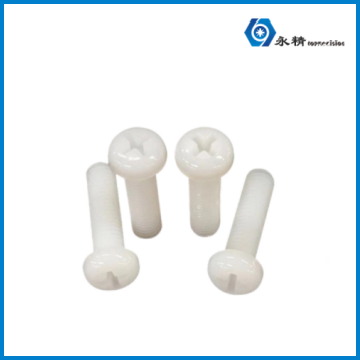
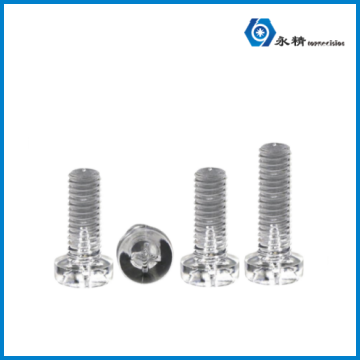
Composite materials, such as carbon fiber-reinforced polymers (CFRP) and glass fiber-reinforced polymers (GFRP), are emerging materials for custom fasteners in high-end applications. These materials have the advantages of lightweight, high strength, corrosion resistance, and fatigue resistance. Carbon fiber composite fasteners are used in aerospace and high-performance automotive applications to reduce weight and improve fuel efficiency, while glass fiber composite fasteners are used in marine and chemical applications due to their excellent corrosion resistance. However, composite fasteners are expensive and have higher production costs, making them suitable for applications where performance is more important than cost.
When choosing the best material for your custom fasteners, it is important to consider the following factors: working environment (temperature, humidity, corrosion), load-bearing requirements (tensile strength, yield strength), compatibility with other components, budget, and regulatory requirements (especially in medical and aerospace industries). For example, if you need fasteners for a marine environment, 316 stainless steel or composite materials would be the best choice due to their corrosion resistance. If you need fasteners for an implantable medical device, titanium is the only suitable material due to its biocompatibility. If you need fasteners for a high-load automotive application, high-strength steel or titanium alloys would be ideal.
At our company, we leverage industry-university-research collaboration to provide professional material selection advice for custom fasteners. Our R&D team, in cooperation with top universities and research institutions, has in-depth expertise in material science and can help you choose the most suitable material based on your specific needs. We also conduct strict testing and verification of all materials to ensure their quality and performance, ensuring that your custom fasteners are stable and reliable in their application scenarios. Whether you need fasteners for automotive, aerospace, medical, or industrial applications, we can provide customized material solutions that meet your requirements.




 Chinese Website:
盈锋志诚嘉精密五金(深圳)有限公司 |
深圳市永精精密技术有限公司 |
永精商城 |
志诚嘉金属科技(襄阳)有限公司 |
盈锋志诚嘉英文站 |
盈锋志诚嘉西班牙语站 |
盈锋志诚嘉德语站 |
盈锋志诚嘉日语站 |
盈锋志诚嘉俄语站 |
盈锋志诚嘉葡萄牙语站 |
深圳市三和朝阳科技股份有限公司 |
PT. Toprecision Fastening Indonesia |
Shenzhen Sunhe Energy Co., Ltd. |
Zishine Energy (Shenzhen) Co., Ltd.
Chinese Website:
盈锋志诚嘉精密五金(深圳)有限公司 |
深圳市永精精密技术有限公司 |
永精商城 |
志诚嘉金属科技(襄阳)有限公司 |
盈锋志诚嘉英文站 |
盈锋志诚嘉西班牙语站 |
盈锋志诚嘉德语站 |
盈锋志诚嘉日语站 |
盈锋志诚嘉俄语站 |
盈锋志诚嘉葡萄牙语站 |
深圳市三和朝阳科技股份有限公司 |
PT. Toprecision Fastening Indonesia |
Shenzhen Sunhe Energy Co., Ltd. |
Zishine Energy (Shenzhen) Co., Ltd.