

Insert Materials Decoded: 304, 316 and Inconel X-750 Wire Thread Inserts
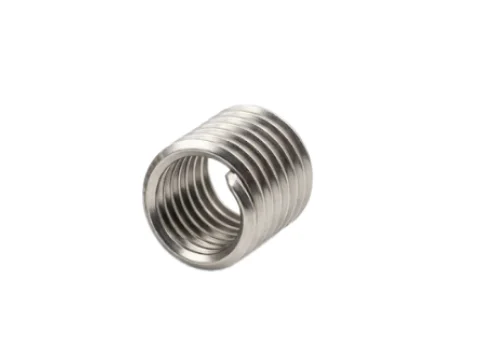
The wire itself is the insert. Choosing 304, 316 or Inconel X-750 decides how the joint behaves for the next decade.
304: the industrial default
Austenitic 304 stainless covers most indoor, automotive-cabin and general machinery uses. It pairs acceptably with aluminum parents in dry environments and costs the least. Cold-drawn 304 wire actually gains strength from the coiling process, so its thread shear capacity is higher than raw sheet 304 might suggest.
316: when chlorides join the party
Marine, coastal electronics enclosures and any washdown environment should move to 316. The molybdenum addition buys pitting resistance that keeps threads from seizing under salt exposure — the failure mode where a 304 insert and an aluminum boss weld themselves together.
Inconel X-750: jet engines and exhausts
Above 425 °C, austenitic stainless loses creep strength. Inconel X-750 inserts hold preload in turbine housings, exhaust mixers and gas-path hardware to 650 °C and beyond, at a price that limits them to where the temperature really lives.
Toprecision stocks all three wire grades, marks them by packaging color, and can supply material certificates (EN 10204 3.1) per lot for aerospace and medical programs.