

Repairing Stripped Threads in Die-Cast Housings with Self-Tapping Inserts
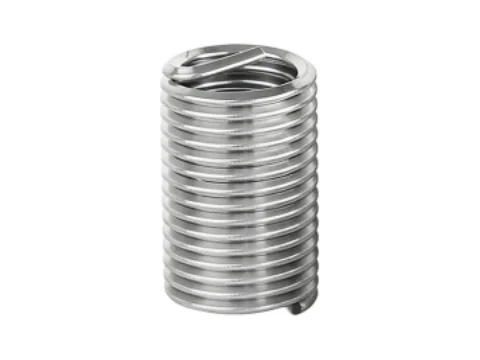
A stripped M8 boss on a die-cast gearbox cover used to mean scrap or a machining rework loop. Self-tapping inserts have changed that economics.
How the repair works
A self-tapping insert has an external cutting thread that taps the stripped hole to a slightly larger size while its internal thread remains to standard. Installation needs only a manual or electric driver with the correct mandrel — no tap set, no chips flying across the line, and cycle times measured in seconds.
When it is the right tool
- Field service and warranty repair where the part is already assembled on a vehicle or machine.
- Thin-walled die castings where heat from welding or helical re-tapping would distort the boss.
- High-volume rework stations: one mandrel, thousands of cycles.
Two cautions worth knowing
First, the pilot hole condition matters: fully collapsed threads should be drilled out to the insert pilot diameter rather than driven through blindly. Second, in abrasive or high-temperature environments, prefer 316 stainless or phospated carbon steel variants matched to the parent metal to avoid galvanic attack. Toprecision offers self-tapping inserts in M3–M12 with pull-out data on request, and we are happy to review a failed joint photo before you commit to a repair spec.