

Wire Thread Inserts: Small Coil, Big Strength A thread rein
1. Introduction: The Hidden Weakness of a Bolt
Modern equipment keeps getting lighter: aluminum, magnesium, engineering plastics and composites are replacing steel on a massive scale. Yet lightweight materials share an inherent weakness — low thread strength. Threads tapped directly into aluminum can wear out after just a few assembly cycles, and vibration makes things worse. A significant share of assembly and field failures trace back to threaded joints. Is there a way to keep the benefits of lightweighting and still get “steel-grade” threads? The answer is the wire thread insert.
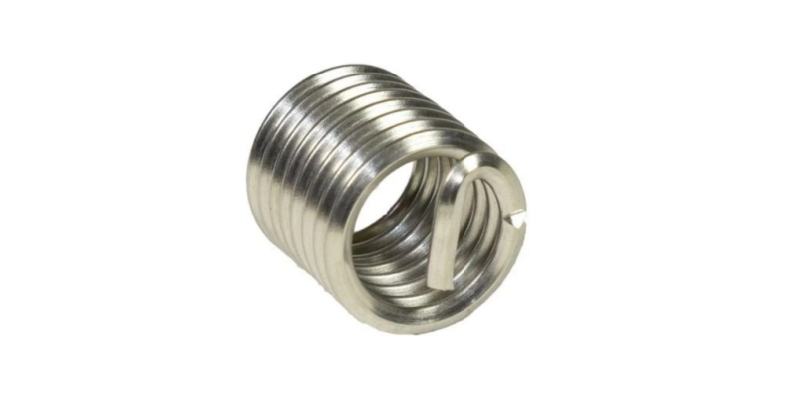
Wire thread inserts — precision fasteners born for light-alloy threaded holes
2. What Is a Wire Thread Insert?
A wire thread insert is an internal-thread fastener precision-wound from diamond-cross-section stainless steel wire; it looks like a finely made spring. Screwed into a pre-tapped hole in aluminum, magnesium, cast iron or plastic, its outer thread anchors in the base material while its inner surface forms a high-precision standard internal thread for ordinary bolts and screws.
In short: it gives a soft substrate a set of steel teeth — the body stays light, the thread becomes high-grade stainless steel.
3. How It Works: Sharing the Load Coil by Coil
In a conventional tapped hole, only the first few threads carry most of the load, creating sharp stress peaks at the thread root. Thanks to the elasticity of its diamond-profile wire, a wire thread insert distributes the bolt's axial clamping force evenly across every coil — stress peaks fall sharply and load capacity rises.
The elastic joint also absorbs vibration and compensates thermal expansion, multiplying fatigue life — a key reason why the aviation and automotive industries trust it.
4. Types and Standards: The GB/T 24425 Series
China's national standard series GB/T 24425 covers wire thread inserts in six parts: GB/T 24425.1 free-running type; 24425.2 free-running type for blind holes; 24425.3 locking type; 24425.4 locking type for blind holes; 24425.5 internal thread for wire thread inserts; and 24425.6 technical specifications.
Free-running inserts suit general reinforcement and thread repair; locking inserts feature a polygonal locking coil in the middle that grips the screw with a prevailing torque to prevent vibration loosening. The standards cover locking blind-hole types M3–M12 and matching internal threads M2–M39; 6H tolerance is recommended for free-running inserts and 5H for locking types.
5. Six Core Benefits
1) Strengthens soft materials: dramatically higher thread strength in aluminum, magnesium, copper alloys, cast iron and non-metals. 2) Higher fatigue strength: elastic load sharing makes joints vibration-durable. 3) Locking performance: locking inserts provide a reliable prevailing torque. 4) Repairs damaged threads: standard threads restored without replacing the part — no scrap of expensive components. 5) Wear-resistant: stainless inserts withstand repeated assembly. 6) Lightweighting and cost: light alloys safely replace steel at lower total cost.
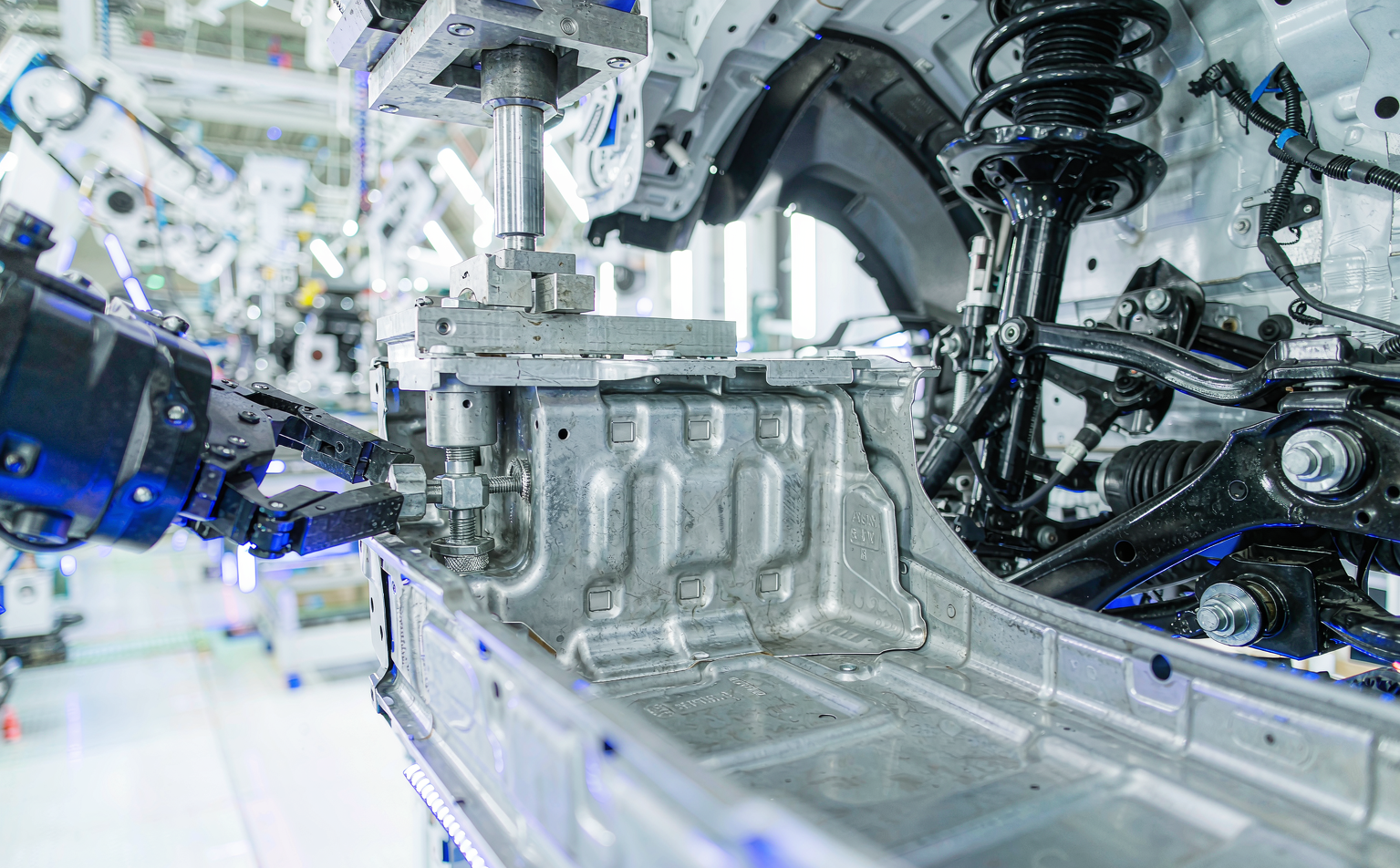
Lightweight structures such as EV aluminum battery enclosures are the main battlefield
6. Installation in Four Steps
1) Drill the pilot hole to spec; 2) Tap the hole with the special insert tap; 3) Drive the insert in with an installation tool until it sits about 0.25–0.5 turns below the surface; 4) Break off the tang (blind-hole types use a tapered end and need no tang). No special equipment is required — each hole takes only seconds.
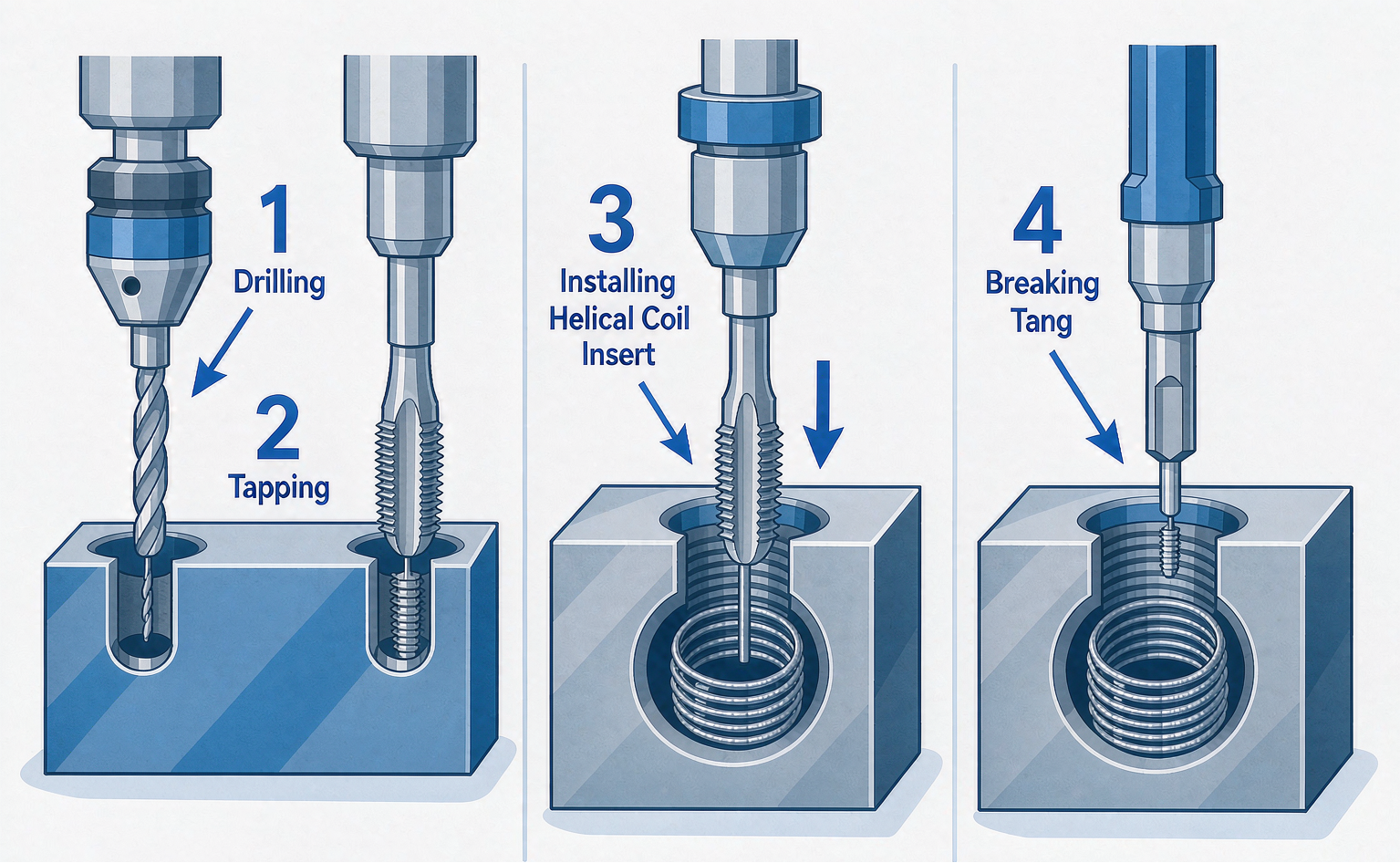
Drill — tap — install — break the tang: four steps, done
7. Where They Are Used
Electric vehicles: battery enclosures, control units, aluminum bodies. Robotics and embodied intelligence: thread reinforcement in magnesium/aluminum joint arms. Aerospace: engines and lightweight structures. Electronics and telecom: precision assemblies requiring frequent servicing. Low-altitude economy: drones and aircraft structures. Wherever “light materials + highly reliable threads” meet, wire thread inserts are on stage.
8. Quick Selection Guide
Sizes: nominal thread diameters M2–M39, pitches 0.4–4 mm. Lengths: 1d, 1.5d, 2d, 2.5d, 3d (d = nominal diameter) selected per engagement length. Tolerances: 6H for free-running, 5H for locking types. Marking example: an M10 locking blind-hole insert with 8 free-state working coils is marked “Wire thread insert GB/T 24425.4 M10-8”.
Rules of thumb: for aluminum and magnesium substrates choose 1.5d–2d; under vibration or dynamic loads, prefer locking types.
9. Conclusion: Small Part, Big Value
Wire thread inserts reconcile “light” and “strong”. Founded in 2003, Yingfeng Zhichengjia has over 20 years of expertise in precision fasteners. In 2019 it established a dedicated automotive plant in Xiangyang, Hubei, developing wire thread inserts and entering the new-energy-vehicle supply chain. Certified to IATF 16949 and other standards, with four global manufacturing bases and a monthly capacity of about 650 million parts, we serve customers worldwide with optimal total cost and ultra-fast response.
For selection support, engineering samples or test reports, visit www.zcjtech.com or contact us.
