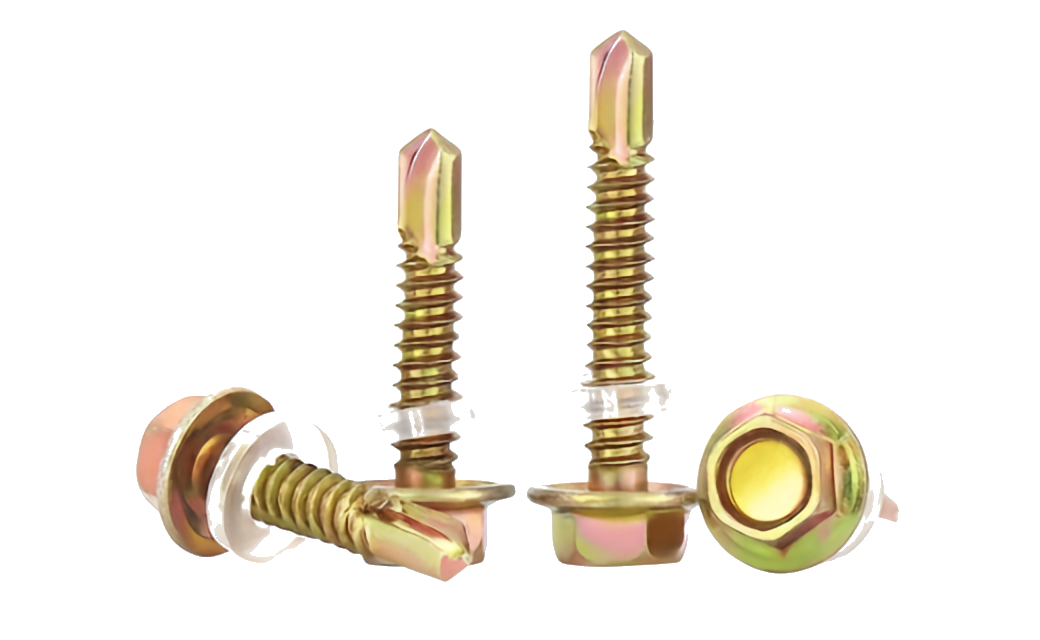
Plating Colour Zinc (Iridescent / Trivalent Colour Zinc)
Trivalent colour zinc (iridescent) plating for carbon steel fasteners: 72 h salt-spray protection with the traditional rainbow passivate appearance.
| Finish Code | TZ002 |
|---|---|
| Environmental Grade | Trivalent chromium zinc plating, RoHS compliant |
| Salt Spray Standard | 72 h; higher grades available on request |
| Appearance / Colour | Iridescent colour passivate |
| Suitable For | All types of screws and fasteners |
| Features | Corrosion resistant; better salt spray than blue-white zinc |
| Environmental Compliance | REACH and RoHS compliant |
Overview
Surface finishing on a fastener is a functional coating, not a cosmetic one: it sets the friction coefficient that determines how much of the applied torque becomes clamp load, and it defines how long the part survives in a corrosive environment. Two finishes that look identical can differ by a factor of several in salt-spray hours and by enough in friction to change the torque specification. This listing: finish code TZ002, salt spray 72 h; higher grades available on request, appearance / colour Iridescent colour passivate, environmental compliance REACH and RoHS compliant.
What sets this listing apart: Features Corrosion resistant; Environmental Grade Trivalent chromium zinc plating.
Advantages
Hydrogen embrittlement risk separates processes: electroplating on high-strength steel needs a de-embrittlement bake, while mechanical and flake coatings avoid the risk entirely.
Friction coefficient changes with coating: a zinc-flake coating typically runs lower and more consistently than electroplated zinc, which is why torque tables are finish-specific.
Barrier coatings protect the base metal, while sacrificial coatings protect the steel even at a scratch; the choice depends on whether the joint will be damaged in service.
Applications
Automotive underhood and body joints, outdoor equipment, marine and coastal installations, electronics hardware, and any joint where the torque specification is tied to a friction value.
Quote the standard, the hours and the acceptance criterion together — a salt-spray figure without the test method is not a specification. Check that the coating process is compatible with the core hardness of the part.
Product information is supplied by Toprecision. Custom parts can be produced to drawing — contact us for samples or a quotation.
Specifications across this series
3 parts in this series
| Part | Finish Code | Environmental Gr… | Salt Spray Stand… | Appearance / Col… |
|---|---|---|---|---|
| Plating Blue-White Zinc (Trivalent Blue Zinc) · TZ001 / Trivalent chromium zinc plating, RoHS compliant / 48 h; higher grades available on request | TZ001 | Trivalent chromium zinc plating, RoHS compliant | 48 h; higher grades available on request | Bright blue-white, uniform |
| Plating Colour Zinc (Iridescent / Trivalent Colour Zinc) · TZ002 / Trivalent chromium zinc plating, RoHS compliant / 72 h; higher grades available on request | TZ002 | Trivalent chromium zinc plating, RoHS compliant | 72 h; higher grades available on request | Iridescent colour passivate |
| Plating (Black Passivated Zinc) · TZ003 / Trivalent chromium zinc plating with black passivate, RoHS compliant / 48 h; higher grades available on request | TZ003 | Trivalent chromium zinc plating with black passivate, RoHS compliant | 48 h; higher grades available on request | Black, low reflectance |
Values are taken from each part’s own attribute set. Changing length, material or finish changes pull-out strength and installation torque, so compare the row that matches your drawing.
Selection and test data: engagement length, standards, salt-spray hours
FAQ
What does this finish provide?
Finish Code TZ002, Environmental Grade Trivalent chromium zinc plating, RoHS, Salt Spray Standard 72 h; higher grades available on request, Appearance / Colour Iridescent colour passivate.
How does it affect torque and friction?
Carbon Steel.
What should I verify before ordering or installing it?
Quote the standard, the hours and the acceptance criterion together — a salt-spray figure without the test method is not a specification. Check that the coating process is compatible with the core hardness of the part.